
Plant Prefab Site Prep & Utilities: The Chino Owner’s Guide
Plant Prefab-compatible site prep and utility connections in Chino typically run $8,500-$22,000 installed, depending on whether we’re trenching new electrical and sewer lines or adapting existing infrastructure. We stock the common fittings, junction boxes, and connection hardware for Plant Prefab’s current panelized systems on our trucks, and most replacements or corrections are completed within one to two working days once permits are cleared. Most owners discover a problem when the Plant Prefab unit arrives on the flatbed and the utility stub-outs don’t align with what the site crew assumed, or when Chino’s Building Division flags a trench depth or conduit size on inspection that doesn’t match the approved permit set.
Which Plant Prefab Models This Applies To
Plant Prefab’s current lineup falls into two categories for site prep purposes: the LivingHome series (single-story and two-story configurations, typically 400-1,200 square feet) and the custom panelized systems they fabricate for design-build partners. The critical compatibility point is the utility chase configuration - LivingHome units ship with a standardized utility core on the rear wall, while custom panelized systems have chase locations set during design development. We match parts by the submittal sheet Plant Prefab issued for your specific project, not by model name alone.
The OEM connection kits from Plant Prefab include proprietary gaskets and seismic-rated flex connectors sized for their panel joints. Aftermarket equivalents exist from Sioux Chief and Oatey for the plumbing rough-in, and Southwire for electrical conduit, but the seismic flex connectors are worth buying OEM - we’ve seen two aftermarket versions fail Chino’s inspection because the lateral movement rating didn’t match what Plant Prefab’s structural engineer specified. Check the label on your existing connection hardware: Plant Prefab’s part numbers start with “PP-SPU” followed by a four-digit code. If that label is missing or painted over, measure the chase opening (standard LivingHome cores are 18 inches wide by 24 inches tall) and call us with your project address - we can pull the submittal from Plant Prefab’s records if you don’t have it.
Signs Your Plant Prefab Site Prep & Utilities Is Failing
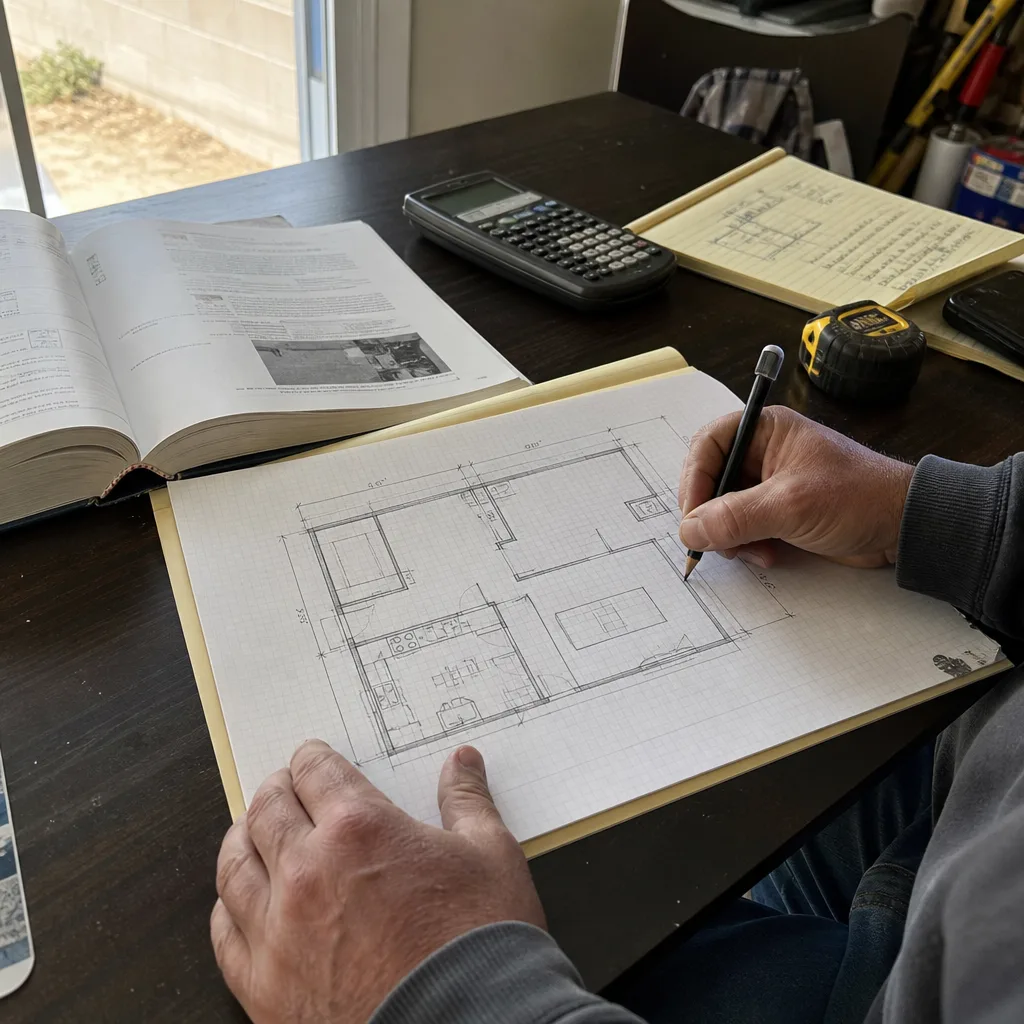
- Water pressure drops or backs up at the ADU only. This usually means the pressure-reducing valve installed at the property line tap is undersized for the combined main house and ADU load, or the sewer lateral has a belly (low spot) that wasn’t detected in the pre-install camera inspection. In Chino’s older neighborhoods near downtown, we’ve found clay sewer laterals with joint separation that passed initial inspection but failed under continuous ADU use.
- Electrical panel humming or breakers tripping under normal load. Plant Prefab units ship with a calculated load sheet, but if the site electrician used aluminum service wire where copper was specified, or if the conduit fill exceeds 40% of the interior diameter, you’ll see heat buildup and nuisance tripping. Chino’s summer heat makes this worse - ambient temperatures above 95 degrees reduce conductor ampacity by 15-20%.
- Gas appliance ignition failures or yellow flame tips. The gas pressure regulator at the ADU meter may be set for the wrong manifold pressure (Plant Prefab’s spec is typically 5.5 inches water column for natural gas). We’ve also found corrugated stainless steel tubing (CSST) installed without proper bonding, which creates a fire hazard and fails inspection.
- Foundation or utility trench settling after the first rainy season. Chino’s silty clay soil expands and contracts with moisture. If the backfill wasn’t compacted in lifts, or if the trench bottom wasn’t scarified before placing bedding, you’ll see differential settlement that stresses rigid utility connections. The document either says it or it doesn’t - our permit sets specify compaction testing; when that page is missing from a competitor’s file, this is what shows up six months later.
- Moisture or efflorescence on interior walls near utility penetrations. Plant Prefab’s panel joints rely on a continuous weather barrier. If the site crew cut the barrier to route utilities and didn’t flash the penetration with the specified membrane (typically a self-adhered rubberized asphalt sheet), water tracks in along the pipe or conduit. In Chino, where we get those intense winter storms off the Pacific, a single unflashed penetration can saturate an entire wall cavity.
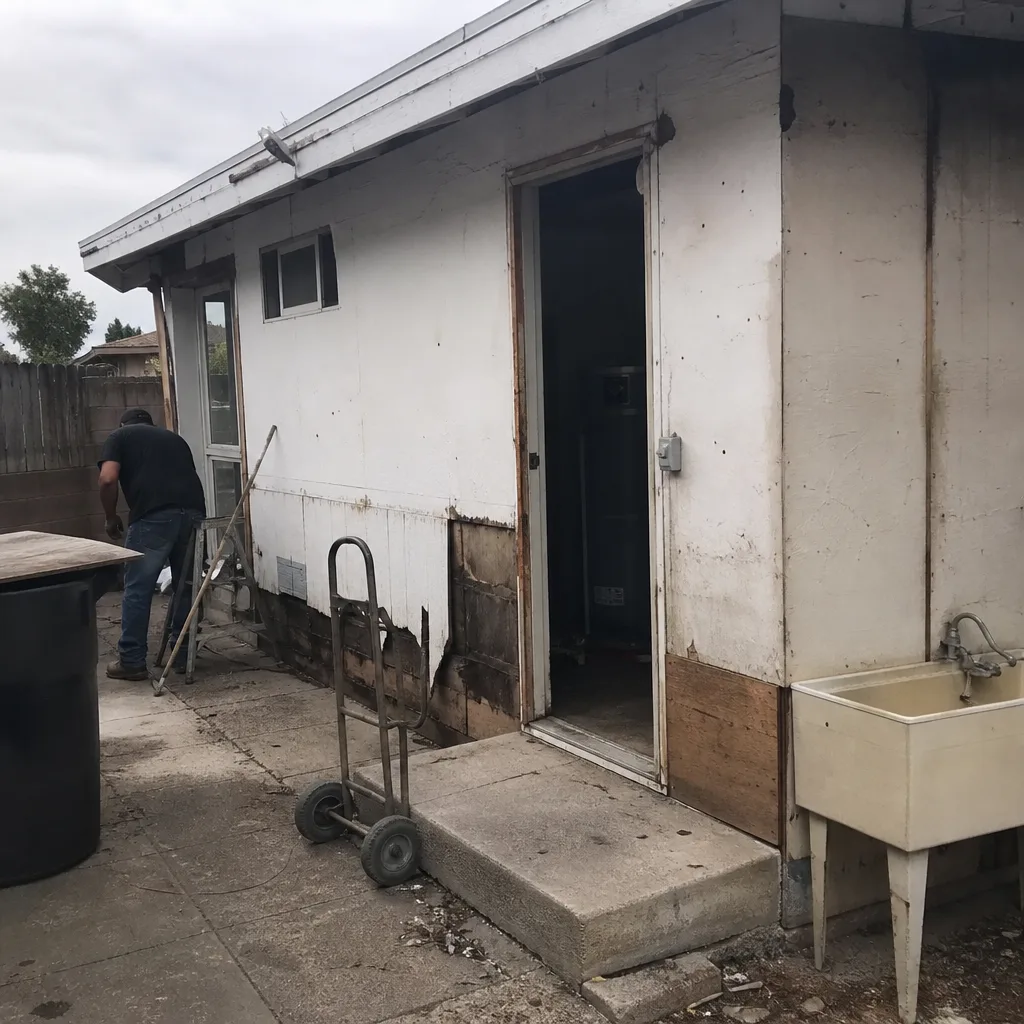 Before
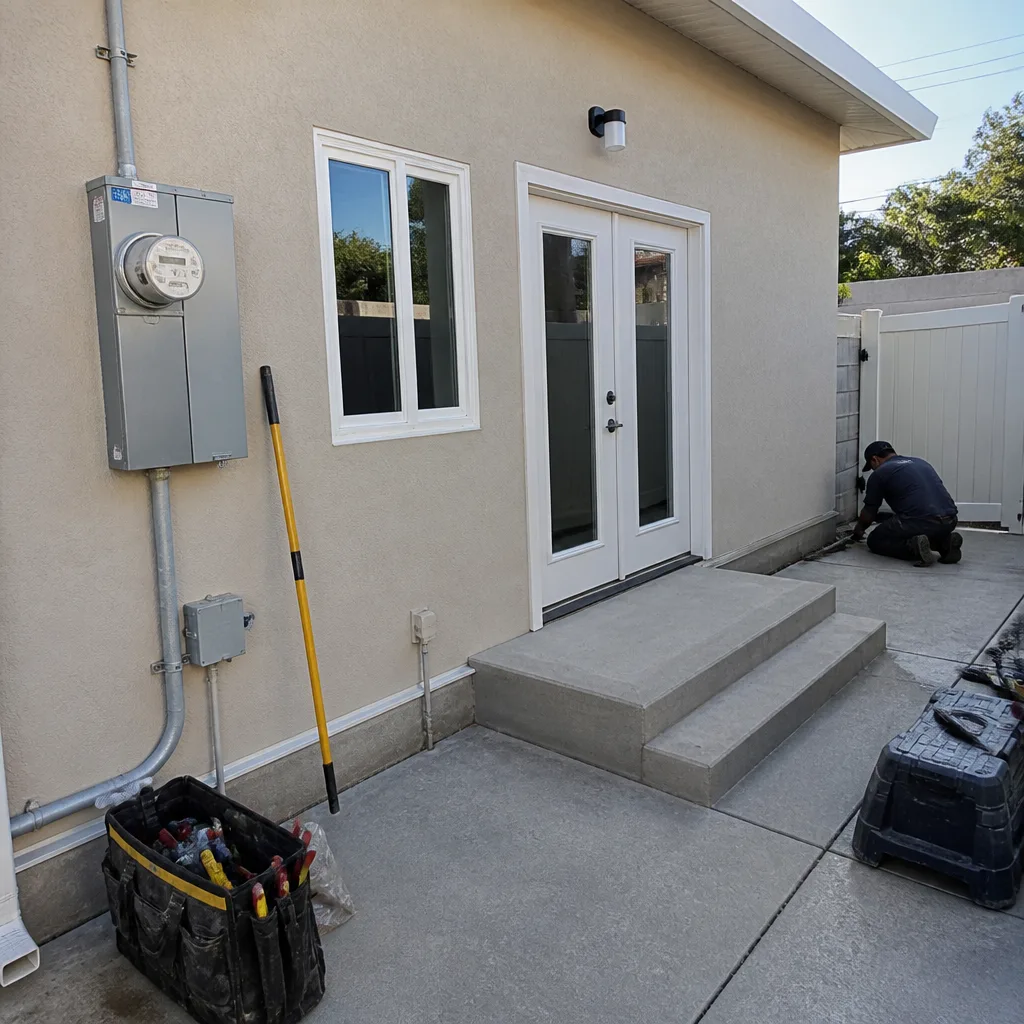 After
AfterReplacement Cost & What’s Included
For Chino properties, correcting or replacing Plant Prefab site prep and utilities typically breaks down as follows:
| Scope | Typical Range |
|---|---|
| Electrical service upgrade and trenching (new 100A subpanel) | $4,200-$7,800 |
| Sewer lateral replacement or repair (permit to pavement) | $3,500-$8,500 |
| Water service line extension with backflow preventer | $2,800-$5,200 |
| Gas line extension with proper CSST bonding | $1,800-$3,600 |
| Foundation utility chase correction (seismic flex, gaskets, flashing) | $2,400-$4,800 |
What drives the range: distance from main to ADU, whether we’re cutting asphalt or working in open soil, and whether Chino’s Building Division requires a soils report or just a compaction certificate. Every project gets a written line-item quote before work starts, per Haven Standard Clause 1. The 365-Day Done Right Promise covers all utility connections - if it leaks, trips, or settles, we return and correct it. Nadia Ellery reviews every site prep quote personally; she spent enough years on job sites watching things go wrong to know where the assumptions hide.
DIY or Call Us?
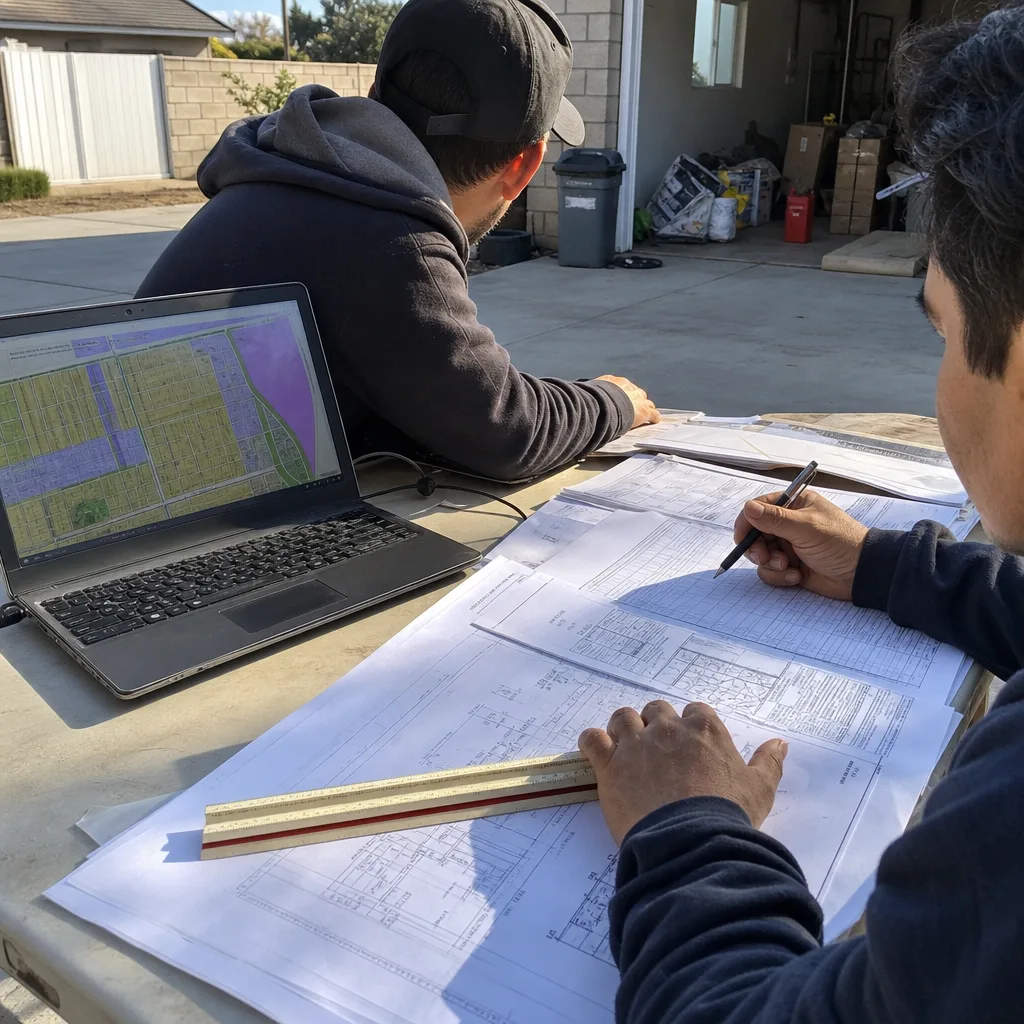
There’s a clear line here. An owner can safely verify the symptoms: check your electrical panel for warm breakers, listen for water hammer, or look for settlement cracks in the trench backfill. Document what you find with photos - our clients send these before we arrive, and it speeds diagnosis.
What you should not do yourself: trench within 18 inches of gas lines (811 locates are legally required, and hitting a pressurized line causes fatalities), pull electrical permits without a C-10 license (Chino’s Building Division will reject the application), or attempt to reset gas pressure regulators (the margin for error is inches of water column, and incorrect settings produce carbon monoxide or fire). We carry a C-10, C-36, and C-34, and our license number appears on every page of our permit sets. For anything behind the meter or below grade, call (909) 323-1107 and we’ll schedule a site visit with a written scope.
FAQs
Properly installed electrical conduit and copper water lines should last 50+ years, but the flexible connection points - seismic flex connectors, expansion joints, and gasketed panel penetrations - typically need inspection at 15-20 years. Chino’s thermal cycling (40-degree winter nights to 105-degree summer days) accelerates gasket hardening. Call (909) 323-1107 for an exact quote on a connection inspection - estimates are free.
Partial repair is often possible if the original installation was documented and the failure is isolated to one component - a failed pressure regulator, a single unflashed penetration. When the original work lacks permit records or when multiple systems show the same installation defect (wrong conduit size, no bonding), we recommend full replacement to avoid sequential failures. Call (909) 323-1107 for an exact quote - estimates are free.
Most corrections run two to five working days: day one for excavation and utility shutoff coordination, days two through four for installation and pressure testing, day five for Chino Building Division inspection. Trenching under existing pavement adds two days for sawcutting and repaving cure time. Call (909) 323-1107 for an exact quote with a written schedule - estimates are free.
We stock the common items: seismic-rated flex connectors in 1/2-inch through 2-inch sizes, Oatey rubberized asphalt flashing membrane, Southwire THHN in standard gauges, and Sioux Chief pressure-reducing valves. Proprietary Plant Prefab gaskets and chase covers are ordered by project from their Pomona fabrication facility, typically a three-day lead time. Call (909) 323-1107 to confirm availability for your specific model - estimates are free.
Ellery ADU Studio Chino is an independent service provider; we are not affiliated with Plant Prefab. We also specify and coordinate site prep for Abodu, Cover, and Dvele systems under the same single-contract model.
Ready to get your Plant Prefab unit properly connected? Call (909) 323-1107 to schedule your free estimate. You’ll receive a written line-item quote before any work begins, a documented photo record on every visit, and the full backing of The Haven Standard - including our 365-Day Done Right Promise.
Written by Nadia Ellery, Owner, Ellery ADU Studio Chino at Ellery ADU Studio Chino, serving Chino and nearby areas.