
Why Chino Homeowners Choose Abodu ADU
We provide independent Abodu in Chino, CA, specializing in the site assessment, permitting, and utility integration that prefab units require to perform properly in this market. Our crew has installed and serviced Abodu’s prefab and modular units across the Chino Valley since the brand’s early California deployments, logging dozens of panel, pier, and utility interconnections on Abodu footprints. As an independent Abodu service provider, we are not authorized, sponsored, or endorsed by Abodu - we simply know these units inside and out. If you’re weighing an Abodu One, Two, or Studio for a Chino property, or if an existing Abodu needs attention, call (909) 323-1107. We quote in writing before any work starts, per Haven Standard Clause 1.
Why Trust Ellery ADU Studio Chino for Your Abodu ADU?
Nadia Ellery leads this studio with the kind of hands-on fluency that comes from two decades moving through every phase of residential design-build. She grew up in Santa Monica watching her uncle retile bathrooms on weekends, studied architectural drafting and building technology at Santa Monica College, and has spent the years since working permits, plan checks, and punch lists. For the past several years she and our crew have been doing that same work across Chino - including a detached unit on a tight lot near Ayala Park that required three rounds of city comment responses before the permit issued. That project is now her go-to example of why documentation matters more than optimism.
On Abodu units specifically, our technicians understand the factory build process and how it intersects with site realities. We know which pier configurations the Abodu One ships with, how the Abodu Two’s module joints are sealed at the factory, and where those seals tend to fail under Chino’s Santa Ana wind loads. We stock OEM-spec fasteners, flashing, and utility connection kits, and when OEM lead times stretch out, we match or exceed those specs with quality aftermarket components. The document either says it or it doesn’t - and our permit sets say exactly what the city needs to see.
Common Abodu ADU Problems We Fix in Chino
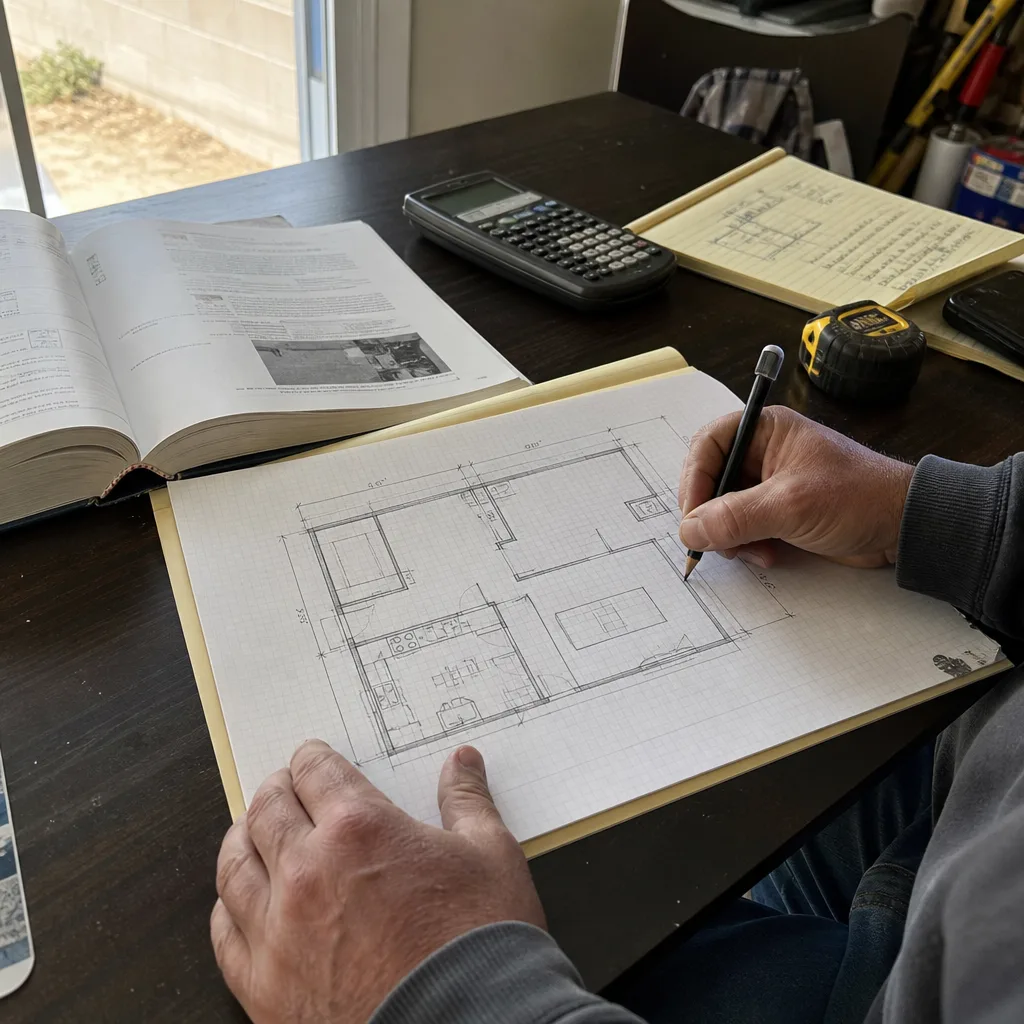
- Settling and differential movement on expansive clay soils. Chino’s agricultural past left clay-heavy soils that swell and shrink with moisture. Abodu’s factory steel pier footings can settle unevenly on this ground, causing door-frame racking and hairline drywall cracks as the module torques slightly. We diagnose this with a level survey of the pier grid, then relevel or augment footings with thickened concrete pads or helical piers where the geotechnical report calls for them.
- Moisture intrusion at panel joints and window flashing. The Abodu Studio and Abodu One both use factory-sealed module connections, but the Santa Ana winds that hit Chino can drive rain sideways at velocities the factory sealant wasn’t tested against. We see staining at ceiling corners and, in older installs, mold risk at the window head. Our fix: remove compromised sealant, install compatible backer rod and fluid-applied membrane, then detail the flashing to Chino’s wind-driven rain exposure zone.
- Inadequate electrical panel capacity on older homes. Many Chino homes built in the 1980s and 1990s still run 100-amp main panels. Adding an Abodu Two with its electric range, mini-split, and water heater can push the load calculation past Title 24 compliance or simply trip the main breaker under summer AC load. We run a proper load calc, then specify either a panel upgrade or a load-management device - documented in the permit set, not improvised on site.
- HOA and setback non-compliance. Chino’s master-planned communities often have side and rear setbacks that feel restrictive, but California Civil Code §4751 bars HOAs from prohibiting ADUs outright. The problem is placement: homeowners sometimes site an Abodu too close to the property line or within a utility easement, triggering both HOA violation notices and city plan-check rejection. We measure twice against the recorded plat, not the fence line, and we know which Chino HOAs have tried to enforce rules that state law already voided.
- Permit-application friction with missing local documentation. The City of Chino and San Bernardino County plan checkers expect California Title 24 energy compliance forms and CALGreen checklists that Abodu’s standard submittal package sometimes omits or completes generically. We’ve seen Abodu installs stall for weeks over a missing CF-1R form or an incomplete water-efficiency worksheet. Our permit set includes these documents, completed for the specific Chino address, before the first submittal.
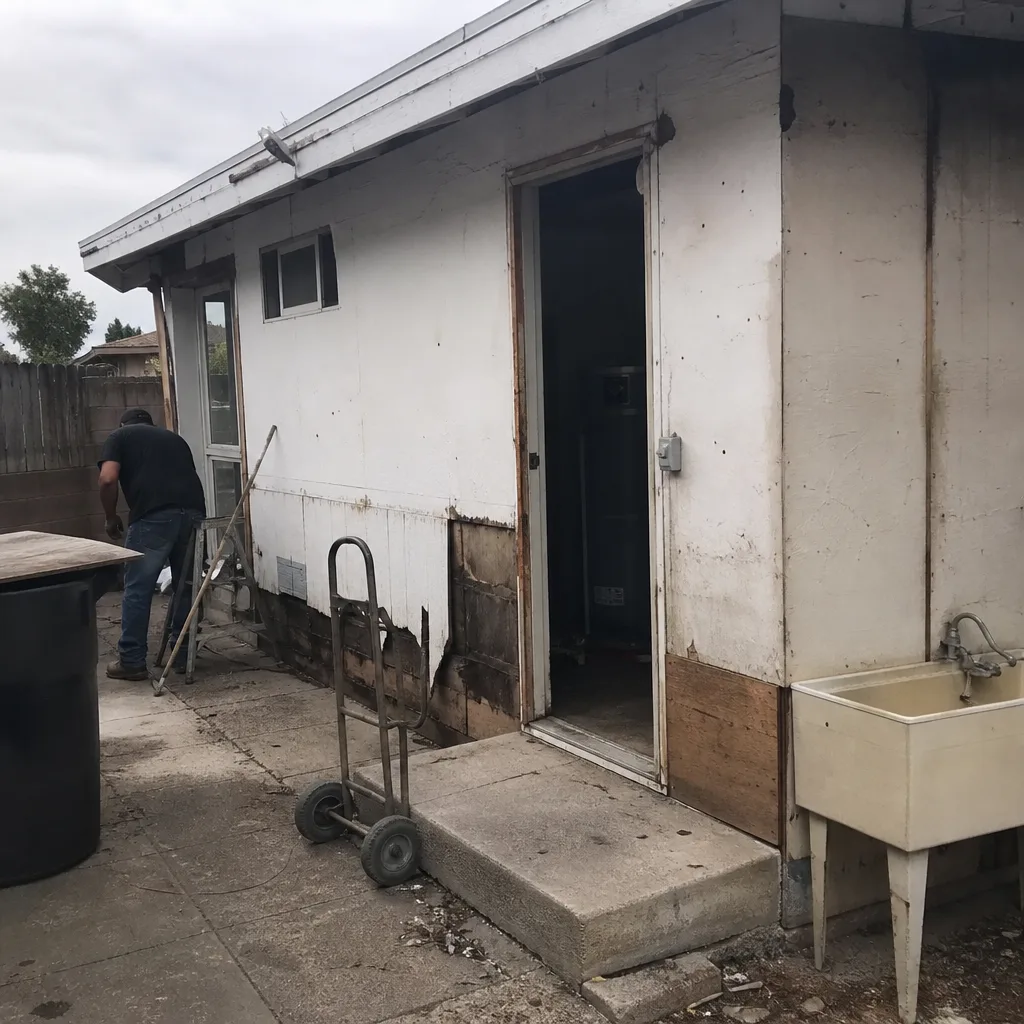 Before
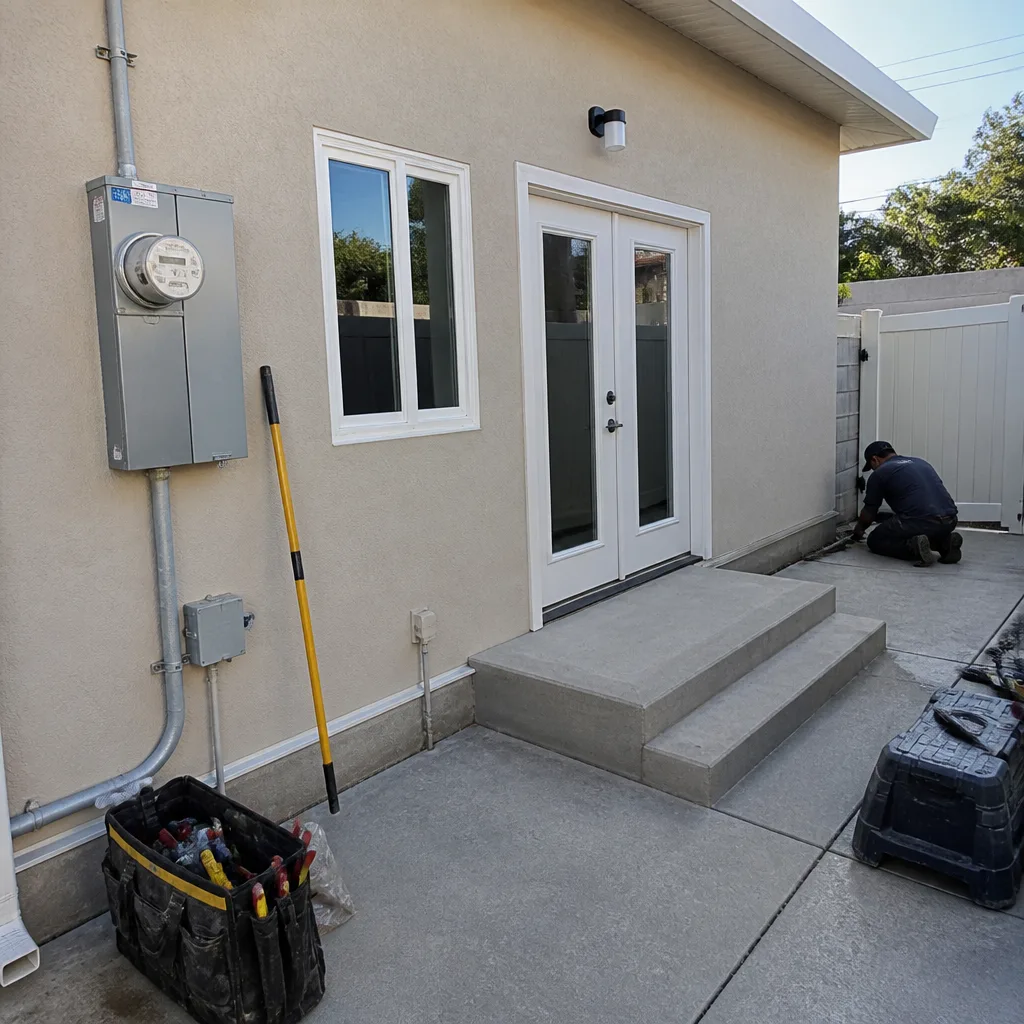 After
AfterAbodu Parts & Our Repair-vs-Replace Approach
We use Abodu OEM-spec fasteners, flashing, and utility connection kits where available. When OEM lead times stall a project - and they sometimes do on older Abodu series - we match or exceed those specs with quality aftermarket components that carry the same wind-load and fire-rating certifications.
For an Abodu, repair is almost always the better call than replacement. The shell is built to last. The real value is in correcting site-specific installation and utility issues: a pier that settled, a flashing that was never integrated with the existing roof, a panel that was undersized from the start. We’ll tell you honestly if a module has taken structural damage that warrants replacement. In ten years of Abodu work, that has been rare. Call (909) 323-1107 and we’ll look at what you have.
Our Abodu Service Process - Step by Step
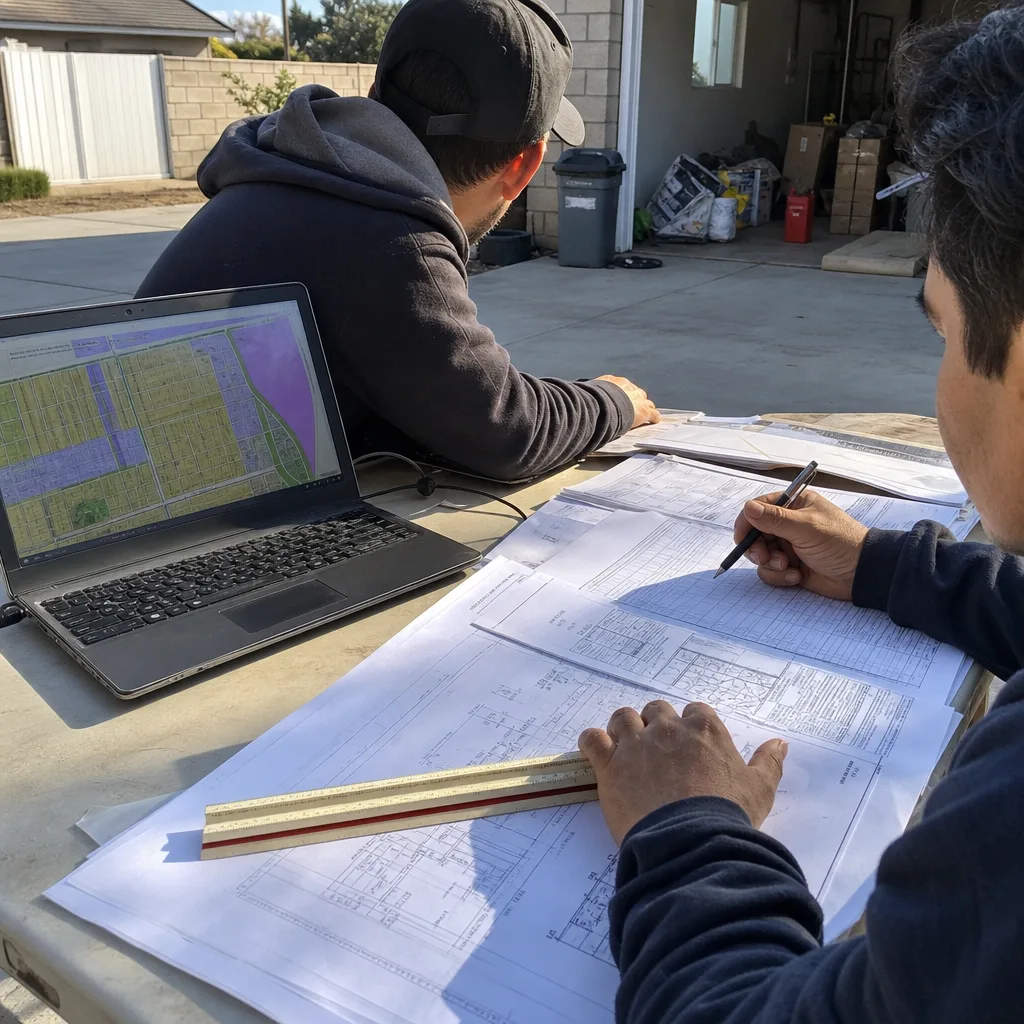
- 1
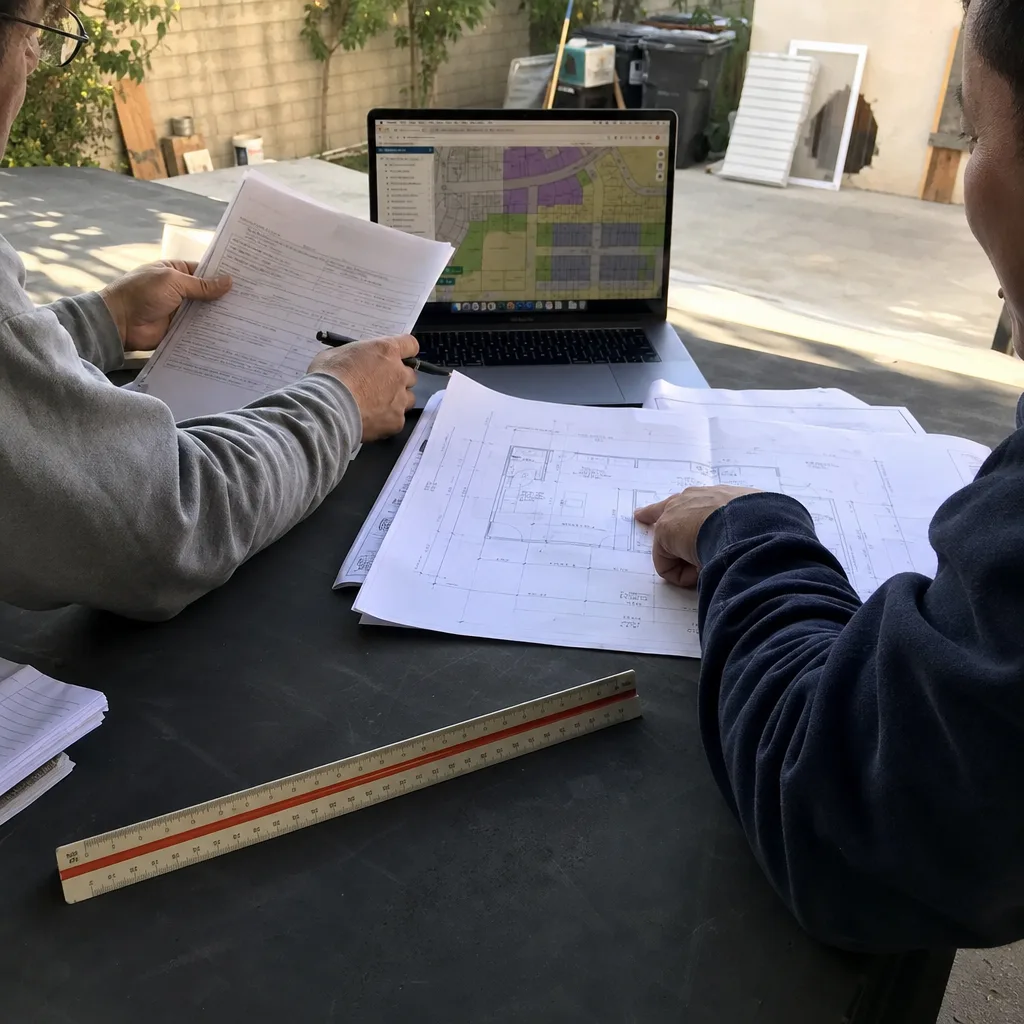
Diagnosis with documentation. We start with a site assessment: level the piers, inspect panel joints and flashing, test electrical load and mini-split performance, and photograph everything. You receive the photo record before we leave. For Chino properties near the airport influence area, we also verify height compliance against CNO obstruction surfaces - a step that has saved more than one project from an FAA informal study delay.
- 2
Repair or install with permit coordination. Our crew executes the fix - whether that’s releveling piers, resealing module joints, upgrading a panel, or preparing a corrected permit package for city resubmittal. Every scope item is tied to a line in the written quote you already approved. No door-side additions.
- 3
Test and verify. We run the mini-split through a full cooling cycle in Chino summer conditions, verify electrical loads at peak draw, and check that all doors and windows operate square after any structural adjustment. If we touched the permit set, we confirm plan-check approval before calling the job complete.
- 4
Warranty in writing. Under our 365-Day Done Right Promise, if the finished work is not built to the permitted drawings, we make it right - in writing, before the project starts. The warranty document names the scope, the date, and the specific Haven Standard clause that applies.
Abodu Products We Service & Install in Chino
We work across Abodu’s full residential line: the Abodu One (one-bedroom prefab), Abodu Two (two-bedroom prefab), Abodu Studio (studio prefab), and Abodu garage conversion / JADU builds. For each, we coordinate site prep, pier or slab foundation, utility trenching and connection, and our ADU Design & Permitting services that Chino or San Bernardino County requires. We stock connection hardware and flashing kits for the current Abodu series locally, and we maintain supplier relationships for older series components. If you’re considering a new Abodu install, we also evaluate whether your Chino lot’s soil conditions, setback lines, and HOA status make a detached unit, garage JADU, or interior conversion the better path.
We Also Service These Brands
Our prefab and modular fluency extends beyond Abodu. We specify and coordinate Cover and Dvele systems within the same single-contract design-build model, and we have direct experience with Mighty Buildings, Boxabl, Plant Prefab, Tuff Shed, and James Hardie modular lines. The advantage is the same for every brand: one contract, one written price, no designer-versus-builder blame gap.
FAQs - Abodu ADU Service in Chino
No. We are an independent Abodu service provider - not authorized, sponsored, or endorsed by Abodu. Our expertise comes from field experience with Abodu installations across Chino and the Inland Empire, not from a factory certification program. This independence means we work for you, not the manufacturer, and our recommendations are based on your site’s conditions and your permit’s requirements.
Not always without local documentation. Abodu’s standard submittal package sometimes lacks the CF-1R form and CALGreen checklist that Chino plan check requires. We complete these documents for your specific address and include them in our permit set before first submittal. Call (909) 323-1107 if you have an Abodu package in hand and want us to review what’s missing.
Yes, if the garage meets basic criteria: sufficient ceiling height, a window for egress, and a foundation that can support residential load. Most Chino garages from the 1980s-2000s tract-home stock qualify with modest modifications. We assess slab thickness, wall framing, and electrical service, then quote the conversion as a single scope - drawings through final inspection - at a written price. Typical garage conversion ADUs in Chino run $85,000-$140,000 all-in, though your specific number depends on existing conditions.
No - and this matters more in Chino than almost anywhere else in the Inland Empire. California Civil Code §4751 explicitly bars HOAs from prohibiting ADUs. Many Chino HOAs still send violation notices, but those notices are not enforceable against a permitted ADU. We handle the HOA correspondence as part of our service, and we document the state law that protects your project. If you’ve already received a violation notice on an Abodu install, call (909) 323-1107 - we have a protocol for this exact situation.
The prefab module delivery and set usually takes one day. Site prep - piers, utility trenching, foundation - runs two to four weeks depending on soil conditions and whether a geotechnical report is required. Permitting adds four to twelve weeks in Chino, longer if the initial submittal lacks Title 24 or CALGreen documentation. Our permit set is designed to avoid the revision cycle that stretches those timelines. For a realistic schedule on your lot, call (909) 323-1107.
We service Abodu units regardless of who handled the original install. The most common post-installation problems we see in Chino - settling piers, moisture at panel joints, electrical overload - trace back to site-specific details that the original installer missed. We diagnose, document with photos, quote in writing, and correct. The 365-Day Done Right Promise applies to our work, not the original install, and we’ll tell you honestly which issues are ours to fix versus pre-existing conditions.
Site assessment and diagnosis starts with a free estimate. Repair work typically ranges from $2,400 for minor pier releveling and sealant replacement to $12,000+ for electrical panel upgrades with full permit coordination. Full Abodu installation, including site prep, module set, utility connection, and permitting, generally runs $180,000-$320,000 depending on series, foundation type, and utility complexity. Every project is quoted with a written price before any work begins - Haven Standard, Clause 1. Call (909) 323-1107 for an exact quote on your Abodu; estimates are free.
Book Your Abodu Service in Chino, CA
Call (909) 323-1107 to schedule your free estimate. A live person answers - no voicemail queue, no callback promise that doesn’t materialize. We’ll give you an honest dollar range on the first call, a written scope before anything is signed, and a documented photo record of everything we find.
Written by Nadia Ellery, Owner at Ellery ADU Studio Chino, serving Chino since 2015.