
Boxabl Site Prep & Utilities: The Chino Owner’s Guide
Boxabl site prep and utility connections in Chino typically run $8,500-$18,000 for a standard Casita install, depending on whether we’re tying into existing electrical and sewer or running new lines from the street. We stock the common Boxabl-compatible connection kits and utility hardware, and most Chino projects move to permit within two weeks of the site walk. Most owners realize something’s off when the Boxabl arrives and the pad isn’t graded to the 4-inch tolerance Boxabl specifies, or when the 50-amp electrical stub and 3-inch sewer lateral the sales brochure mentioned don’t match what their backyard actually has.
Which Boxabl Models This Applies To
Boxabl’s current lineup centers on the Casita, a 375-square-foot module that ships flat and folds on site. The site prep and utility package we specify covers Casita units with serial prefixes BXC-20 through BXC-24, which covers every Boxabl we’ve handled in Chino and the Inland Empire since 2022. Earlier BXC-18 units used a slightly narrower foundation template, 19 feet 6 inches versus the current 19 feet 8 inches. That two-inch difference matters when you’re pouring a stem-wall foundation in Chino’s expansive clay soil, where the city requires a 12-inch minimum footing depth per the Chino Municipal Code Chapter 16.28.
We specify OEM Boxabl connection hardware where the unit warranty depends on it, specifically the proprietary weatherproof utility chase gaskets and the seismic isolation pads. For the electrical subpanel, sewer cleanout, and water pressure regulator, we use commercial-grade aftermarket equivalents rated for Inland Empire conditions, typically Uponor or Viega for plumbing and Siemens or Square D for electrical. The document either says it or it doesn’t, and Boxabl’s install manual is explicit about which connections must use their hardware to maintain the structural warranty.
To identify your unit, check the data plate on the interior utility wall, left of the electrical panel. The model prefix, manufacture date, and the “Site Prep Spec Revision” number tell us exactly which foundation detail and utility rough-in to quote.
Signs Your Boxabl Site Prep & Utilities Is Failing
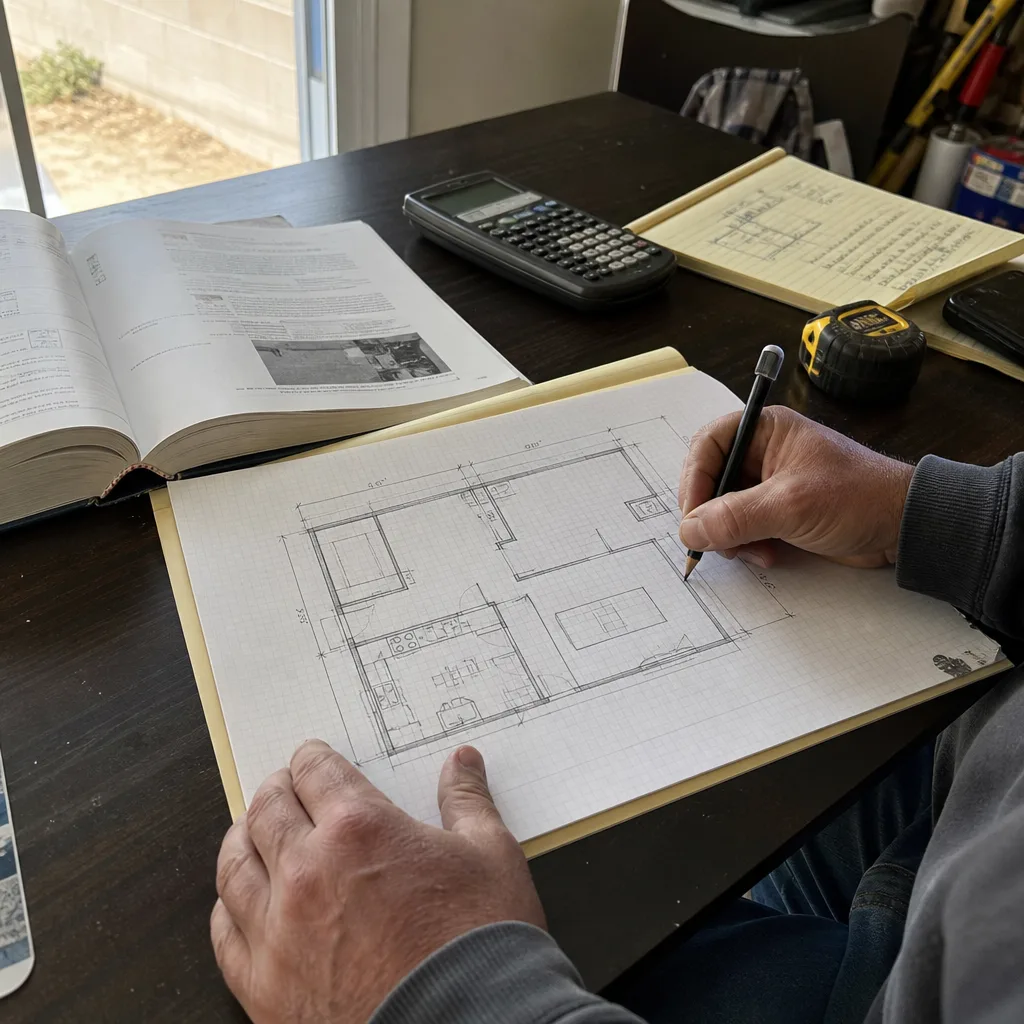
- Foundation cracks or pad settlement visible at the perimeter. Chino’s clay soil expands and contracts with seasonal moisture swings. If the pad wasn’t engineered with a proper gravel cap and drainage slope, you’ll see differential settlement within the first two winters. We check for this on every site walk near Ayala Park and the older neighborhoods south of the 60.
- Water pooling beneath the unit after rain. Boxabl specifies a 2 percent minimum slope away from all sides. Pooling means the pad was poured flat or the surrounding grade wasn’t tied back properly. Standing water voids the Boxabl floor warranty and accelerates corrosion at the steel frame base plates.
- Electrical panel throwing intermittent ground faults. This usually traces to the underground feeder conduit, where settling or improper compaction cracked the PVC and let moisture into the conductors. Chino’s summer heat cycles make this worse, expanding and contracting the conduit joints until the seal fails.
- Sewer backup or slow drains despite clear interior lines. The 3-inch lateral from the Boxabl to the city main may have been backpitched during original install, or the cleanout wasn’t set at the proper 18-inch finish grade. We’ve found both issues on Chino projects where the original contractor skipped the laser-level verification.
- Gas pressure drop during appliance use (if propane or natural gas is connected). Undersized regulators or improper pipe sizing for the 30-foot run from meter to unit are common. Boxabl’s manual calls for 1-inch minimum black iron or CSST for natural gas runs over 25 feet, a spec we’ve seen ignored on DIY installs.
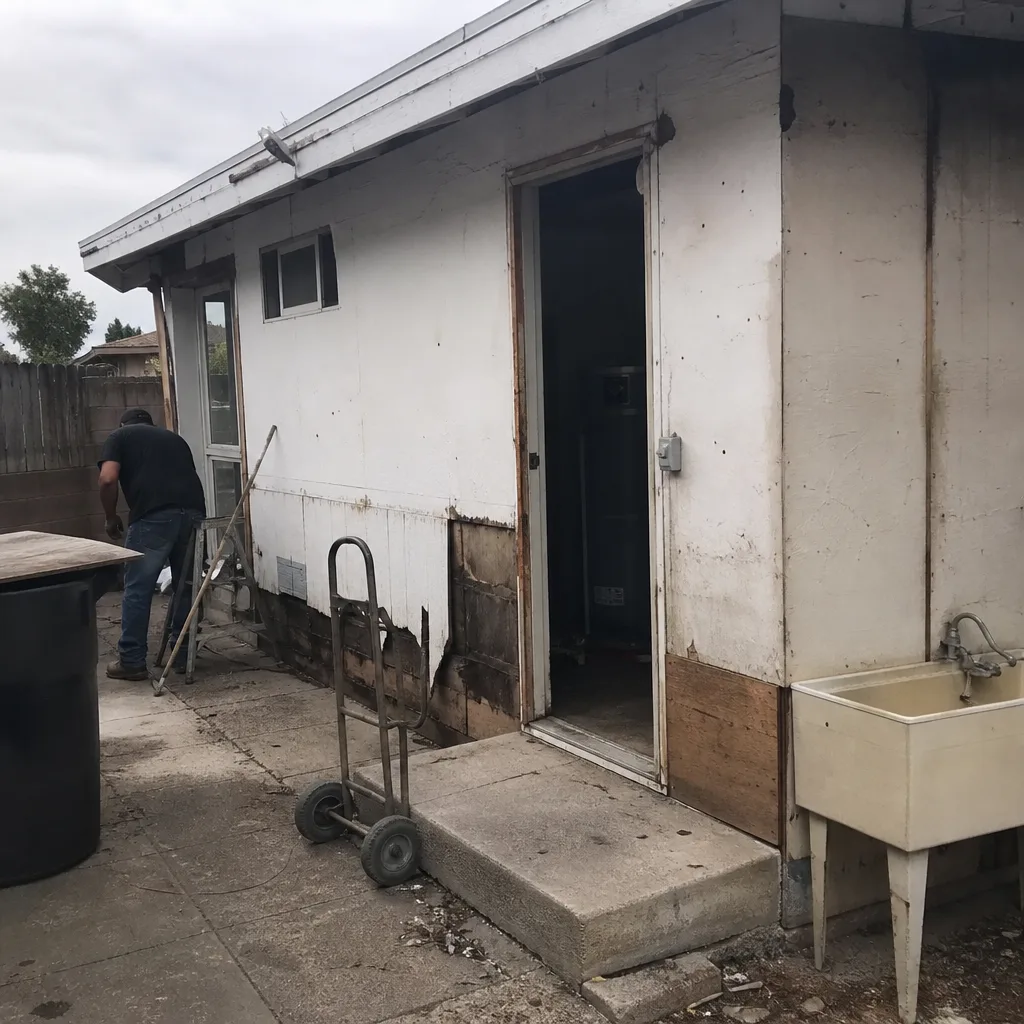 Before
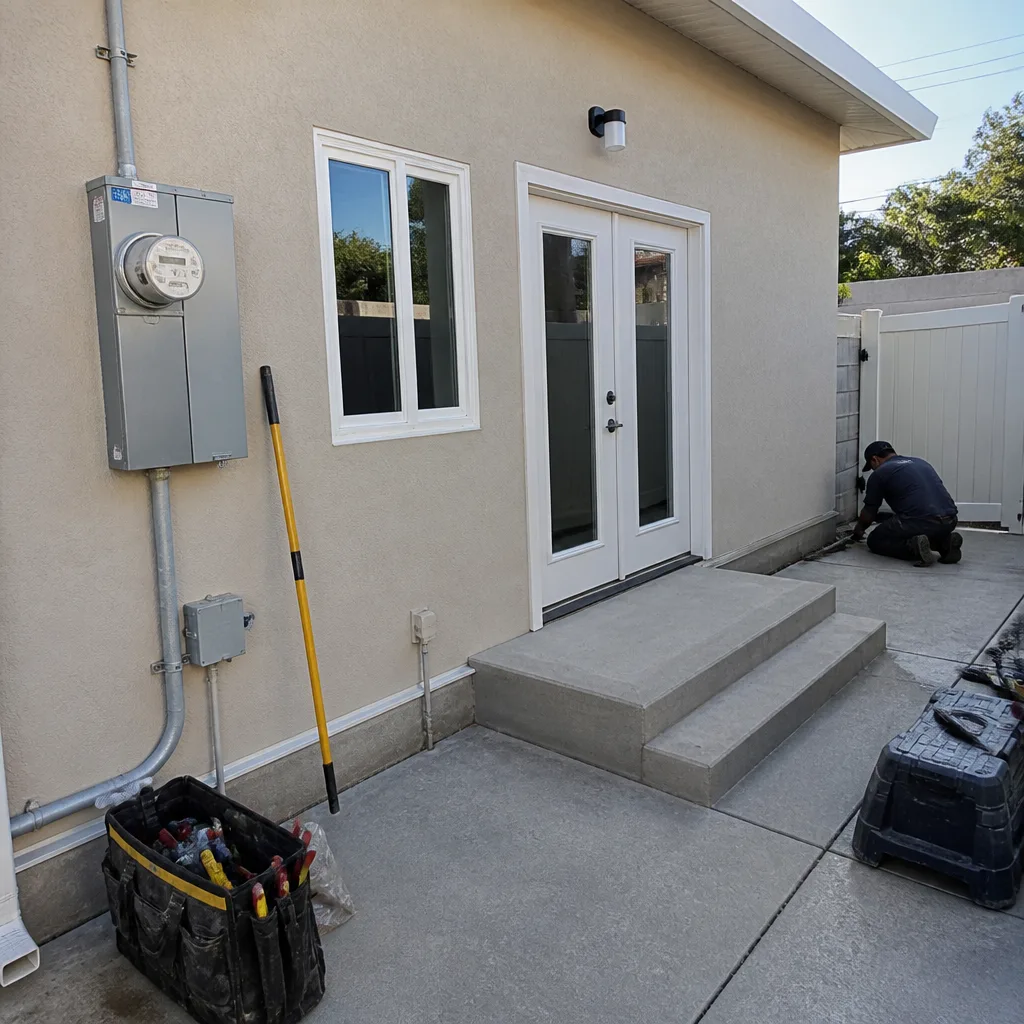 After
AfterReplacement Cost & What’s Included
For a full site prep and utility redo on a Boxabl Casita in Chino, our installed range is $12,000-$22,000. That covers demolition of the failed pad, engineered fill and compaction, a new 4-inch reinforced slab or stem-wall foundation per Chino’s current code, and complete utility rough-in: 200-amp service lateral with 50-amp subpanel stub, 3-inch sewer with cleanout, 1-inch water with pressure regulator and backflow preventer, plus gas if needed. Projects at the lower end tie into existing mains with minimal trenching; the upper end involves new service runs from the street, which triggers Southern California Edison or Chino Public Works coordination.
Partial repairs, a pad regrade with drainage correction or a single utility line replacement, typically fall between $3,500 and $8,500. Every quote is itemized: materials, labor, permit fees, and any required soils or structural engineering. Under Haven Standard Clause 1, that written price is locked before work starts. No change orders unless you add scope. Our workmanship on site prep carries the 365-Day Done Right Promise, and we document every phase with dated photos you receive at final inspection.
DIY or Call Us?
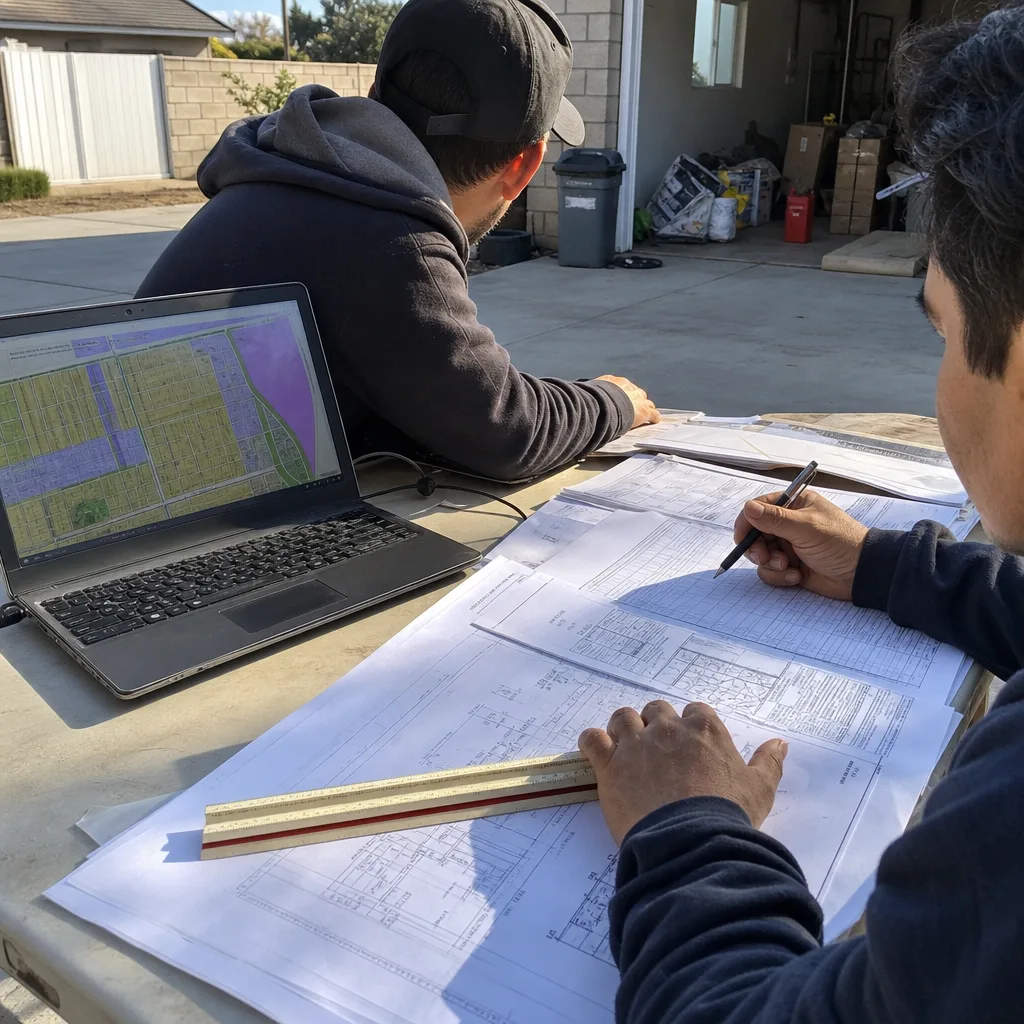
There’s a short list an owner can safely verify. Check that the pad slope drains away from the unit using a 4-foot level. Confirm the electrical panel labeling matches the subpanel amperage Boxabl shipped. Look for standing water after a storm. These observations help, but they don’t fix anything.
What goes wrong in DIY: trenching without utility locates, pouring concrete over uncompacted fill, pulling electrical permits without a C-10 license, and sizing gas lines from a web calculator instead of the Gas Pipe Sizing Tables in the California Plumbing Code. The dangerous ones are electrical and gas. A 200-amp residential service can kill you, and a gas leak in a confined crawl space is not a learning opportunity. We are an independent service provider, not affiliated with Boxabl, and we carry the C-10 and C-36 licenses Chino requires for this work. If you’re unsure, call (909) 323-1107. We’ll look at what you have and give you an honest read on whether it’s a weekend project or a permit job.
FAQs
A properly engineered pad and utility rough-in should last 30-50 years in Chino’s climate, though clay soil movement means you’ll want to check perimeter drainage every few years. The utility components themselves, pressure regulators and backflow preventers, typically need replacement at 15-20 years. Call (909) 323-1107 for an exact quote on your specific setup - estimates are free.
Partial repair is possible if the failure is isolated: a cracked sewer lateral can be spot-replaced, or a low spot in the pad can be mud-jacked. If the pad is out of level by more than Boxabl’s 1/4-inch tolerance or multiple utilities are failing, full replacement is more cost-effective than chasing symptoms. We assess this on every site walk and tell you which path makes sense.
From permit approval to final inspection, typically 3-4 weeks for a standard Chino Casita site. Demolition and rough grading take 3-5 days, concrete cure is 7 days minimum per Chino’s inspection schedule, and utility tie-ins run another 5-7 days with SCE and city coordination. We build that timeline into your written scope before you sign.
We stock the common connection hardware, seismic pads, and utility rough-in materials for Casita units on our Chino warehouse truck. Proprietary Boxabl gaskets and chase components we order direct with 3-5 day lead time. If your unit is down and you need confirmation on what’s in stock today, call (909) 323-1107 and we’ll check against your serial number.
Written by Nadia Ellery, Owner, Ellery ADU Studio Chino at Ellery ADU Studio Chino, serving Chino and nearby areas.