
Cover Garage Conversion ADU: The Chino Owner’s Guide
We stock and install Cover-compatible components for garage conversion ADUs across Chino, with installed replacement work typically running $2,800-$4,600 depending on the subsystem and access conditions. Most Cover-specific parts are on our truck or available within 24 hours through our prefab supply chain. You’ll usually know something’s wrong when the unit’s climate control short-cycles, the integrated electrical panel throws repeated breakers, or the pre-finished wall panels show moisture staining at the base - signs that the sealed subsystem you bought as a kit has developed a point failure.
Which Cover Models This Applies To
Cover’s garage conversion ADU line has shipped in three distinct series since 2020, and the part you need depends on which generation sits on your slab. The Series 1 units (2020-2022) used a 100-amp subpanel with Siemens breakers and a single-zone mini-split housing; Series 2 (2022-2024) moved to 125-amp panels with integrated load management and dual-zone HVAC; Series 3 (2024-present) uses a 150-amp service with smart-panel readiness. The model label is inside the utility chase door, upper left corner - a 6-digit code starting with “CV1,” “CV2,” or “CV3.”
Here’s the compatibility gotcha: Cover’s wall-panel fastening system changed between Series 1 and 2. The cam-lock brackets look identical but the Series 2 bracket has a 3/16-inch deeper bite. We learned this the hard way on a swap in Chino’s College Park neighborhood where the aftermarket bracket seated flush but didn’t engage the panel lock, creating a 1/8-inch thermal gap that showed up on infrared during our documented photo record. We stock both OEM Cover brackets and a verified equivalent from our prefab partner network. For electrical subcomponents, we typically specify Siemens OEM - the panel warranty stays intact, and the breaker trip curves match what Cover’s load calculations assumed.
Signs Your Cover Garage Conversion ADU Is Failing
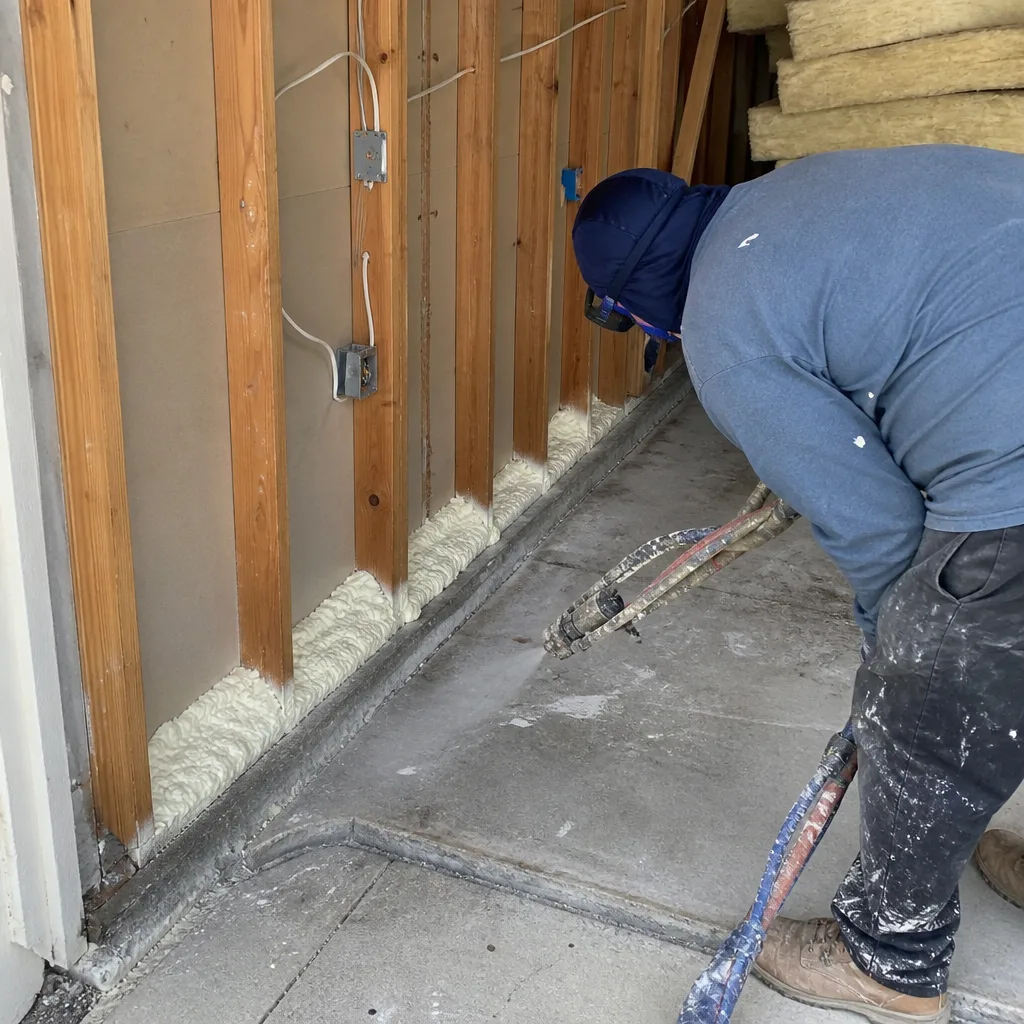
- Climate control short-cycling or uneven temperatures. The mini-split compressor kicks on, runs 90 seconds, shuts off, and repeats. In Chino’s inland heat - 95°F-plus July afternoons are standard - this usually means the refrigerant line set has developed a pinhole leak where it passes through the firewall grommet, or the condensate drain is blocked and the safety switch is doing its job.
- Repeated breaker trips on the subpanel, especially under load. If the breaker trips when the water heater cycles or the cooktop pulls full amperage, the issue is often a loose lug on the bus bar from thermal expansion through Chino’s 40°F winter lows to summer highs. The connection loosens, resistance builds, the breaker senses the heat, and it trips before the wire insulation degrades.
- Moisture staining at the base of wall panels, particularly the north-facing wall. Cover’s panels are sealed at the factory, but the sill gasket compresses over time. In Chino, where the Santa Ana winds drive rain hard against that north wall in January storms, a compressed gasket lets water wick behind the panel. The OSB sheathing swells before you see it, which is why we check with a moisture meter on every service call.
- Doors or windows that bind or won’t latch. The steel frame modules settle slightly as the garage slab does its seasonal dance. Chino’s expansive clay soils - the same ones that crack driveways on Cypress Avenue every three years - shift the module 1/4-inch or more. The fix is usually shimming the frame, not replacing the door, but it has to be done before the latch mechanism tears out the striker plate.
- Smart panel or load manager showing connectivity loss or phantom loads. Series 2 and 3 units have a communication module that bridges to your home’s main panel. Firmware updates over cellular can fail in Chino’s dead zones - the area around Pipeline Avenue east of the 71 is notorious - leaving the module in a boot loop that reads as a hardware failure.
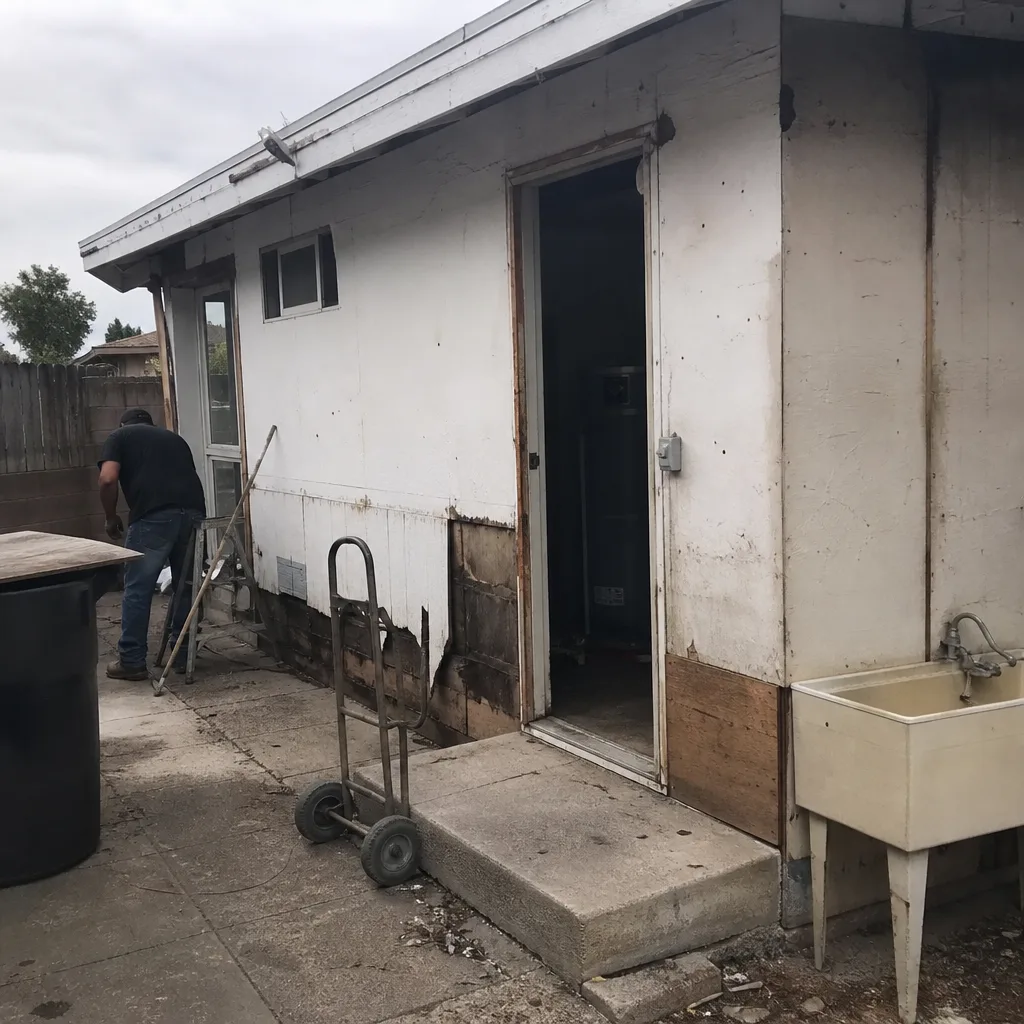 Before
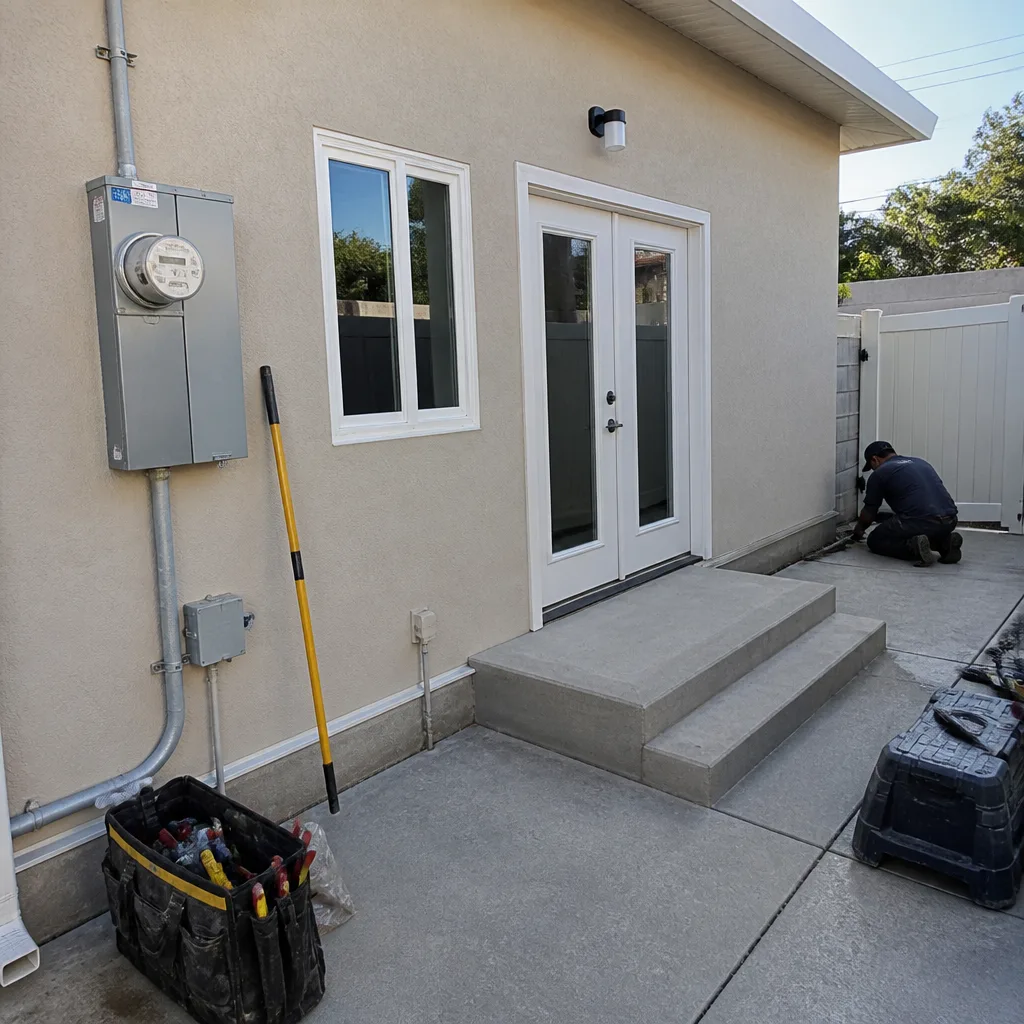 After
AfterReplacement Cost & What’s Included
Here’s what we charge in Chino, all-in, with parts, labor, and documentation:
| Component/System | Typical Range | What’s Included |
|---|---|---|
| Mini-split replacement (single-zone) | $2,800-$3,400 | OEM-spec unit, line-set pressure test, refrigerant charge, permit amendment if needed |
| Subpanel / breaker service | $1,800-$2,600 | Siemens OEM breakers, bus-bar inspection, torque verification, photo documentation |
| Wall panel gasket / seal repair | $2,200-$4,600 | Panel removal, substrate inspection, new gasket, reseal, moisture-meter verification |
| Frame shim and door realignment | $800-$1,400 | Laser level check, shim installation, latch/striker replacement if damaged |
| Communication module replacement | $1,200-$1,800 | Module, firmware flash, cellular signal test, homeowner app re-pair |
The wide range on wall-panel work reflects access: a unit with built-in cabinetry on that wall means disassembly and reassembly; an open studio layout takes half the time. Under Haven Standard Clause 1, the written price you receive before work starts locks the scope - no door-side upsells. Every visit produces a documented photo record, and the 365-Day Done Right Promise covers the workmanship. The document either says it or it doesn’t.
DIY or Call Us?
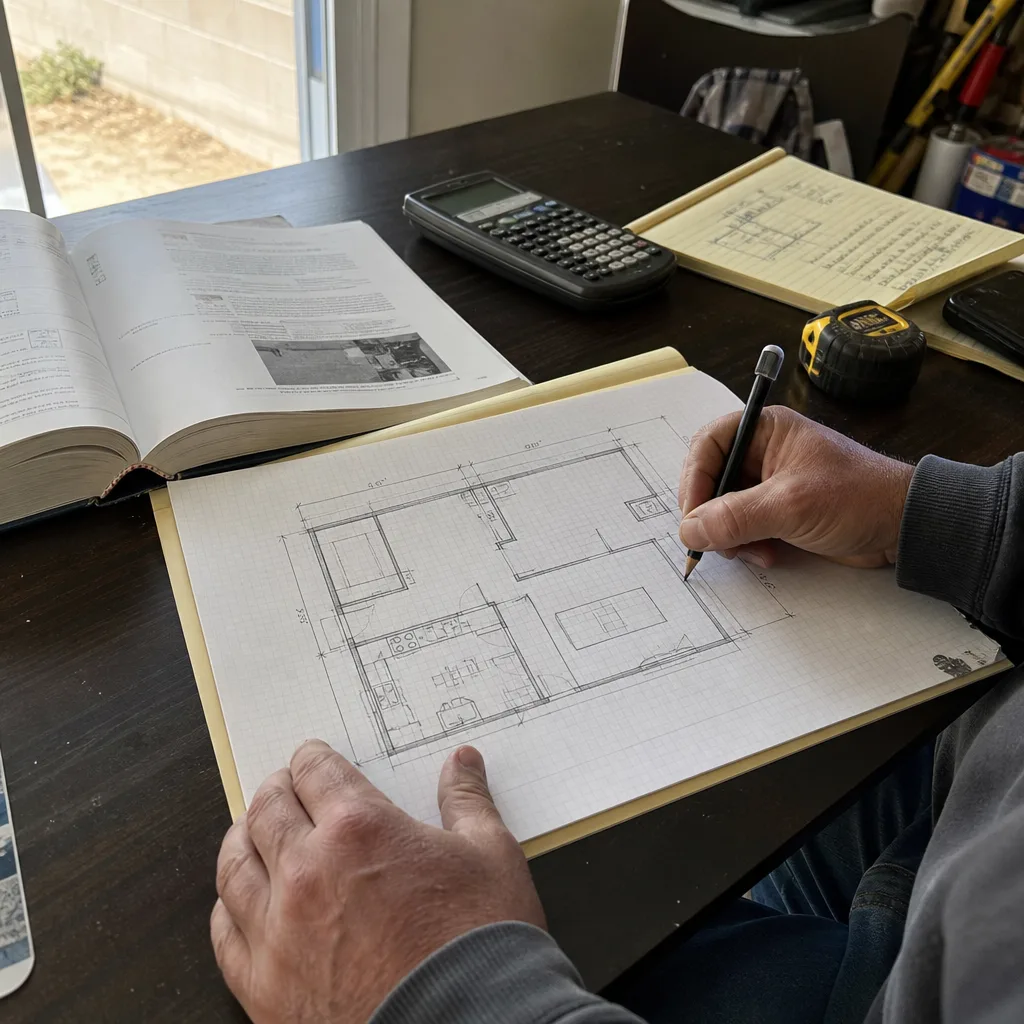
There’s a clear line here, and it’s not about your skill level - it’s about what failing will cost you.
What you can safely check: the model label in the utility chase, whether the breaker is fully seated (turn it fully off, then on), and whether the condensate drain outlet - usually a 3/4-inch PVC stub on the module’s rear - is blocked by leaves or spider webs. Take photos of anything you find. That’s it.
What you should not touch: anything refrigerant (federal EPA 608 requirement), anything in the subpanel beyond the main breaker (arc flash hazard at 125 amps), or any wall panel you intend to reseal yourself (the vapor barrier continuity is what keeps your warranty valid with Cover’s support team). We’ve been called to three Chino jobs where a homeowner’s gasket replacement looked fine but trapped moisture behind the panel, turning a $2,200 repair into a $6,800 wall rebuild. Call (909) 323-1107 and we’ll give you a written price before any work starts - no charge for the diagnosis, and you’ll have documentation of what we found, not what we felt.
FAQs
In Chino’s climate - hot, dry summers with Santa Ana wind events and mild, occasionally wet winters - the HVAC components typically run 12-15 years, the electrical subpanel 25-30 years, and the wall-panel seals 8-12 years before gasket replacement is needed. The sun load on south-facing modules accelerates seal aging by roughly 20 percent. Call (909) 323-1107 for an exact assessment of your unit’s condition - estimates are free.
Electrical lugs can be re-torqued, and communication modules can sometimes be firmware-recovered. Refrigerant leaks in the line set can be located and patched, though we typically recommend replacement if the leak is in the buried portion. Wall-panel gaskets and compressed sill seals cannot be repaired - the material has taken a set, and any patch fails within two seasons. We quote both options when repair is viable, per Haven Standard Clause 3.
A mini-split swap is one day. Subpanel work is four to six hours, assuming no upstream issues in the main house panel. Wall-panel gasket replacement is two to three days: removal, substrate dry-out, new gasket installation, and verification. We coordinate Chino’s inspection schedule as part of our single-contract service, so you’re not managing the permit amendment yourself.
We carry Series 2 and 3 breakers, communication modules, and gasket sets on every Chino-area truck. Series 1 components are available next-day through our prefab supply chain - we specify and coordinate Cover, Abodu, Dvele, and other modular systems under the same contract. If your unit is down hard, we’ll source the part while we diagnose, so we’re not waiting on freight once we know what failed.
Written by Nadia Ellery, Owner, Ellery ADU Studio Chino at Ellery ADU Studio Chino, serving Chino and nearby areas.