
James Hardie Site Prep & Utilities: The Chino Owner’s Guide
James Hardie site prep and utility rough-in components for ADU projects in Chino typically run $4,200-$8,600 installed, depending on trench depth, existing main-panel capacity, and whether your lot slopes toward or away from the street. We stock Hardie-compatible moisture barriers, galvanized steel flashing, and utility-connection hardware on our Chino trucks, and most site-prep replacements or upgrades can start within 48 hours of permit release. Most owners discover these systems need attention when their James Hardie siding install crew stops work because the WRB (weather-resistant barrier) behind the panels has failed at the utility penetration points, or when the city inspector flags improper electrical/sewer stub depth before framing can begin.
Which James Hardie Models This Applies To
James Hardie does not manufacture ADU shells directly, but their HardiePanel and HardiePlank siding systems are specified on nearly every prefab and stick-built ADU we coordinate in Chino, including modular units from Abodu, Cover, and Dvele that we also specify. The critical compatibility point is between James Hardie’s 0.312-inch-thick fiber-cement panels and the site-prep layer beneath them: the moisture barrier, flashing tape, and utility-penetration seals must meet Hardie’s own 1/4-inch minimum clearance spec from grade, or the 30-year product warranty voids.
To identify your exact system, check the stamp on the existing WRB (often Tyvek HomeWrap or HardieWrap) for the mil thickness, and measure from finished grade to the bottom of your siding course. Hardie requires 6 inches minimum; we regularly find Chino installations at 4-5 inches where the original grading settled or a patio was added later. The OEM HardieWrap Pro-Flashing is the safe choice for warranty preservation, though Vycor Plus or Grace Vycor are code-compliant aftermarket alternatives we use when the client is not pursuing Hardie’s registered warranty. The document either says it or it doesn’t.
Signs Your James Hardie Site Prep & Utilities Is Failing
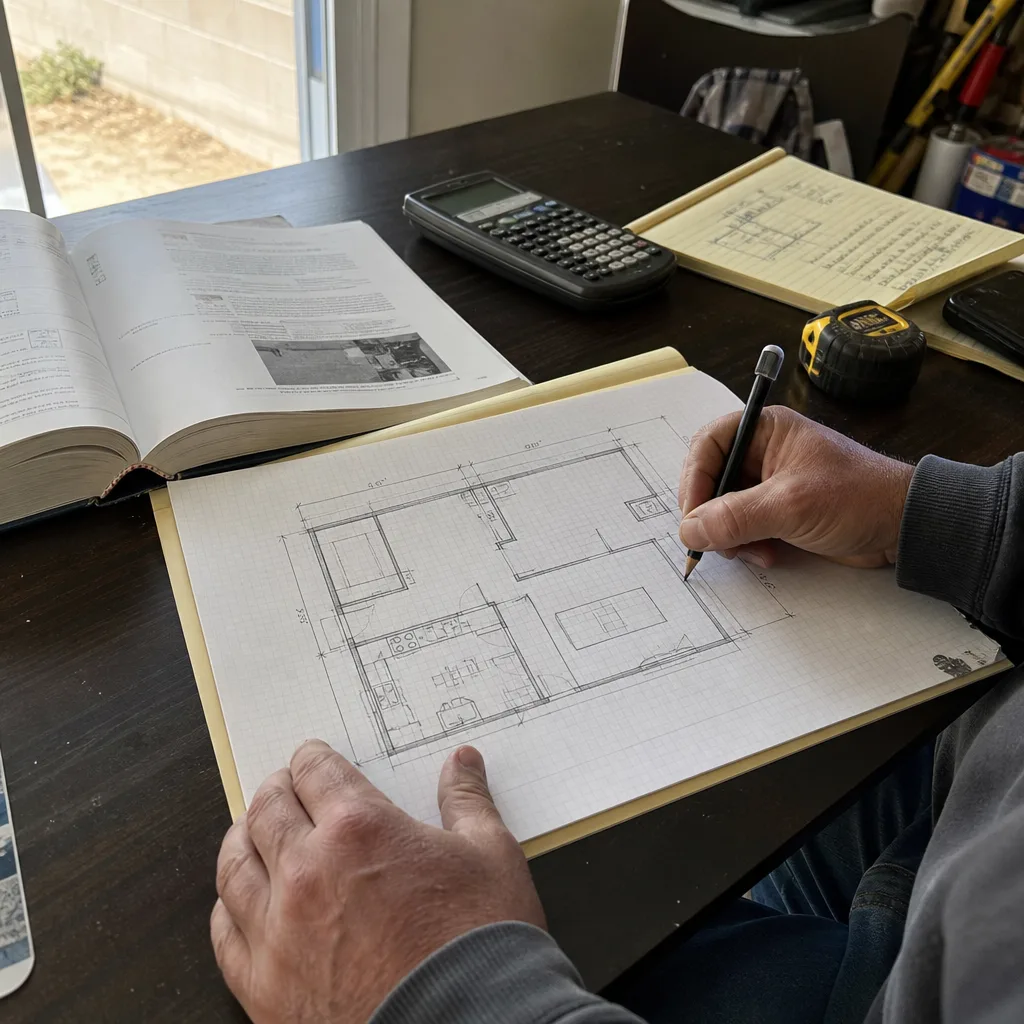
- Soft or stained drywall inside, especially near electrical outlets on exterior walls. This usually means the WRB at the utility penetration was not taped with compatible butyl flashing, or the Hardie panel was fastened through the barrier without a sealant washer. Water follows the fastener shaft inward. We see this most often on Chino’s 1980s-1990s ranch conversions where the original T-111 siding was replaced with Hardie but the rough-ins were not touched.
- Visible rust streaks running down from horizontal joints in the siding. Hardie’s ColorPlus finish does not rust; the streaks are from galvanized Z-flashing that was installed without end dams or was damaged during utility trenching. The flashing is a site-prep element, not a siding element, and its failure destroys the wall assembly from behind.
- City of Chino inspector rejects your sewer lateral or electrical stub at rough inspection. This is not a parts failure in the traditional sense, but a site-prep sequencing failure: the utility rough-in was not deep enough, not properly bedded, or not photographed before backfill. Our crews document every trench with a photo record before the inspector arrives, per Haven Standard Clause 3.
- Siding panels cracking or delaminating within 10 years of install. Hardie fiber cement is dimensionally stable; premature failure almost always traces to moisture trapped behind the panel due to a missing or punctured drainage plane. In Chino’s combination of hot, dry summers and occasional heavy winter rains, that trapped moisture expands and contracts dramatically.
- Musty smell in a newly converted garage ADU, especially after rain. The concrete slab was likely poured without a vapor barrier, or the existing barrier was compromised when plumbing was trenched through it. James Hardie siding cannot compensate for slab moisture; the site-prep layer has to handle it, or the panels wick water at the sill.
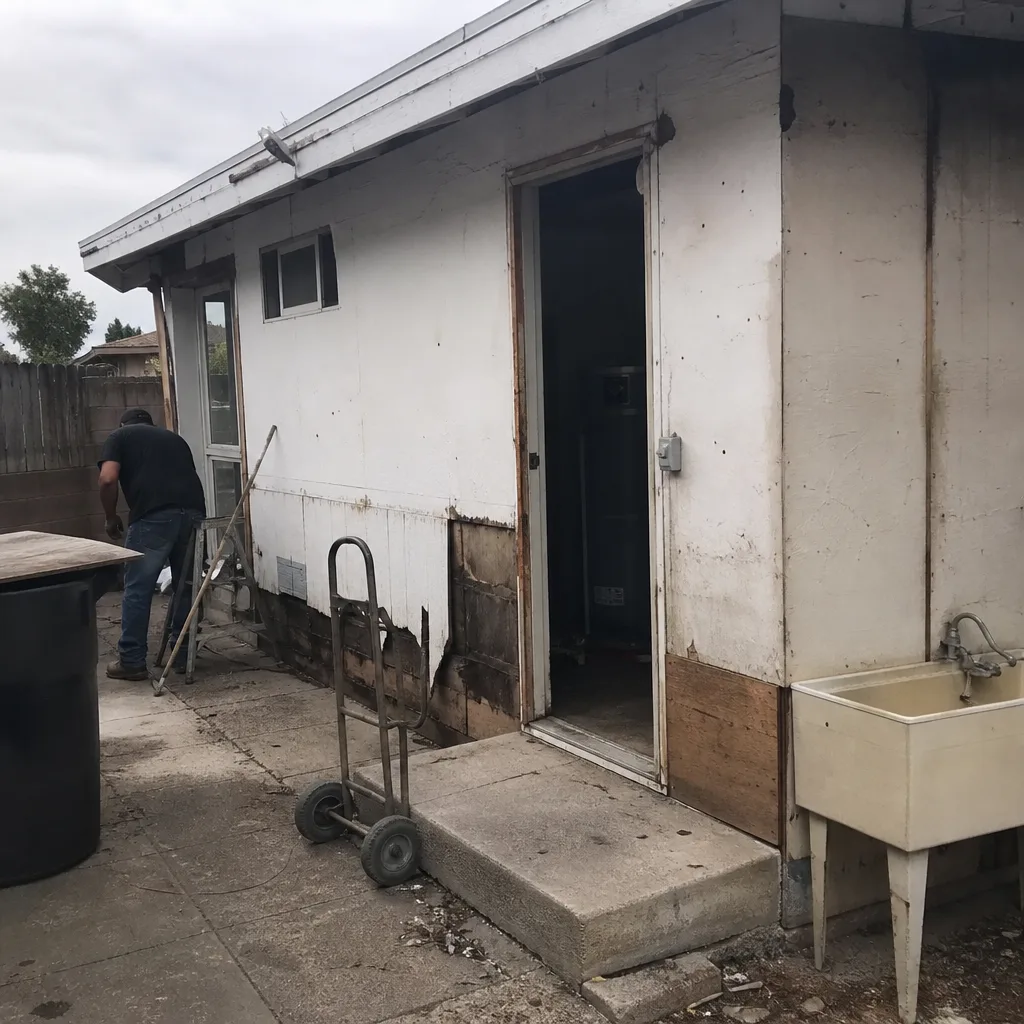 Before
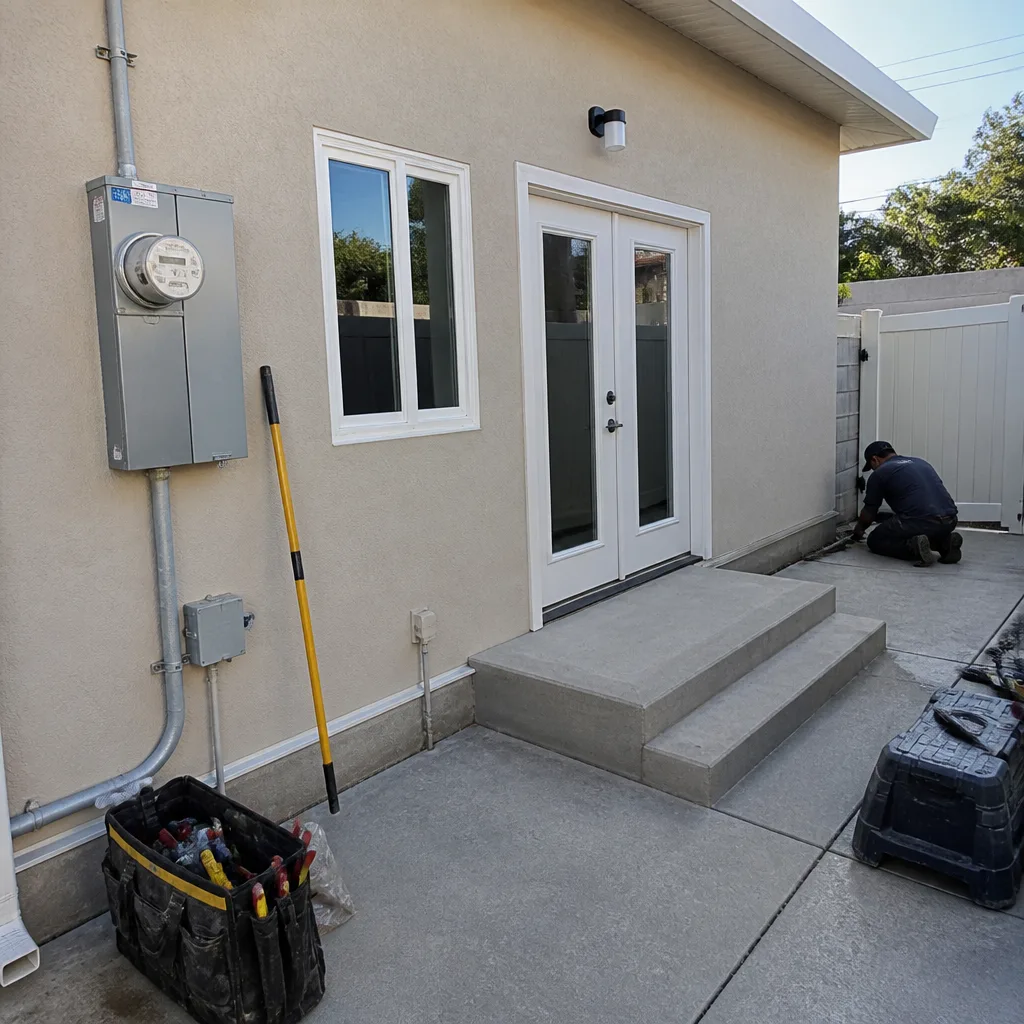 After
AfterReplacement Cost & What’s Included
For Chino ADU projects, James Hardie-compatible site prep and utility rough-in work runs $4,200-$8,600 all-in, with most falling in the $5,400-$6,800 range for a standard 400-600 square foot unit. The low end covers WRB replacement on a garage conversion with existing panel capacity; the high end includes trenching a new sewer lateral from the main to a detached unit on a sloped lot near the Chino Hills border, plus a 200-amp panel upgrade.
That price includes the permit set revision (if the original drawings did not account for the corrected depth or routing), materials, labor, inspection scheduling, and the documented photo record you receive at each phase. Under Haven Standard Clause 1, the written price is locked before work starts; under Clause 5, no scope creep is permitted without a written change order signed by both parties. Our 365-Day Done Right Promise covers the workmanship on every penetration seal and flashing detail.
DIY or Call Us?
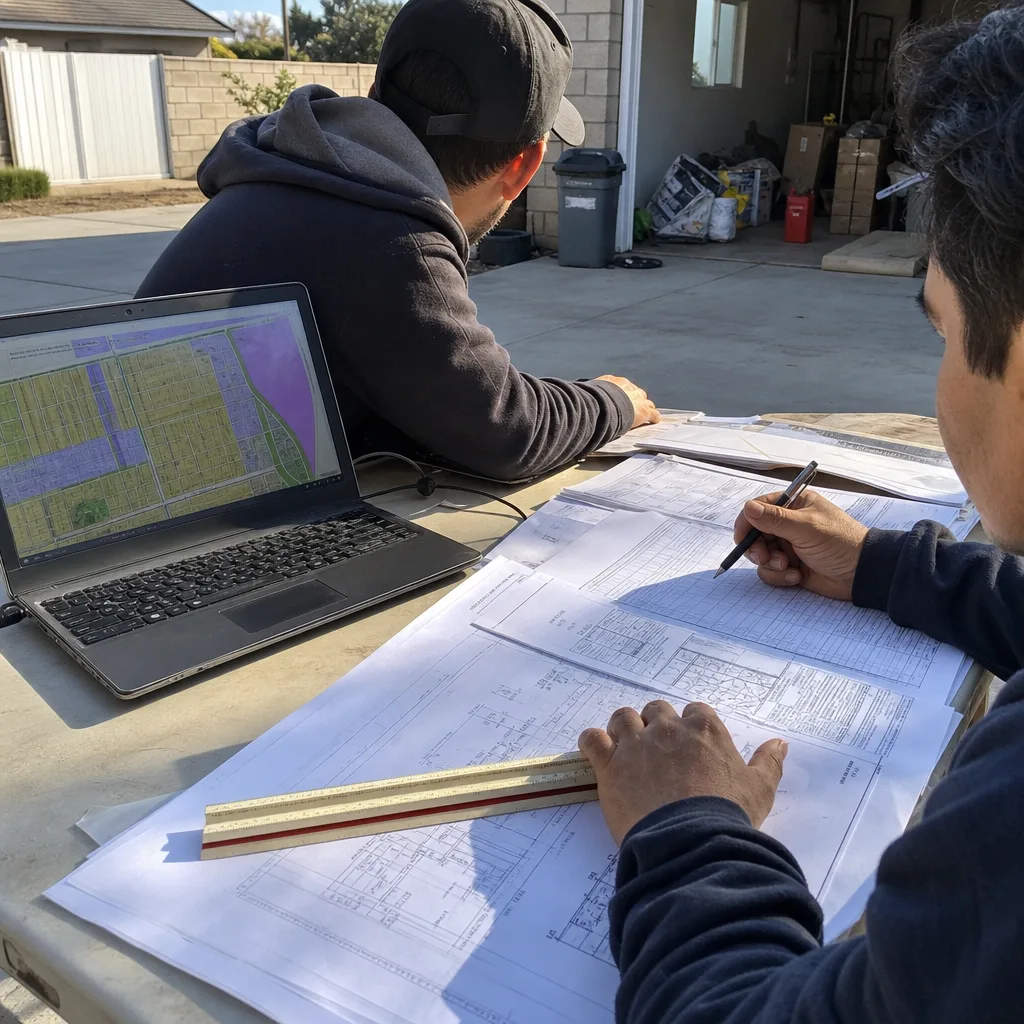
There is safe owner homework and there is work that requires a licensed crew. You can verify your siding-to-grade clearance with a tape measure, photograph any stains or rust streaks for reference, and pull your original permit from the City of Chino’s online portal to see what WRB was specified. What you should not do: remove Hardie panels to inspect behind them without understanding the fastener pattern (improper reinstallation voids the warranty), trench within 18 inches of a gas line without a USA North 811 locate, or attempt to reset a failed sewer lateral without verifying slope with a laser level.
The cost of a single re-inspection fee in Chino, plus the delay to your certificate of occupancy, usually exceeds the labor you might save. Call (909) 323-1107 for a free estimate with a written scope.
FAQs
How long does James Hardie site prep last in Chino’s climate?
Properly installed WRB and flashing should last 20-30 years, but we see premature failure at 8-12 years when the original install skipped Hardie’s required 1-inch overlap at horizontal seams or used non-compatible sealant. Chino’s Santa Ana wind events drive rain sideways into joints that would stay dry in calmer climates. Call (909) 323-1107 for an exact quote on your condition - estimates are free.
Can the site prep be repaired, or does it all have to come off?
Localized repair is possible if the damage is limited to one or two utility penetrations and the surrounding WRB is intact and properly lapped. If the WRB is brittle, torn in multiple locations, or was never installed as a continuous plane, partial repair creates more problems than it solves. We assess this on every site visit and tell you which path the documentation supports.
How long does a full site-prep replacement take?
Most Hardie site-prep replacements on Chino ADUs take 2-4 working days, plus inspection scheduling. Trenching for new utilities adds 1-2 days depending on soil conditions and USA North clearance timing. We do not start work until the permit is in hand and the written price is signed, so your timeline is predictable from day one.
Do you stock James Hardie-compatible parts on your Chino trucks?
We carry HardieWrap Pro-Flashing, butyl tape, galvanized Z-flashing with end dams, and common utility-penetration seals on every Chino crew vehicle. Specialty items like deep-wall electrical boxes for 1-inch Hardie panel thickness or custom-milled fascia boards are ordered with a 3-5 day lead time. We confirm stock status during your estimate visit so there are no surprises once work begins.
Written by Nadia Ellery, Owner, Ellery ADU Studio Chino at Ellery ADU Studio Chino, serving Chino and nearby areas.