
Last updated September 25, 2026
ADU Permits, Codes & Inspections in CA: What You Need to Know
AB 68 was supposed to eliminate local obstruction of ADU permits. It did - for some standards. Fire sprinkler requirements, lot-line utility easements, and school impact fees survived the preemption intact, which is why the same ADU design costs $40,000 more to permit in some California cities than others. In Chino, we’ve seen permit timelines swing from 8 weeks to 8 months for nearly identical garage conversion ADUs, depending entirely on whether the owner understood which rules are negotiable and which are not before submitting plans. This guide maps the statutory sections that matter, the inspection hold points that stop work, and the formal processes that protect your timeline, and you can explore The Complete Guide to ADU in Chino for deeper context.
Quick Answer
California ADU permits are governed by Gov. Code §65852.2, which preempts local size, parking, and setback rules but explicitly preserves local authority over fire safety, utility standards, and design guidelines. Most Chino ADU projects require 3-4 inspection hold points (foundation, framing, mechanical/electrical/plumbing, final), with total permit fees typically running $8,000-$18,000 depending on utility connection charges and whether impact fee exemptions are properly invoked during plan check.
Table of Contents
- What California Actually Preempts (and What It Doesn’t)
- Chino’s Layered Code: Local Rules on Top of State Law
- The California ADU Permit Process Step by Step
- Inspection Hold Points: Where Work Can Stop
- Impact Fee Exemptions and How to Invoke Them
- Owner-Occupancy Repeal and Existing Deed Restrictions
- The 60-Day Permit Mandate and Escalation Process
- Prefab and Modular ADUs: Permitting Differences
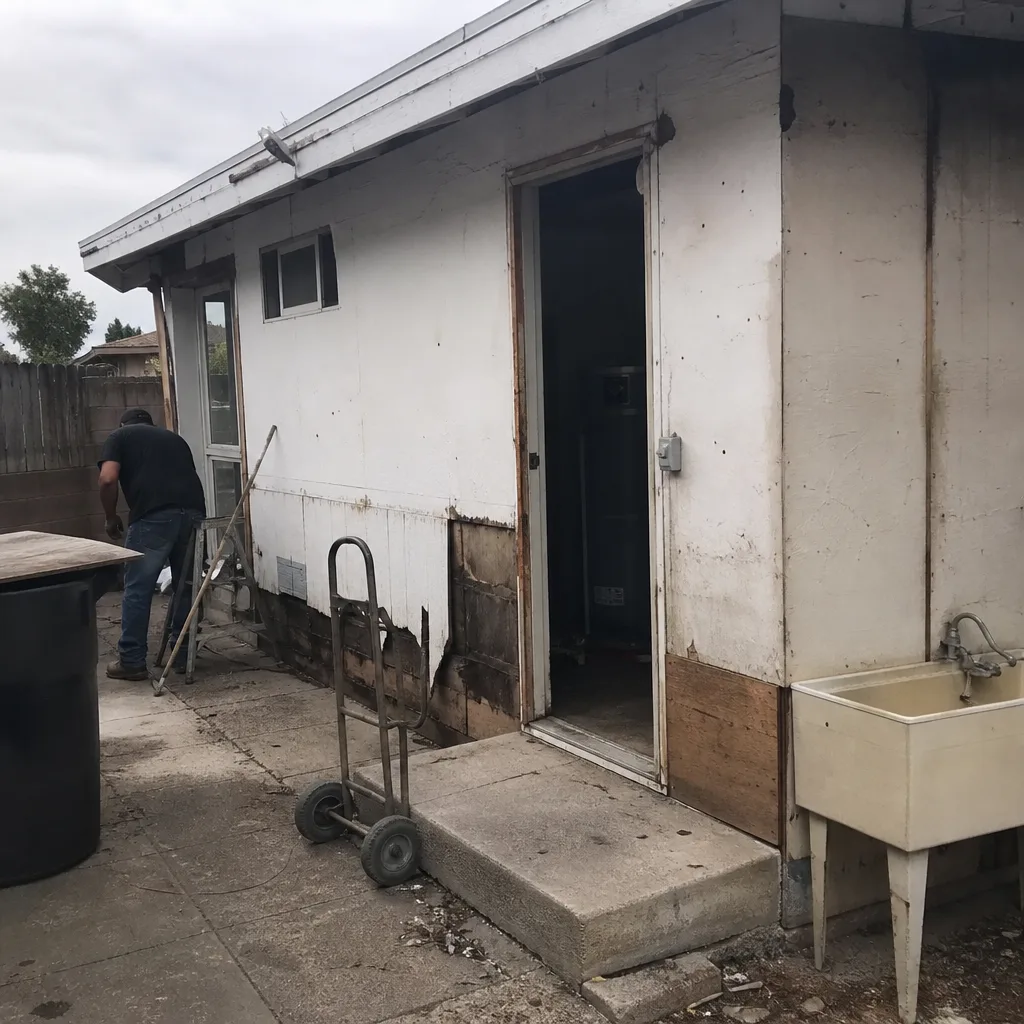 Before
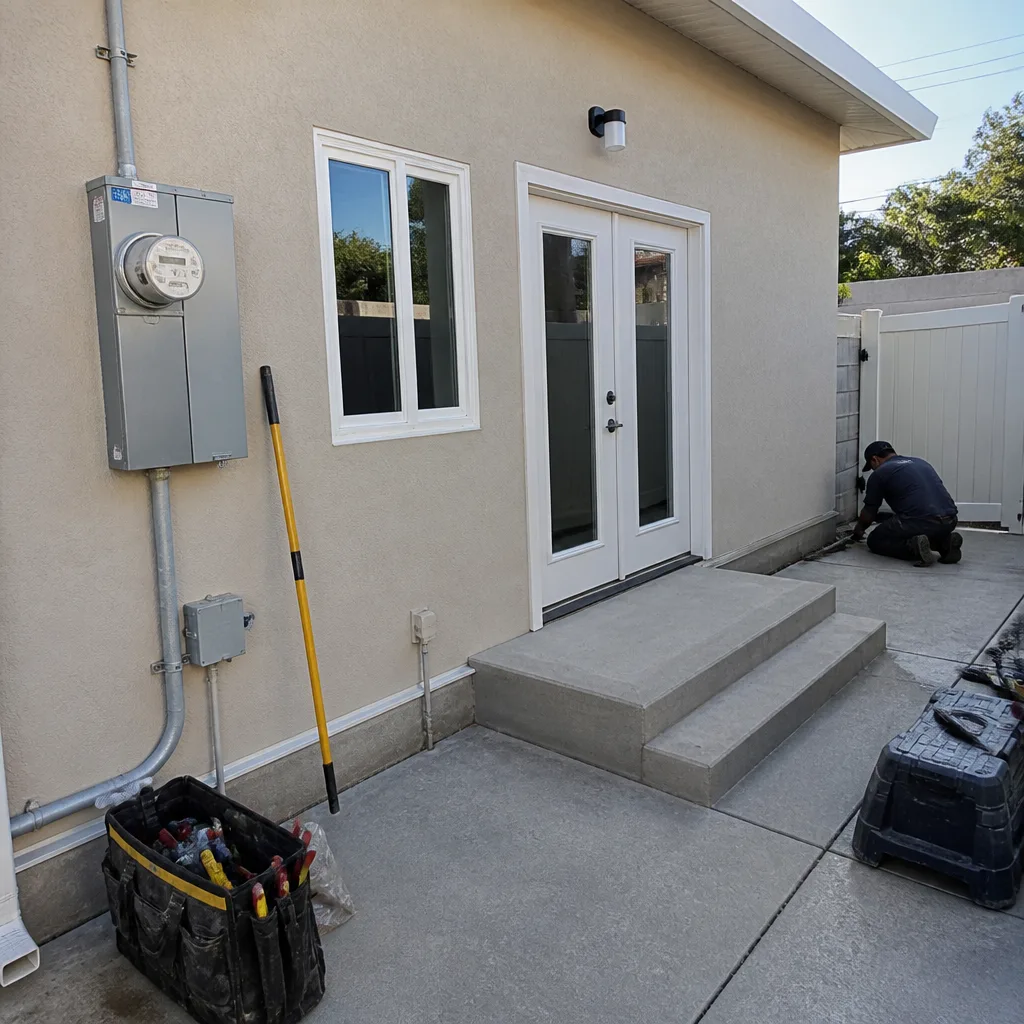 After
AfterWhat California Actually Preempts (and What It Doesn’t)
Gov. Code §65852.2 is the statute every ADU owner needs to read, or at least understand. The legislature has amended it seven times since 2016, each time expanding what cities cannot say no to. But the preemption is not total, and treating it as if it were is the single most expensive mistake we correct in Chino.
What the state preempts (cities cannot require more restrictive standards):
- Minimum lot size for ADU construction - eliminated statewide
- Front setback requirements for garage conversions and existing structures
- Off-street parking for the ADU itself (though replacement parking for converted garages has specific rules)
- Maximum ADU size: up to 850 sq ft for a one-bedroom, 1,000 sq ft for two-bedroom, regardless of lot size
- Height limits of 16 feet for detached ADUs, with exceptions for attached and certain zoning districts
- Owner-occupancy requirements (repealed effective January 1, 2020, with some exceptions)
What the state explicitly preserves (local authority remains intact):
- Fire and life safety standards, including sprinkler requirements in specific zones (Gov. Code §65852.2(a)(1)(D)(xi))
- Utility connection fees and capacity standards, including sewer and water hookup charges
- Design standards that do not “unreasonably increase the cost” - a vague but litigated standard
- Coastal zone requirements and historic district overlays
- Building code compliance, including energy code (Title 24) and green building standards
The carve-out for fire standards is where Chino projects most commonly hit unexpected costs. The city sits in San Bernardino County’s fire protection district, and certain zones require residential fire sprinkler systems for any new dwelling unit, including ADUs. This is not a Chino invention; it’s a local fire authority standard that survived preemption. We’ve seen owners budget $85,000 for a garage conversion, then face a $12,000-$18,000 sprinkler addition when the fire marshal reviews the plans - a scenario covered in our ADU Warning Signs: A Chino Homeowner’s Reference Guide. The fix is simple: confirm fire district requirements before the permit set is finalized, not after plan check.
The utility connection fee preservation matters equally. California Water Service, which serves much of Chino, charges capacity fees based on meter size and anticipated demand. For a 750 sq ft ADU with kitchen and laundry, that’s typically a 1-inch meter upgrade running $6,500-$9,800 in connection fees alone. The state cannot preempt this; it’s a utility tariff, not a zoning ordinance. We build these numbers into every written quote under Haven Standard Clause 1, so the owner sees the full picture before signing.
Chino’s Layered Code: Local Rules on Top of State Law
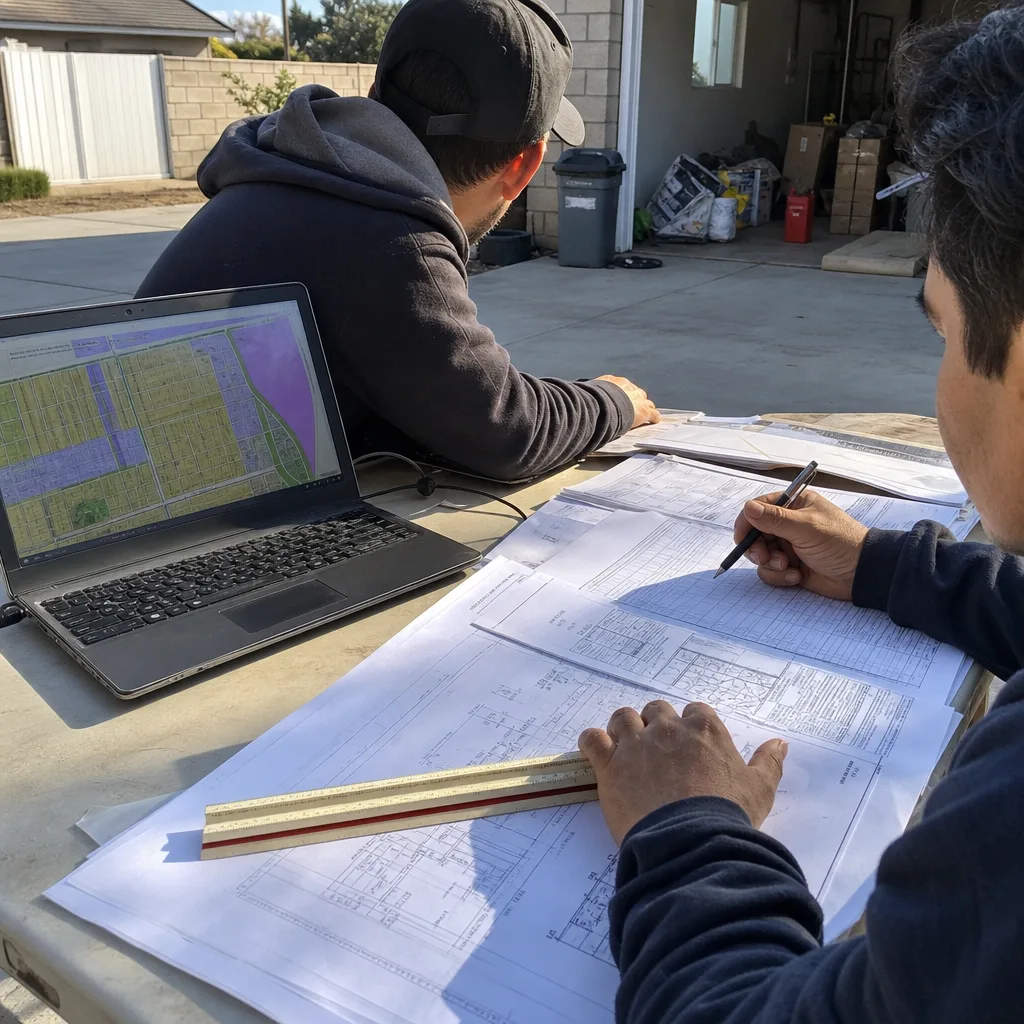
Chino Municipal Code Chapter 19.64 implements the state ADU law with specific local provisions. The city does not obstruct permits, but it does layer requirements that the state explicitly allows. Understanding the interaction prevents the correction-loop delays that stretch projects across multiple seasons.
Chino-specific provisions that affect most projects:
Design Review for Detached ADUs: Chino requires architectural review for detached ADUs in certain planned districts, not for size or height (those are preempted) but for materials, roof pitch, and color palette compatibility. The standard is “not unreasonably increasing the cost,” and in practice, Chino’s design guidelines add $2,000-$5,000 in material upgrades compared to purely utilitarian construction. A standing-seam metal roof specified for a new detached ADU in Chino may cost $4,200 more than comp shingles, but it satisfies the design guideline in one submission rather than two.
Utility Easement Setbacks: Chino preserves standard utility easement setbacks of 5-10 feet from rear and side lot lines, depending on the recorded plat. The state cannot preempt this; it’s a property right, not a zoning standard. For narrow lots in the College Park area or older neighborhoods south of Riverside Drive, this often pushes a detached ADU toward the front yard or requires a zero-lot-line variance. We flag this in preliminary site analysis before any design hours are billed.
School Impact Fees: Chino Valley Unified School District charges Level II school facility fees for ADUs over 500 sq ft, currently $3.48 per square foot. For a 750 sq ft ADU, that’s $2,610. The exemption for ADUs under 750 sq ft exists in statute but must be formally invoked - more on this in the impact fee section below.
Historic District Overlay: The Old Town Chino historic district imposes additional design standards and a separate Historic Preservation Commission review. This is not preemption-eligible; it’s a local historic resource protection explicitly preserved in Gov. Code §65852.2(a)(1)(D)(xii). Timeline adds 4-6 weeks.
Chino’s climate matters for code compliance too. The city sits in Climate Zone 10 for Title 24 energy compliance, with cooling degree days that push insulation and HVAC requirements higher than coastal Zone 3. A mini-split system that passes in Santa Monica may need upsizing for Chino’s 95°F summer peaks. We specify equipment based on Manual J load calculations using Chino’s specific design temperatures, not generic California tables.
The California ADU Permit Process Step by Step
The permit process follows a sequence that looks uniform statewide but varies in duration based on local plan check capacity and how complete the initial submittal is. In Chino, we’ve tracked our projects through this sequence 900+ times since 2015. Here’s what actually happens.
- Pre-application site analysis. We verify zoning, easements, utility capacity, and fire district before any design. This takes 3-5 business days and produces a written feasibility memo with flagged issues. Under Haven Standard Clause 3, this memo becomes part of the project record.
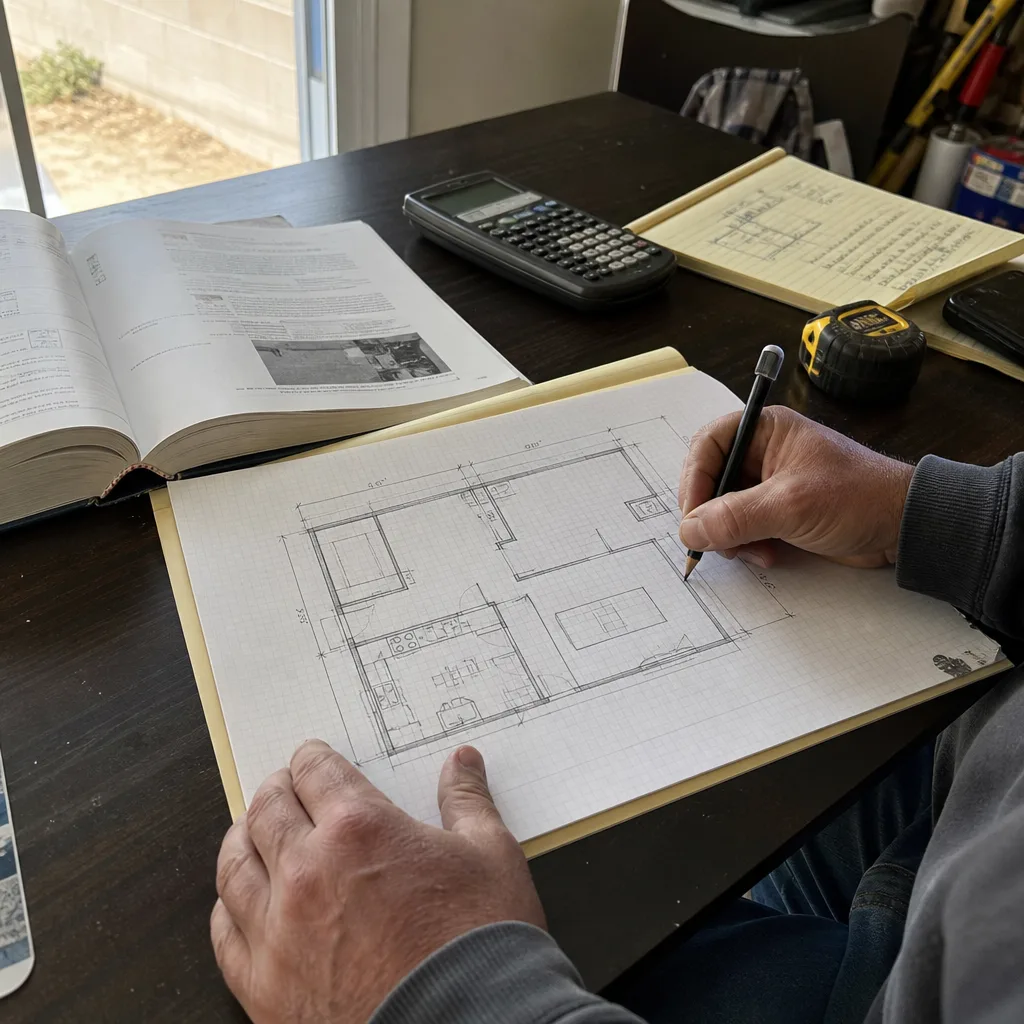
- Design and permit set preparation. The permit set includes architectural plans, structural calculations, Title 24 energy compliance documentation, and for Chino, any required fire sprinkler hydraulic calculations. For a garage conversion, this typically runs 4-6 weeks; for a new detached ADU, 8-12 weeks depending on structural complexity. ADU Design & Permitting in Chino is our core service - the drawings and the permit are a single deliverable, not separate contracts.
- Plan check submittal. Chino accepts digital submittal through its ProjectDox portal. The city charges plan check fees at submission: roughly 65% of estimated building permit fees. For a $120,000 construction value ADU, that’s approximately $2,800-$3,400 in plan check fees due upfront.
- First plan check review. Chino aims for 10-15 business days for first review, but capacity varies. Corrections, when they occur, typically involve: fire sprinkler trigger zones, Title 24 compliance documentation, or utility connection verification. A complete permit set with these items pre-addressed typically passes first review.
- Correction response and resubmittal. If corrections are required, the applicant has 180 days to respond before the application expires. We respond within 5 business days; the delay is almost always on the city’s side for re-review, not ours for correction.
- Permit issuance. Upon approval, remaining permit fees are due. Chino issues the permit within 2-3 business days of payment. Construction may begin upon permit issuance and required notifications.
The total timeline from feasibility memo to permit in hand: 10-14 weeks for garage conversions in Chino, 14-20 weeks for new detached ADUs, assuming no major corrections. The variance is almost always in plan check duration, not design time.
Our written price covers the full sequence: design, permit set, plan check response, and permit issuance. Under Haven Standard Clause 1, the price is fixed before any work starts. If plan check requires a third review due to city error, we absorb that cost; if we missed a required sheet, we absorb that too. The owner never sees a change order for design or permitting.
Inspection Hold Points: Where Work Can Stop
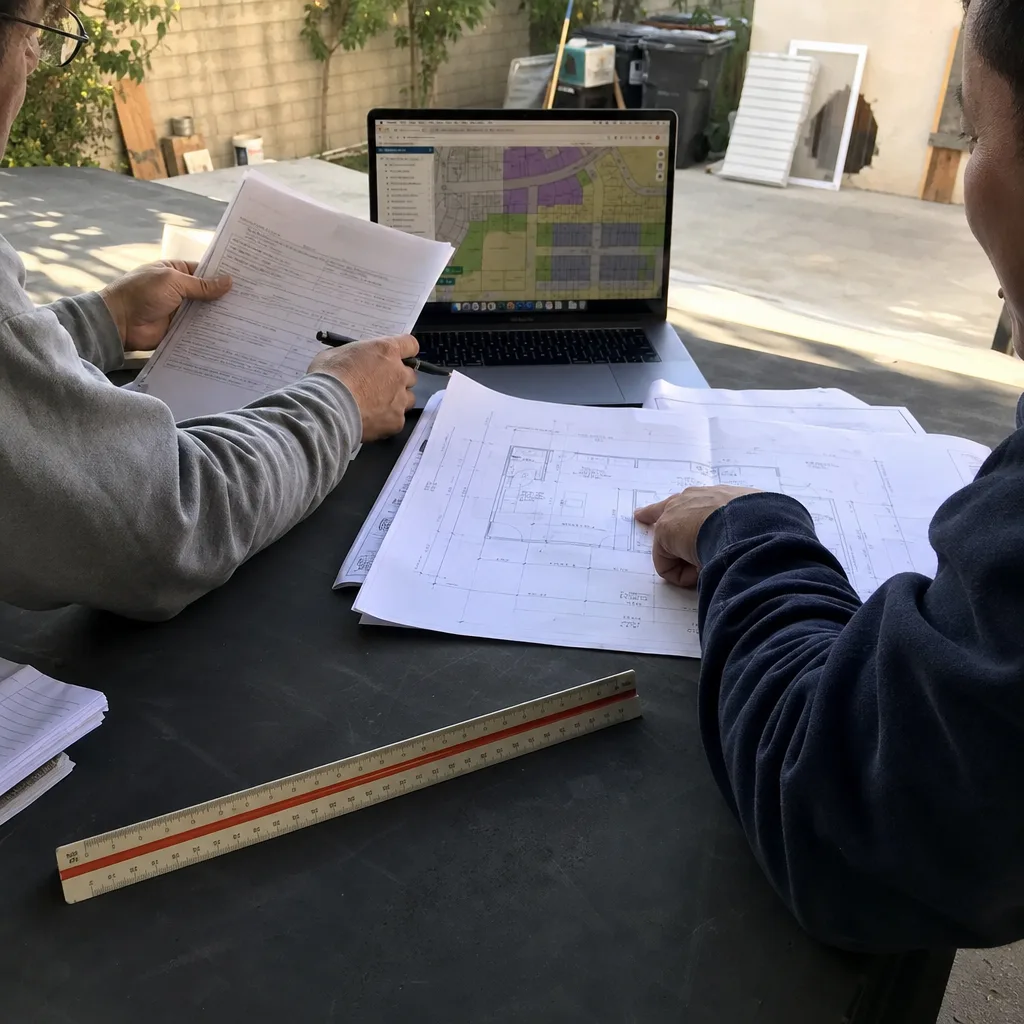
California Building Code requires specific inspections at defined construction stages. In Chino, the inspector can stop work at any of these hold points without issuing a formal correction notice if the work deviates from the approved plans or if required documentation is not on-site. Understanding what must be present prevents costly work stoppages.
The standard Chino ADU inspection sequence:
- Foundation/Under-slab inspection. For new detached ADUs, this occurs after excavation, formwork, and rebar placement, before concrete pour. The inspector verifies depth, rebar size and spacing, and vapor barrier placement. For garage conversions, this is typically skipped unless the existing slab is being modified or a new foundation is added for a second story. Common stoppage reason: rebar chair height incorrect or vapor barrier missing at plumbing penetrations.
- Framing/rough structural inspection. Occurs after framing is complete but before insulation and drywall. The inspector verifies lumber grades, fastener schedules, shear wall nailing patterns, and hold-down installation. For Chino’s seismic zone (Zone D, moderate to high seismic hazard), hold-downs at shear wall boundaries are scrutinized closely. Common stoppage reason: incorrect hold-down bolt depth or missing Simpson Strong-Tie documentation on-site.
- Mechanical, electrical, plumbing (MEP) rough inspection. Three separate inspectors may visit, or one combined inspection if scheduling aligns. All MEP systems must be rough-installed, tested where required (gas pressure test, water line pressure test), and accessible for inspection. Common stoppage reason: electrical panel capacity documentation not on-site, or gas line pressure test not performed at required 1.5x working pressure for 15 minutes.
- Insulation inspection. Required before drywall covers the thermal envelope. The inspector verifies R-values, continuous insulation placement, and air sealing at penetrations. Title 24 compliance documentation must match the installed materials exactly. Common stoppage reason: substitution of specified insulation without approved equivalency documentation.
- Final inspection. Occurs after all finishes are complete, fixtures installed, and the unit is ready for occupancy. The inspector verifies smoke/CO detector placement, stair railings, window egress operation, and all prior correction items are resolved. A certificate of occupancy or final approval letter is issued upon passing.
Chino allows re-inspection after corrections, typically within 2-3 business days of scheduling. Re-inspection fees apply for certain failure types: $150-$280 depending on trade and complexity. We build one re-inspection allowance into every project; additional re-inspections due to our error are our cost under the 365-Day Done Right Promise.
The undocumented hold point that catches many owners: the fire marshal’s final walk-through for sprinklered units. This is not on the standard inspection card but is required before final approval. The marshal verifies head types, coverage patterns, and flow switch operation. We coordinate this inspection automatically; owners working with separate designers and builders often discover it only when the final inspector notes it as incomplete.
Impact Fee Exemptions and How to Invoke Them
Gov. Code §65852.2(a)(1)(D)(v) exempts ADUs under 750 sq ft from impact fees, including school facility fees, park fees, and traffic impact fees. The exemption is not automatic. Cities may still bill the fees unless the applicant formally invokes the exemption during plan check. In Chino, we’ve seen owners billed $4,000-$7,000 in impact fees that statute clearly exempts, simply because no one checked the right box or attached the required declaration.
How to properly invoke the exemption in Chino:
- Submit a signed “ADU Impact Fee Exemption Declaration” with the initial plan check application. Chino provides this form on its website, but it is not automatically included in the standard application packet.
- Calculate and state the ADU’s finished floor area explicitly on the declaration. For two-story ADUs, include only the ADU’s footprint, not the total structure square footage if a garage or storage area is included beneath.
- Attach a scaled site plan showing the ADU’s footprint dimensioned. Chino’s plan checkers verify the stated area against the plans; discrepancies trigger a correction.
- Request written confirmation of exemption in the plan check approval letter. This creates a record if the finance department later generates a fee bill in error.
For ADUs between 750 sq ft and the maximum allowed size, impact fees are pro-rated based on the primary dwelling’s square footage, not charged at full single-family rates. The formula is: (ADU sq ft / Primary dwelling sq ft) x Full impact fee. For a 1,000 sq ft ADU with a 2,200 sq ft primary dwelling, the owner pays approximately 45% of the full fee. Chino’s community development department applies this formula correctly when prompted, but the calculation is not automatic in their software.
School impact fees deserve specific attention. Chino Valley Unified’s fee schedule is published annually, but the district’s billing cycle lags behind permit issuance. We’ve seen owners receive a school fee invoice 6-8 months after permit approval, after construction is complete. The exemption or pro-ration must be locked in at plan check; retroactive exemption requests require administrative appeal and 4-6 month resolution. We handle this in initial submittal to prevent the downstream headache.
Utility connection fees are not impact fees and are not exempt. California Water Service’s capacity charges, Southern California Gas Company’s meter upgrade fees, and SCE’s electrical service upgrade costs remain fully billable regardless of ADU size. For a typical Chino ADU, utility connection fees run:
- Water (Cal Water): $6,500-$9,800 for 1-inch meter, including capacity charge and meter installation
- Sewer (City of Chino): $3,200-$5,400 connection fee, plus any main extension if required
- Gas (SoCalGas): $800-$2,400 for meter upgrade and line extension to ADU
- Electric (SCE): $1,200-$4,800 depending on panel capacity and whether service upgrade is required
These are built into our written quotes as line items, not buried in contingency. Under Haven Standard Clause 5 (No Surprises), the owner sees each before signing.
Owner-Occupancy Repeal and Existing Deed Restrictions
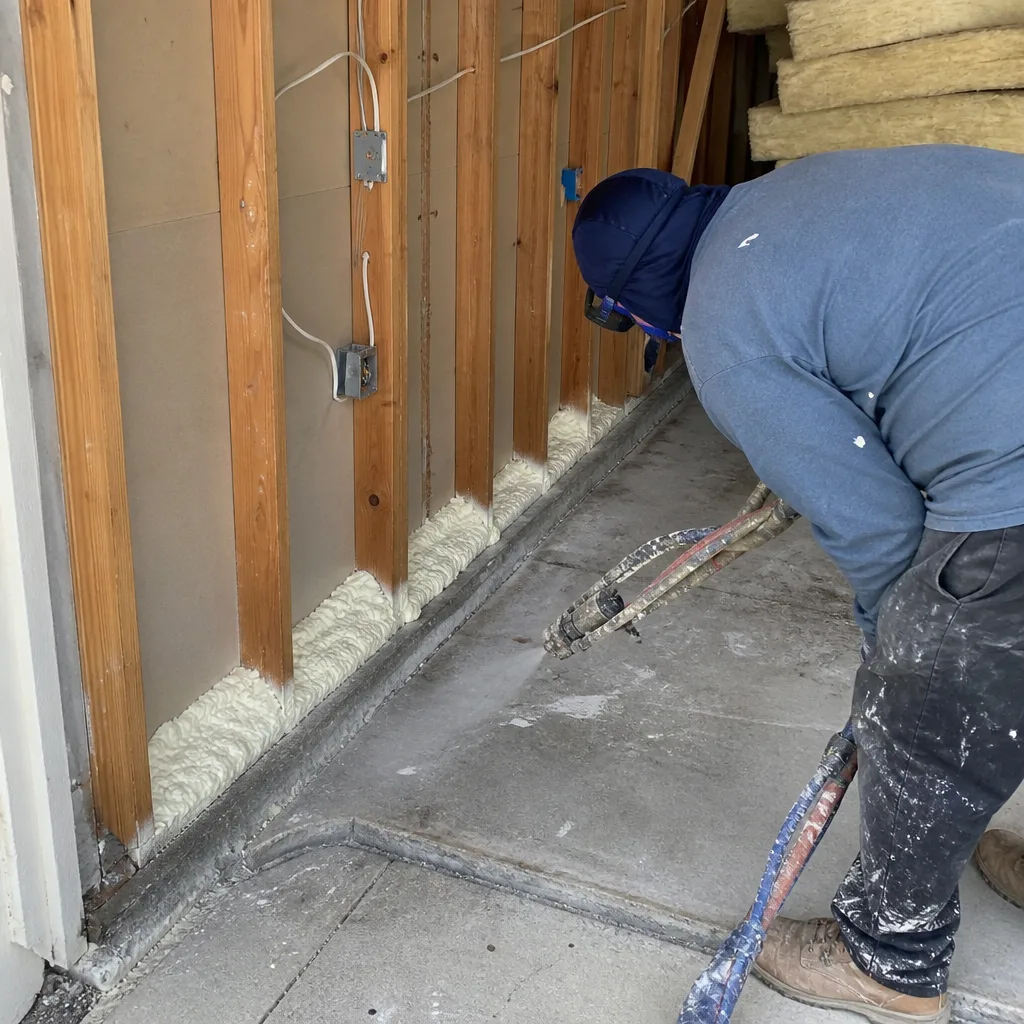
California repealed owner-occupancy requirements for ADUs effective January 1, 2020. An ADU may now be rented independently, with no requirement that the owner live in either the primary dwelling or the ADU. This opened ADU investment to pure rental property owners and out-of-state investors. But the repeal does not extinguish pre-existing deed restrictions recorded before 2020, and Chino has thousands of parcels with CC&Rs that predate the statute.
How this plays out in practice:
A homeowner in The Preserve at Chino or one of the city’s other master-planned communities may have CC&Rs recorded in 2004 that prohibit “accessory rental units” or “separate kitchen facilities in accessory structures.” These restrictions are private covenants, not zoning ordinances. Gov. Code §65852.2 does not preempt private agreements. The city will issue the ADU permit regardless - the permit desk does not review CC&R compliance - but the homeowners association or a neighboring owner could enforce the restriction civilly.
We verify CC&R status during pre-application site analysis for properties in planned communities. The fix, when needed, is typically an HOA architectural committee approval or, in rare cases, a CC&R amendment vote. Neither is guaranteed. We’ve advised owners to abandon ADU plans when the amendment threshold is 75% of owners and the community’s rental-averse culture makes passage unlikely. Better to know before design hours are invested.
Properties with existing ADUs built before 2020 under owner-occupancy requirements present a separate issue. If the original permit was conditioned on owner occupancy, that condition may remain enforceable even after the statewide repeal. The owner needs a formal release from the condition, typically through a building department administrative review. Chino processes these in 2-3 weeks if the original permit file is complete; longer if records were paper-only and must be retrieved from archives.
For rental property owners considering ADU addition, we recommend a preliminary title report review before design commitment. The cost is $200-$400; the information prevents a $15,000 design investment on a property that cannot legally operate the unit as intended.
The 60-Day Permit Mandate and Escalation Process
Gov. Code §65852.2(a)(5) mandates that local agencies approve or deny ADU permit applications within 60 days of submission. If the agency does not act, the application is “deemed approved” and the permit issues by operation of law. This sounds like a powerful tool. In practice, cities have developed procedural mechanisms that restart the clock, and the deemed-approval provision has specific notice requirements that most owners miss.
How Chino’s timeline typically runs:
Day 0: Complete application submitted through ProjectDox, fees paid.
Days 1-15: Plan check review. If complete, approval letter issued. If corrections needed, correction letter issued with specific items and code references.
Days 16-60: Correction response window. The owner/applicant has 180 days to respond, but the 60-day clock pauses at correction issuance and restarts at resubmittal. This is the standard mechanism; it is not a violation of the statute.
Days 61+: If no action after complete resubmittal, the deemed-approval clock begins. But the applicant must provide specific notice to trigger it.
The formal escalation process for Chino delays exceeding 60 days:
- Document the timeline. Keep the original submittal confirmation, correction letters, and resubmittal confirmations with timestamps.
- Submit a written “Notice of Deemed Approval Request” to the Chino Community Development Director by certified mail and email. The notice must cite Gov. Code §65852.2(a)(5), state the application number, and specify that the 60-day period has elapsed without action.
- The city has 5 business days to respond with approval, denial, or a written request for additional information. A request for additional information restarts the 60-day clock; approval or denial concludes the process.
- If the city does not respond within 5 business days, the applicant may record a “Notice of Deemed Approval” with the San Bernardino County Recorder, which has the same effect as a building permit for purposes of commencing construction.
We’ve used this process twice in Chino, both times after plan check timelines stretched past 90 days due to staffing transitions. In both cases, the deemed-approval notice produced permit issuance within 48 hours. The mechanism works, but it requires precise documentation and formal notice. Informal complaints to council members or social media posts do not trigger the statutory protection.
The 60-day mandate applies to the building permit, not to separate approvals that may be required. Fire marshal approval, utility connection agreements, and HOA architectural review run on independent timelines. We track all parallel processes and flag any that threaten the overall schedule.
Prefab and Modular ADUs: Permitting Differences
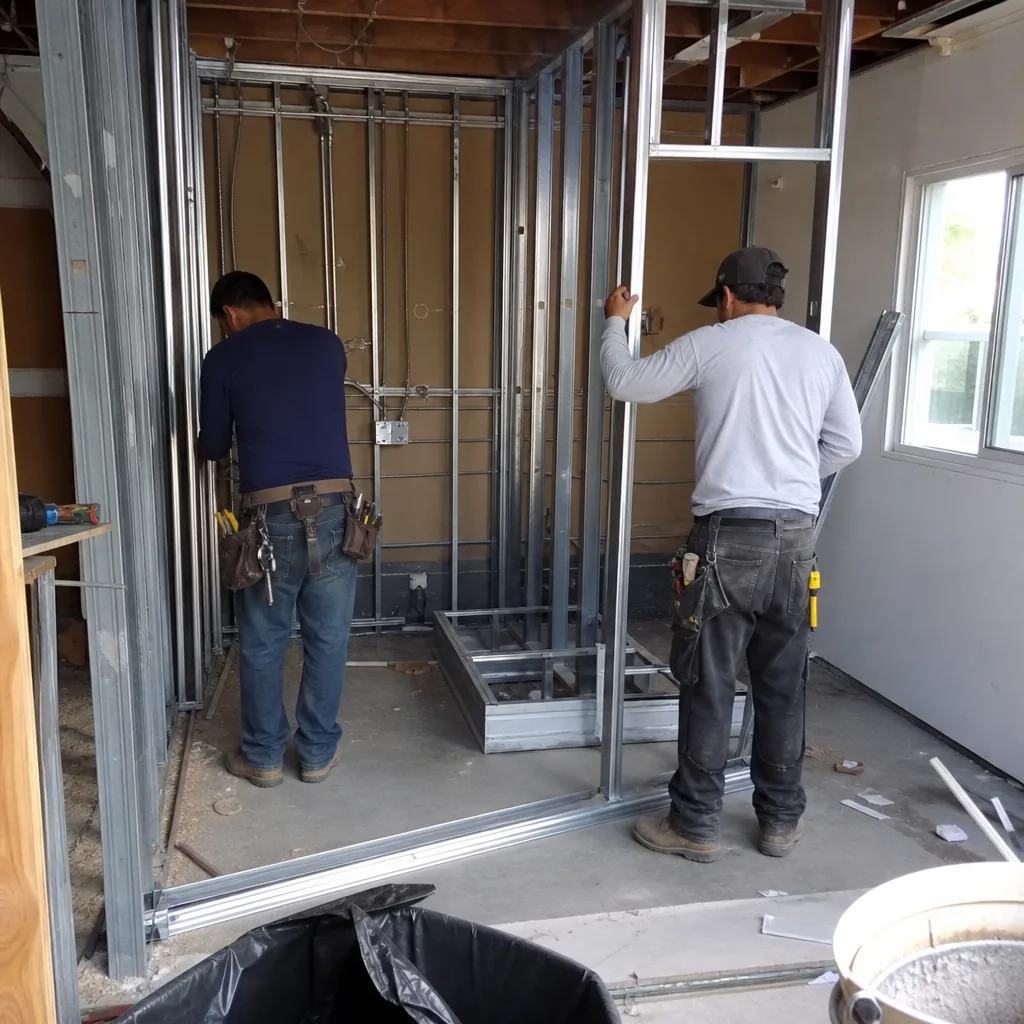
Prefab and modular ADUs are increasingly specified in Chino, particularly for homeowners who want faster construction timelines or specific architectural statements. The permitting path differs from site-built ADUs in ways that affect timeline, cost, and inspection sequence - a key factor in the DIY vs Professional ADU: The Chino Homeowner’s Decision Guide.
Factory-built housing (FBH) vs. modular: California distinguishes between factory-built housing, regulated by HCD (Department of Housing and Community Development), and modular construction, regulated by the local building department with state oversight. Most “prefab” ADUs from brands like Mighty Buildings or Plant Prefab fall under FBH; Boxabl and Tuff Shed structures may be FBH or site-built depending on configuration. The permit path determines inspection requirements.
For HCD-approved factory-built units, the factory performs structural, electrical, plumbing, and mechanical inspections during manufacturing. The HCD label certifies compliance with California Building Code. Local permitting then focuses on:
- Foundation and site preparation
- Utility connections
- Final tie-down and anchoring
- Local fire and life safety requirements not covered by HCD approval
This typically reduces local inspections from 5 hold points to 2-3, shortening the construction inspection phase from 6-8 weeks to 3-4 weeks. But the upfront permitting timeline is often longer, as HCD approval documentation must be complete before local plan check begins. For additional guidance, see our more guides & resources.
Chino’s design review for detached ADUs applies equally to prefab units. A Mighty Buildings unit with its distinctive curved roofline may require additional design review documentation to demonstrate neighborhood compatibility. We coordinate this during the specification phase, not after delivery.
Site prep and utility costs for prefab units often surprise owners. The unit may arrive 90% complete, but the foundation, electrical service run, sewer lateral, and water line still require full site work. In Chino’s heavy clay soils, foundation costs for a prefab ADU run $8,000-$14,000, comparable to site-built. The savings are in construction duration and weather risk, not in total project cost.
We specify and coordinate prefab systems from multiple brands under our single contract. The owner receives one written price covering factory unit, site prep, utility connections, local permitting, and final tie-down. Under Haven Standard Clause 1, there is no separate “factory invoice” that arrives later with freight charges not previously disclosed.
Common Mistakes to Avoid
- Assuming state preemption covers everything. Fire sprinklers, utility fees, and design review are locally controlled. A permit set that ignores these gets corrected, not approved. We’ve seen 4-month delays from this single error.
- Submitting incomplete utility documentation. Chino requires verification of water meter capacity, sewer connection point, and electrical service size at plan check. Utility companies take 2-3 weeks to provide this; owners who wait until plan check is underway add that delay to their timeline.
- Ignoring recorded CC&Rs. The city permits the ADU; the HOA sues to remove it. Review title commitments before design, not after construction.
- Failing to formally invoke the under-750-sq-ft impact fee exemption. Chino’s finance system does not auto-apply the exemption. The box must be checked, the declaration signed, and the approval letter must confirm it.
- Starting construction before permit issuance. California allows some site preparation, but any foundation work or structure placement before permit is a code violation that can trigger stop-work orders and double fees. The 60-day deemed-approval provision does not authorize early construction.
- Using generic energy compliance documentation. Title 24 calculations must use Chino’s specific climate zone, orientation, and proposed equipment. Generic “California compliant” certificates fail plan check.
- Separating design and construction contracts. When the designer specifies a 24-foot span and the builder discovers it needs engineered LVLs, the owner pays twice. Our Ellery ADU Studio Chino home model eliminates this gap with single-contract accountability.
When to Call a Professional
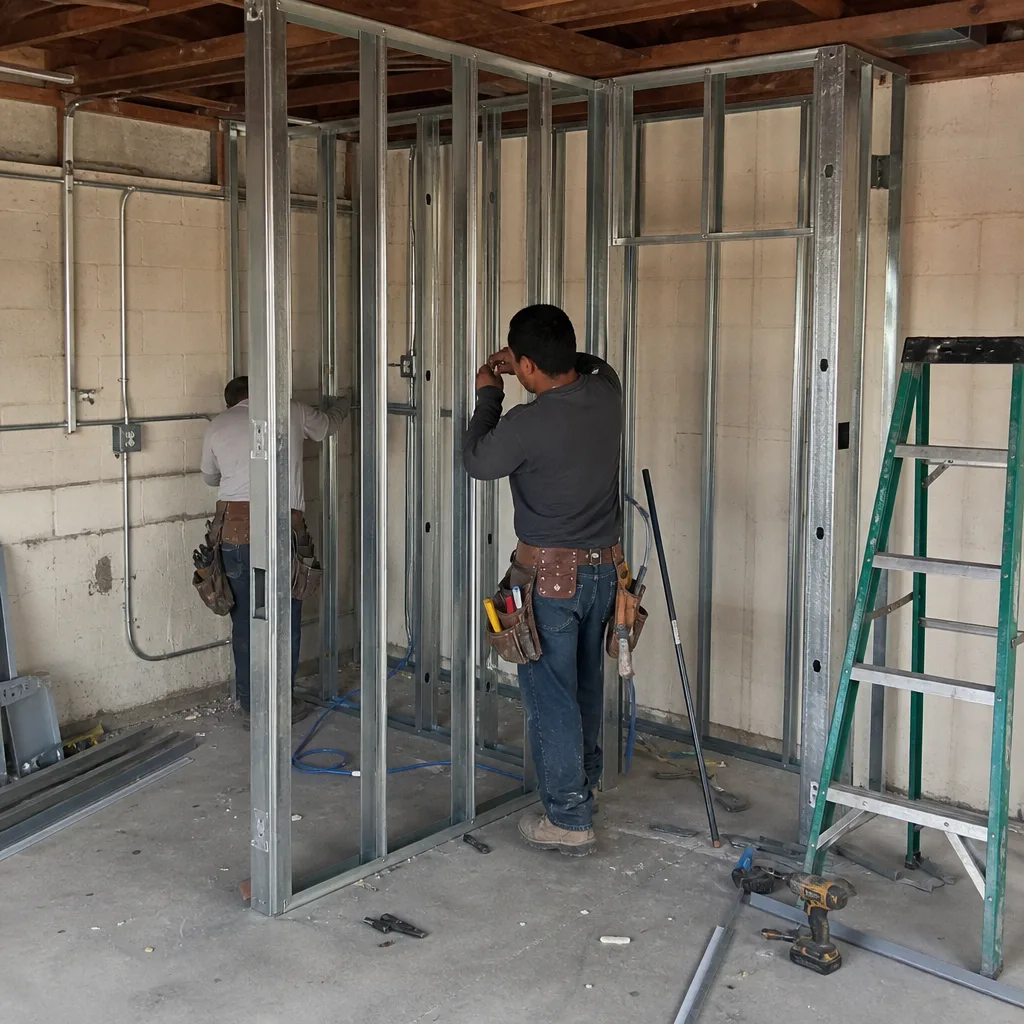
Call a design-build studio when the project involves structural modification to an existing building, utility connections beyond a simple plug-in, or any interaction with city plan check. The permit set is not a formality; it is the enforceable contract between your project and the building code. A set that misses fire sprinkler triggers, utility capacity limits, or seismic hold-down requirements becomes expensive correction loops.
Ellery ADU Studio Chino offers free estimates in Chino - call (909) 323-1107. Every estimate includes a written feasibility memo, a preliminary permit timeline, and a fixed price for design, permitting, and construction under a single contract. We also provide a Free Second Opinion on any written estimate already in hand, with specific attention to permit risks and hidden utility costs that may not be visible in the quoted scope.
Frequently Asked Questions
Most complete applications in Chino are approved in 10-14 weeks for garage conversions and 14-20 weeks for new detached ADUs, assuming no major corrections. The state’s 60-day mandate applies to each complete submittal; corrections restart the clock. Call (909) 323-1107 for a timeline assessment specific to your property - estimates are free.
ADU permit costs in California typically run $8,000-$18,000 in total fees, including plan check, building permit, utility connection, and impact fees. In Chino, a 600 sq ft garage conversion ADU with impact fee exemption typically totals $8,500-$11,000 in fees; a 1,000 sq ft new detached ADU with pro-rated impact fees runs $14,000-$18,000. These figures are built into our written quotes as line items under Haven Standard Clause 1. Call (909) 323-1107 for an exact quote - estimates are free.
No. Under Haven Standard Clause 1, every project is quoted with a written price before any work begins. Under Clause 5 (No Surprises), the scope is locked at signing; no door-side upsells, no scope creep. If we missed an item in our initial assessment, we absorb that cost. Call (909) 323-1107 to review how this applies to your project.
We pull all permits as part of our design-build contract. The permit is in our name as the licensed contractor of record, with the owner listed as the property owner. This ensures single-point accountability if corrections or re-inspections are needed. The owner never interfaces directly with plan check or the inspection desk. Call (909) 323-1107 to discuss permit handling for your specific project.
Certain Chino fire protection zones require residential sprinklers for any new dwelling unit, including ADUs. The trigger is the fire district boundary, not the ADU size or type. We verify fire district status in pre-application analysis and include sprinkler design and installation in the written quote when required. Retrofitting sprinklers after plan check failure adds $12,000-$18,000 and 4-6 weeks. Call (909) 323-1107 to confirm your property’s fire district status.
Yes. California repealed owner-occupancy requirements effective January 1, 2020. However, pre-existing CC&Rs or deed restrictions recorded before 2020 may still prohibit rental ADUs. We review title commitments during feasibility analysis to flag this risk. The city will issue the permit regardless, but private covenant enforcement remains a risk. Call (909) 323-1107 for a property-specific review.
After 60 days from a complete submittal with no action, you may serve a formal “Notice of Deemed Approval Request” on the Community Development Director. If no response in 5 business days, you may record a Notice of Deemed Approval with the county recorder. We’ve used this process successfully in Chino; it requires precise documentation but is effective. We handle this escalation automatically if timelines stretch. Call (909) 323-1107 to discuss timeline protection for your project.
The Bottom Line
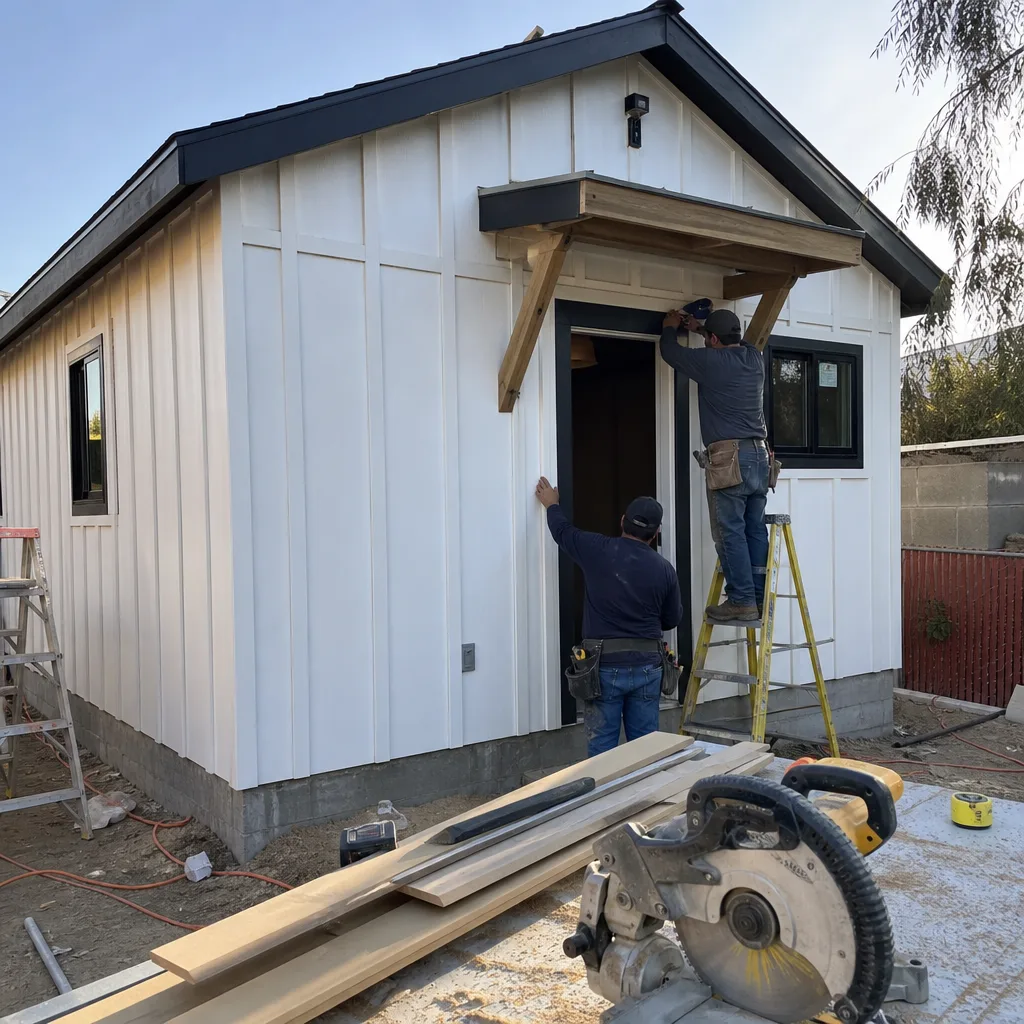
California’s ADU law created opportunity, but local codes, utility tariffs, and fire standards determine what that opportunity costs and how long it takes. The difference between a 10-week permit and a 10-month ordeal is understanding which rules are preempted, which are preserved, and how to formally invoke the protections the statute provides. In Chino, this means verifying fire district status before design, invoking impact fee exemptions at submittal, and tracking the 60-day mandate with documentation that supports escalation if needed. The permit set is not paperwork; it is the enforceable definition of your project. Treat it as the core product, and the rest follows.
Written by Nadia Ellery, Owner at Ellery ADU Studio Chino, serving Chino since 2015.