
Last updated September 25, 2026
ADU Warning Signs: A Chino Homeowner’s Reference Guide
Here is a number that should stop every Chino homeowner reviewing ADU bids: in 2023, the California Department of Housing and Community Development found that 34% of ADU projects statewide exceeded their original contract price by more than 20%, with the majority of overruns traceable to permit corrections and scope gaps that existed at signing. The warning signs are not dramatic. They do not arrive as collapsed walls or stolen deposits. They arrive as quiet contract clauses, vague timeline assumptions, and bids written against drawings the city has not yet seen. In Chino, where Building & Safety currently processes ADU plan checks through a multi-week cycle and SCAQMD air quality permits add a separate queue, these bureaucratic gaps become five-figure surprises. This guide names the specific signals, explains what each one costs, and shows how to verify what you are actually being promised. For a deeper dive, see The Complete Guide to ADU in Chino.sed.
Quick Answer
The warning signs of a failing ADU project in Chino are bureaucratic, not theatrical: a bid written before permit approval, contract language that assigns design corrections to the homeowner, down payments exceeding 10% before permit issuance, and timelines that ignore Chino’s actual plan check backlog. Each signal predicts a specific failure mode, and each is detectable before you sign.
Table of Contents
- Contract Language Red Flags: What the Clauses Actually Cost You
- The Permit-Readiness Test: Five Questions That Reveal the Truth
- Timeline Red Flags Specific to Chino’s Permitting Reality
- Financial Warning Signs: Payment Structures That Predict Overruns
- Post-Construction Warning Signs in the ADU Itself
- The Designer-Builder Blame Gap: Why Single-Contract Matters
- Prefab and Modular Coordination Risks in Chino
- Common Mistakes to Avoid
- When to Call a Professional
- Frequently Asked Questions
- The Bottom Line
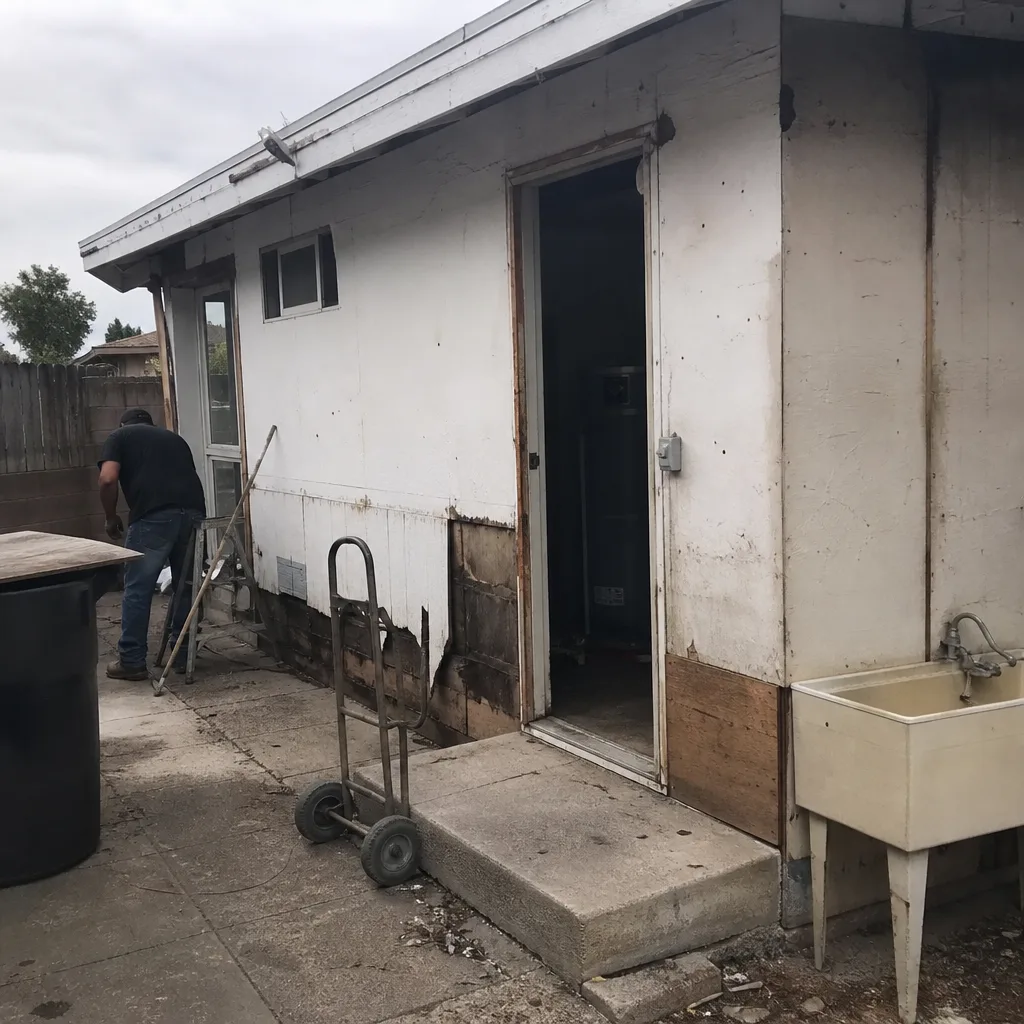 Before
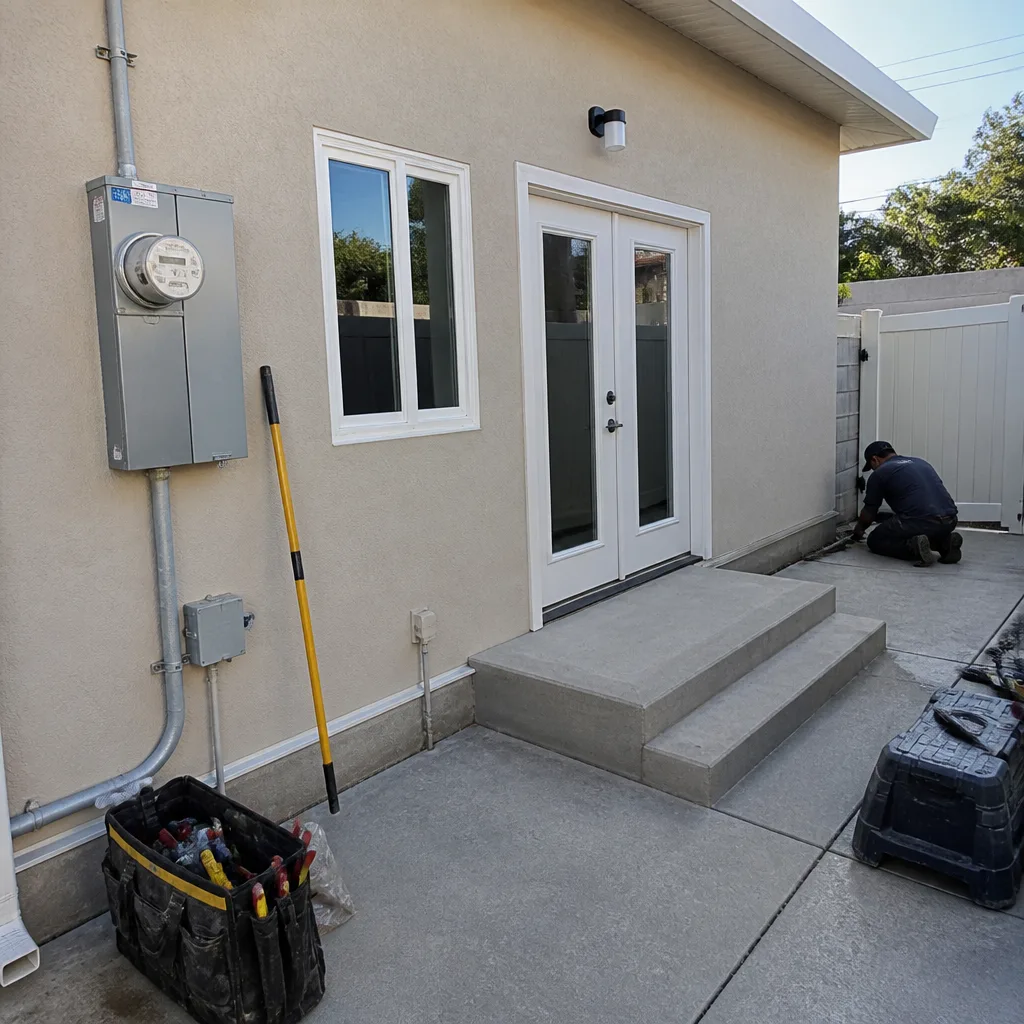 After
AfterContract Language Red Flags: What the Clauses Actually Cost You
Every ADU contract in Chino contains language that appears standard until you translate it into dollar exposure. We have reviewed hundreds of competitor contracts through our Free Second Opinion service, and three clauses appear with troubling regularity. Each transfers risk from the contractor to the homeowner in ways that rarely surface until the first change order arrives.
“Allowances” for finish materials. An allowance is a placeholder dollar amount, not a fixed price. A contract that lists “$8,000 allowance for flooring” means you pay the difference when your actual selection costs $12,000. In Chino’s market, where material lead times fluctuate and specialty orders for compact ADU layouts are common, allowance gaps of 40-60% are standard outcomes. Under Ellery ADU Studio Chino‘s Haven Standard, Clause 1, every project receives a written price based on specified materials, not estimated placeholders. The price you sign is the price you pay.
“As per plans to be provided.” This phrase means the contractor is bidding against drawings that do not yet exist, or that exist only as preliminary sketches. When Chino’s plan checker issues corrections, and corrections are standard on first submittal, the contract has no fixed reference point. The contractor can claim the revised drawings constitute “additional scope” and issue a change order. We have seen Chino homeowners absorb $15,000-$30,000 in post-permit corrections that this clause made their responsibility.
“Owner-furnished” fixtures or appliances. This transfers procurement risk to you. If the item arrives damaged, incompatible with the rough-in dimensions, or delayed past the crew’s scheduled window, you pay for the rescheduling and the correction. In Chino’s climate, where summer heat can warp improperly stored materials and winter rains delay exterior work, owner-furnished items create cascading schedule failures.
The specific dollar test: add every allowance, every “to be provided” line item, and every owner-furnished category in the contract. If the total exceeds 15% of the project price, you are not looking at a fixed bid. You are looking at a preliminary estimate with your signature on it.
The Permit-Readiness Test: Five Questions That Reveal the Truth
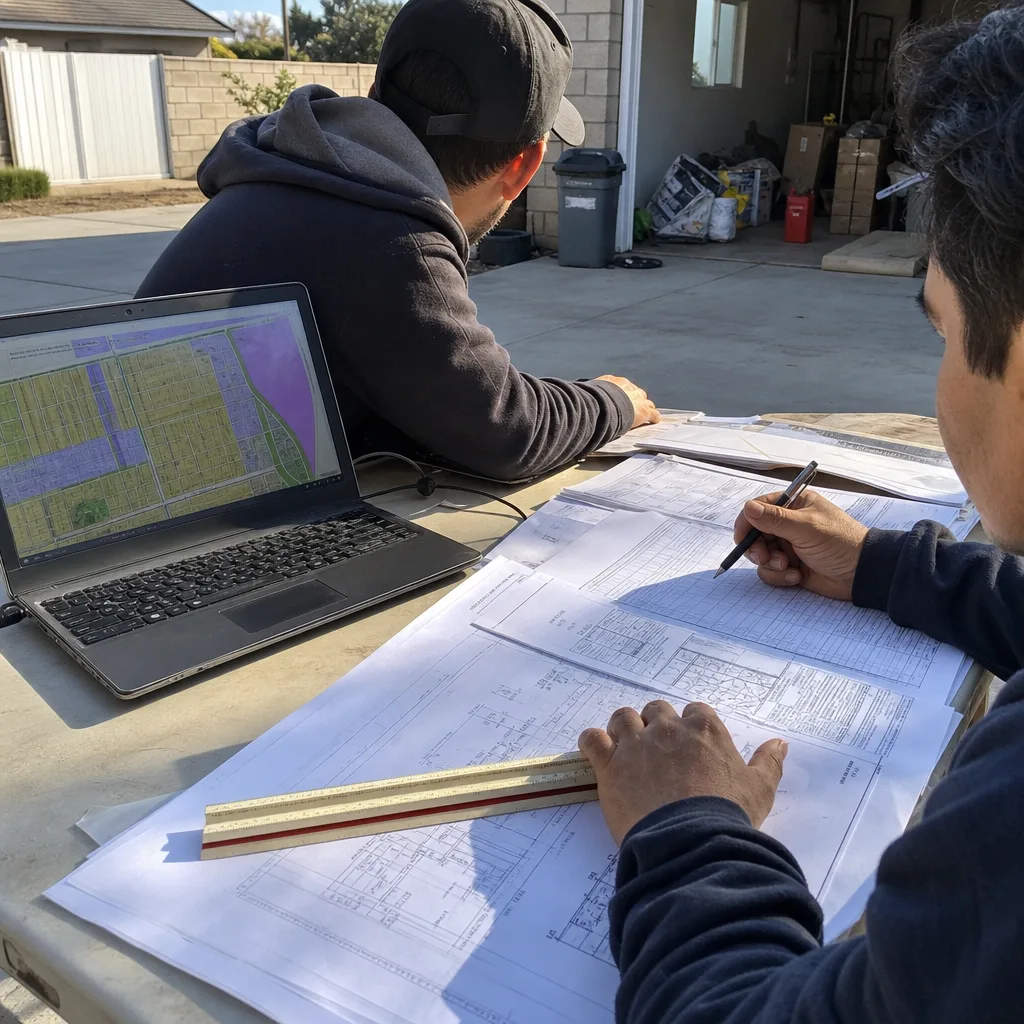
When a designer or contractor tells you their ADU plan is “approved,” the word means radically different things depending on who speaks it. These five questions expose the gap between internal approval and actual permit readiness in Chino.
- “Approved by which entity?” Internal design review, structural engineering sign-off, and city plan check approval are three distinct stages. Only Chino Building & Safety’s stamped approval triggers permit issuance. Ask to see the stamped plan set.
- “What was the plan check correction letter, and who addressed it?” Chino’s plan checkers routinely issue correction notices for ADU submittals. A designer who cannot produce the correction letter and the revised sheets has not completed the permit cycle. Ask how many rounds of corrections the project required and whether the designer or contractor absorbed that cost.
- “Does the permit set include the SCAQMD determination?” The South Coast Air Quality Management District governs Chino’s air quality permits. Certain heating systems, generators, and combustion appliances trigger additional review. A permit set without SCAQMD clearance is not permit-ready, regardless of what the city stamp says.
- “Is the utility connection shown on the approved plans?” Chino’s water and sewer connections for ADUs require separate utility review. The building permit does not automatically include utility approval. A contractor who begins trenching without utility clearance risks stop-work orders.
- “Who pays if plan check corrections require design changes?” This is the decisive question. If the answer is “the owner” or “we’ll discuss it if it happens,” the bid is not fixed. Under Haven Standard Clause 5 (No Surprises), ADU Design & Permitting in Chino includes all plan check corrections in the original written price.
The honest professional welcomes these questions. The evasive professional has something to obscure.
Timeline Red Flags Specific to Chino’s Permitting Reality
Chino’s ADU timeline has structural constraints that no contractor can negotiate away. Bids that ignore these constraints are either naive or deceptive. Here is what the current process actually requires.
Plan check backlog. Chino Building & Safety processes ADU plan checks through a queue that varies seasonally. Summer submittals, when the department handles peak volume, face longer waits than winter submittals. A contractor who promises “permit in two weeks” in July is either unfamiliar with Chino’s operations or making a promise they cannot keep. Ask for the specific plan check timeline in writing, with the submittal date noted.
SCAQMD permit window. Air quality permits operate on a separate timeline from building permits. In Chino, where the basin’s air quality regulations are among the state’s most stringent, certain equipment selections trigger SCAQMD review that adds 2-4 weeks. A timeline that shows building permit issuance as the start of construction, without SCAQMD clearance, will stall.
Utility coordination lead times. Southern California Edison and the Chino Public Works Department schedule connection inspections on their own calendars, not the contractor’s. A timeline that assumes immediate utility availability will compress the construction phase unrealistically.
Inspection sequencing. Chino requires specific inspection milestones: foundation, rough framing, plumbing rough, electrical rough, insulation, and final. Each requires scheduling through the city’s system, and failed inspections require re-inspection fees and delay. A timeline with no buffer for re-inspection assumes perfection.
The specific test: ask the contractor to show you a Chino ADU project they completed in the last 18 months, with actual permit dates, inspection dates, and completion dates. If they cannot produce this documentation, their timeline is a projection, not a promise.
Financial Warning Signs: Payment Structures That Predict Overruns
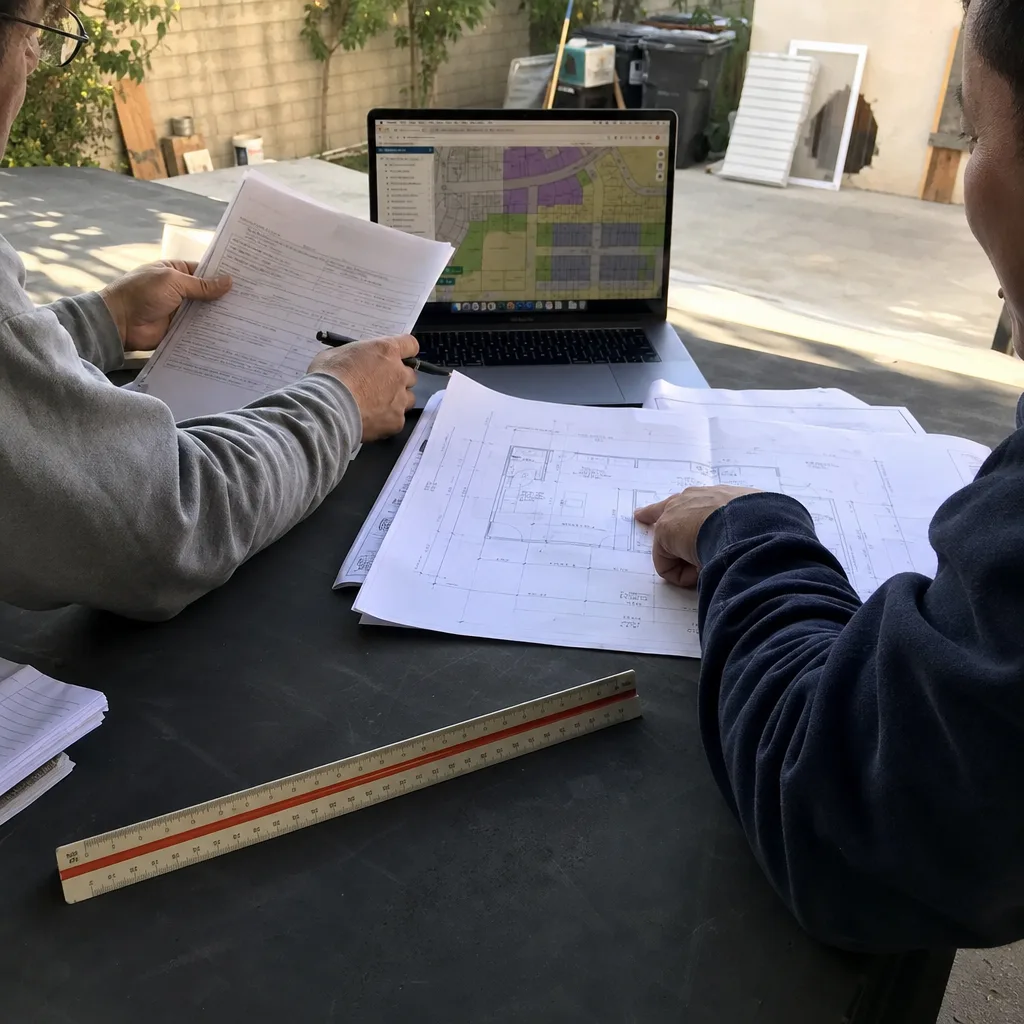
California law limits down payments on home improvement contracts to 10% or $1,000, whichever is less, until permit issuance. This is not a suggestion. It is Business and Professions Code Section 7159. Yet we regularly review Chino ADU contracts requesting 25-50% down “to secure materials” or “to hold the schedule.” These requests predict cash flow problems that become your problems.
Payment schedules tied to milestones, not inspections. A legitimate ADU contract in Chino ties payments to passed inspections: foundation complete and inspected, rough complete and inspected, final complete and inspected. A contract that ties payments to calendar dates (“25% at start of week 3”) or subjective milestones (“25% when framing is substantially complete”) leaves you paying for work that has not been verified.
Draw schedules that front-load design fees. In a design-bid-build arrangement, the designer often collects 50% or more of their fee before permit submittal. If the project stalls in plan check, or if you discover the designer’s drawings are inadequate, you have limited leverage. The design-build model, where Garage Conversion ADU in Chino and other services operate under a single contract, aligns payment with progress rather than separating design risk from construction risk.
Change order thresholds. Every contract should specify a dollar threshold above which written change orders are required. A contract with no threshold, or a threshold above $2,500, permits incremental cost accumulation that escapes notice until the final invoice.
The specific documentation to request: a payment schedule with inspection milestones, a sample change order form with pricing methodology, and proof of the contractor’s license bond. Under Haven Standard Clause 1, every Ellery project receives this documentation before signing.
Post-Construction Warning Signs in the ADU Itself
Some ADU failures do not appear until months after final inspection. These physical signals indicate permit compliance gaps that may not have been caught during construction.
Moisture patterns on interior walls. In Chino’s climate, where winter rains concentrate in December through March and summer heat drives interior condensation, proper moisture management is critical. Staining at baseboards, bubbling paint near window frames, or musty odors in closet areas suggest inadequate flashing, missing vapor barriers, or slab moisture intrusion. These are not cosmetic issues. They indicate that the waterproofing details on the approved plans were not executed, or that the plans themselves lacked adequate moisture specifications for Chino’s conditions.
Grading that directs water toward the ADU foundation. Chino’s clay-heavy soils expand when wet and contract when dry, exerting pressure on foundations. Proper grading slopes away from the structure at minimum 2% for 10 feet. Depressions, pooling, or visible erosion channels toward the foundation suggest either inadequate site work or post-construction settling that was not addressed. Either indicates inspection gaps or scope reductions not documented in the permit file.
Electrical panel labeling gaps. A properly permitted ADU in Chino requires clear circuit labeling and, for detached units, a separate meter or subpanel configuration that meets current code. Missing labels, handwritten corrections, or circuits that do not match the approved electrical plan suggest either unpermitted modifications or inspection shortcuts.
HVAC short-cycling or inadequate cooling. Chino’s summer temperatures regularly exceed 95°F. An ADU that cannot maintain 75°F on a 100°F day may indicate Manual J load calculations were not performed, equipment was downsized to meet a budget, or ductwork was compromised during installation. The permit set should include the load calculation and equipment specification. Request it.
The specific action: before final payment, request the documented photo record from construction, the passed inspection reports, and the as-built drawings. Compare the as-builts to what you observe. Under Haven Standard, every Ellery project includes this documentation as deliverables, not optional extras.
The Designer-Builder Blame Gap: Why Single-Contract Matters
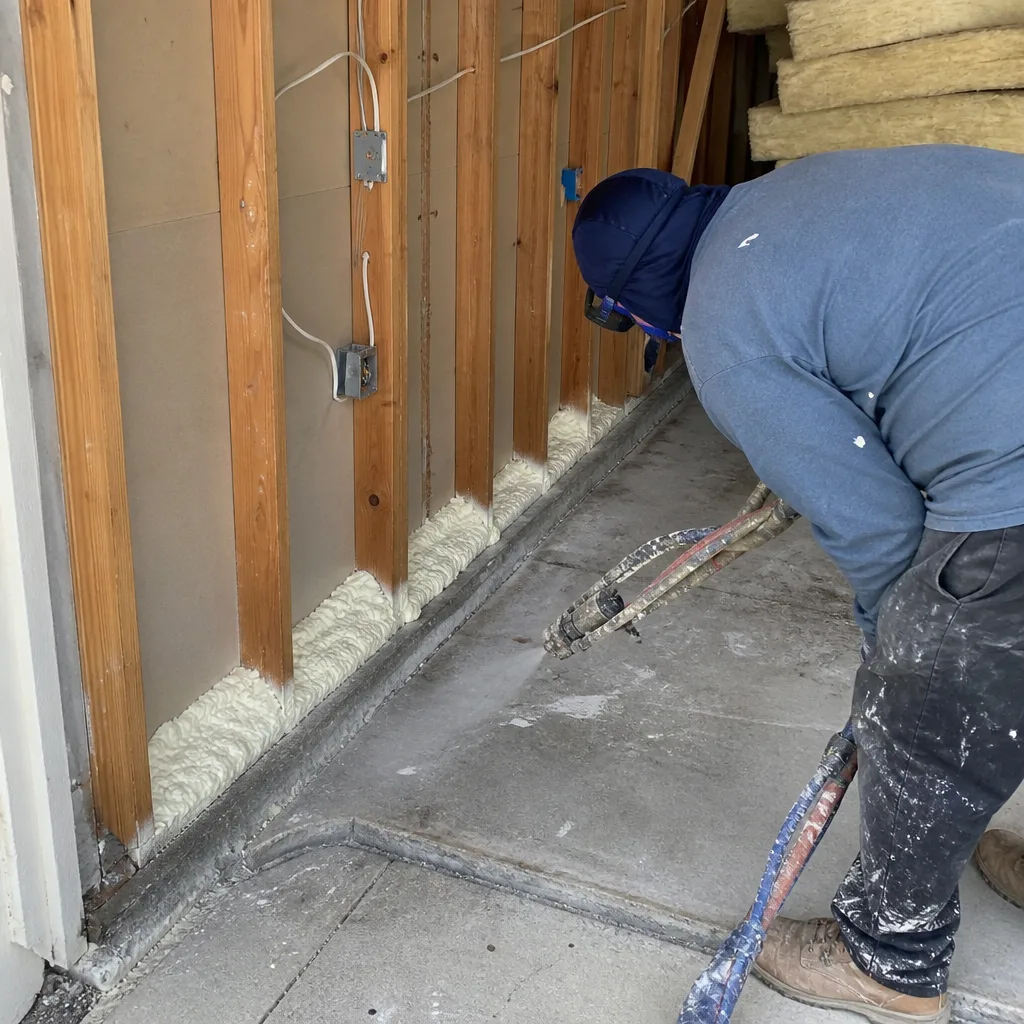
The most expensive sentence in residential construction is “that’s not what the drawings show.” In a design-bid-build ADU project, this sentence launches a dispute that the homeowner funds while the designer and contractor arbitrate responsibility.
The structure works like this: the homeowner hires a designer for permit drawings, then solicits bids from contractors. The lowest bidder wins, often by interpreting the drawings optimistically. During construction, field conditions require deviations. The contractor claims the drawings were unbuildable. The designer claims the contractor deviated without approval. The homeowner pays for both the correction and the delay.
In Chino, where ADU code compliance involves overlapping city, county air quality, and utility requirements, this gap is particularly hazardous. A designer who does not build may specify materials or methods that contractors avoid. A contractor who does not design may interpret drawings in ways that compromise permit compliance. See DIY vs Professional ADU: The Chino Homeowner’s Decision Guide for help evaluating your options.
The New Detached ADU in Chino and other services at Ellery operate under a single contract because the permit set is the core product, not an afterthought. When the same entity that designed the drawings builds from them, “that’s not what the drawings show” becomes an internal correction, not a homeowner-funded dispute. The 365-Day Done Right Promise applies because the accountability is undivided.
The specific verification: ask any prospective designer whether they carry contractor’s license and workers’ compensation coverage for construction. Ask any prospective contractor whether they employ architects or designers who will revise drawings at no cost if plan check corrections require changes. If either answer is no, the blame gap exists and you will pay to bridge it.
Prefab and Modular Coordination Risks in Chino
Prefab and modular ADU systems, including those from Plant Prefab, Tuff Shed, and James Hardie, offer legitimate advantages: factory-controlled quality, compressed construction schedules, and predictable pricing. But they introduce coordination risks that site-built ADUs do not, and Chino’s permitting environment amplifies several of them.
Foundation mismatch. Prefab units arrive with precise foundation requirements. A site with Chino’s expansive clay soils may require engineered pier foundations or post-tensioned slabs that differ from the manufacturer’s standard specification. The coordination failure occurs when the foundation contractor builds to conventional assumptions and the prefab unit cannot be leveled or anchored correctly. The correction requires either foundation modification or unit modification, and manufacturers rarely absorb field errors.
Utility rough-in conflicts. Factory-installed plumbing and electrical locations are fixed at production. If Chino’s utility connection points differ from the manufacturer’s standard layout, field modifications to the unit may void warranties or trigger re-inspection. The coordination requires advance utility marking, manufacturer submittal review, and often a pre-construction meeting that competing contractors skip to accelerate timeline.
Transport and crane constraints. Chino’s residential streets, particularly in older neighborhoods with mature trees or narrow rights-of-way, may not accommodate the transport vehicles or crane placement required for modular delivery. A contractor who has not performed a site access study is guessing.
Permit set integration. The manufacturer’s installation manual must be incorporated into the Chino permit set as an approved document. Some manufacturers provide this integration; others do not. A contractor who treats the prefab unit as a product purchase rather than a permitted building system will stall at plan check.
Ellery specifies and coordinates these systems within the same single contract that governs site-built work. The written price includes foundation engineering, utility coordination, transport planning, and permit integration. The alternative is purchasing a unit from one entity, hiring a contractor for site work, and managing the interface yourself.
Common Mistakes to Avoid
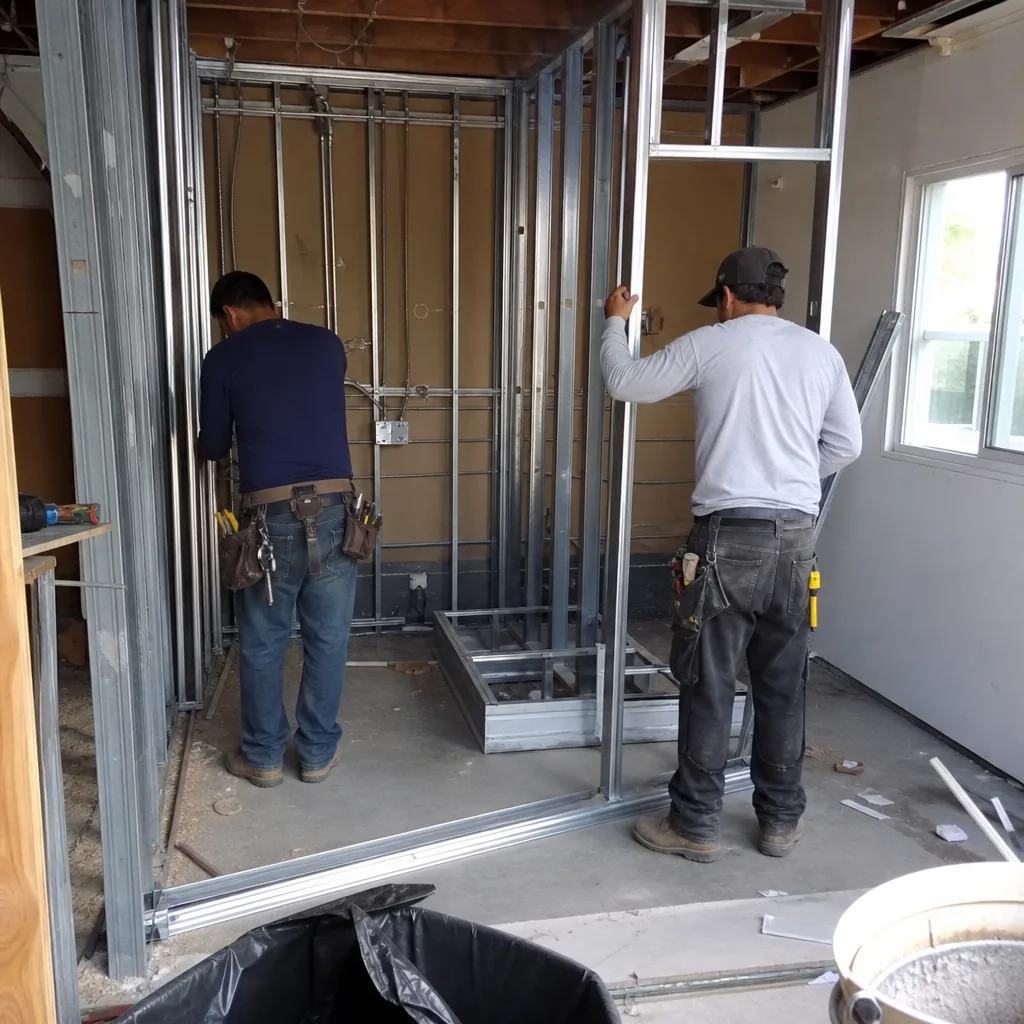
- Accepting a “verbal range” as a budget. In Chino’s current market, garage conversion ADUs typically run $85,000-$140,000 all-in, drawings through final inspection, and new detached units run $180,000-$320,000. A contractor who will not commit these ranges to writing before design work begins is not offering a price. They are offering a hope.
- Assuming the lowest bid covers the same scope. A bid that omits permit fees, utility connection costs, or SCAQMD compliance is not cheaper. It is incomplete. Itemize every category and compare line by line.
- Starting construction before permit issuance. Chino issues stop-work orders for unpermitted construction, and the penalties include demolition orders for work that violates setback or height requirements. The “permit later” strategy is not a time-saver. It is a project terminator.
- Neglecting the accessory structure’s impact on existing utilities. An ADU that overloads the main electrical service or exceeds sewer capacity requires utility upgrades that can add $8,000-$20,000. A proper load calculation and sewer capacity assessment should precede any bid.
- Failing to verify the contractor’s license status at cslb.ca.gov. Active status, bond compliance, and workers’ compensation coverage are publicly verifiable. Check before you sign, not after a problem emerges.
- Ignoring the neighbor notification requirements. Chino’s ADU ordinances include specific notification protocols for certain project types. Non-compliance triggers delays and, in some cases, appeals that extend timelines by months.
- Treating the final inspection as the end of accountability. The 365-Day Done Right Promise exists because some failures, particularly moisture intrusion and HVAC performance, manifest across seasonal cycles. A warranty that expires at final inspection is not a warranty.
When to Call a Professional
Call a design-build professional when you have a written estimate in hand and cannot verify the permit status of the drawings it references. If you are still selecting that professional, read How to Hire a ADU Contractor in Chino: A Step-by-Step Guide first. Call when the payment schedule exceeds legal down payment limits or ties payments to calendar dates rather than inspections. Call when the timeline ignores Chino’s actual permitting queues or when the contract contains more than 15% in allowances and undefined scope.
Ellery ADU Studio Chino offers free estimates in Chino, and a Free Second Opinion on any written estimate already in hand. We will review the contract language, verify the permit readiness of the drawings, and identify the specific dollar exposure the current proposal creates. Explore more guides & resources or call (909) 323-1107.
Frequently Asked Questions
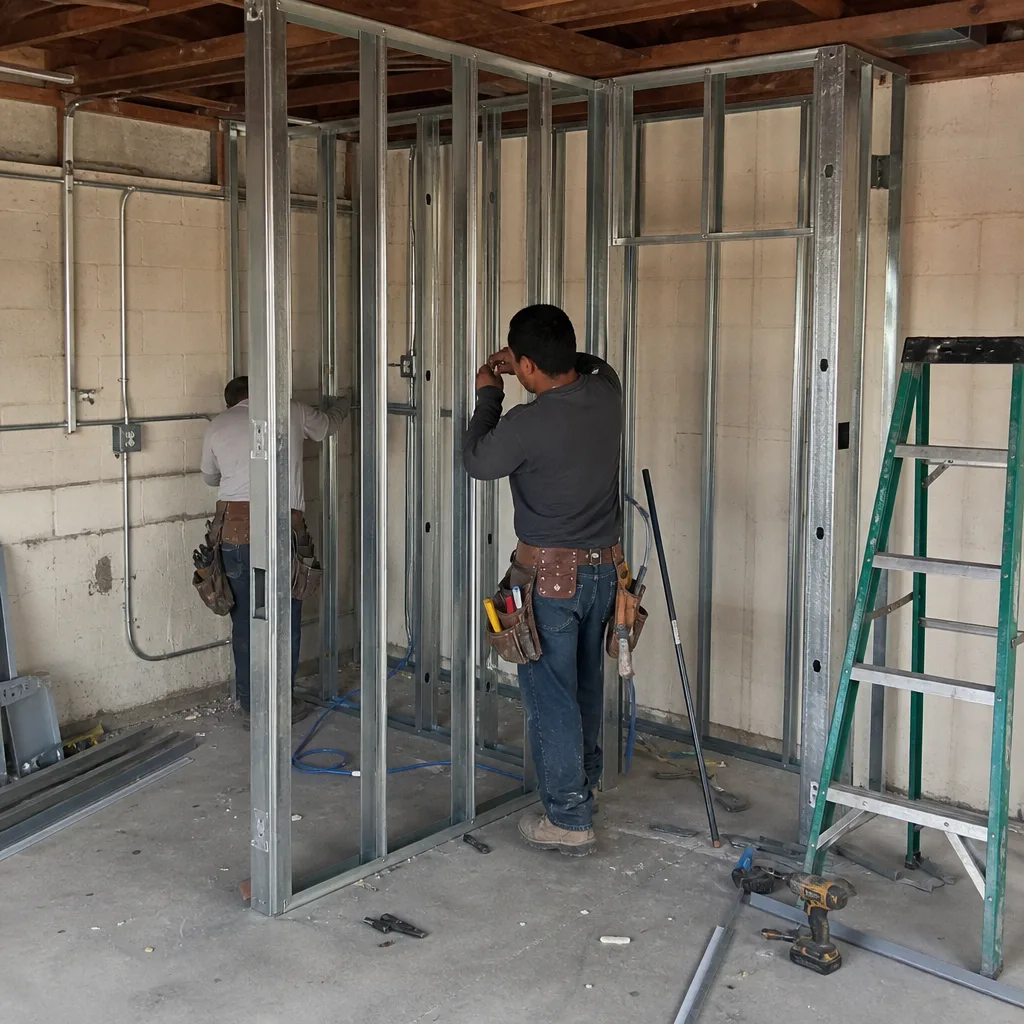
Garage conversion ADUs in Chino typically run $85,000-$140,000 all-in, from permit drawings through final inspection, while new detached ADUs range from $180,000-$320,000 depending on size, utility complexity, and finish level. Every Ellery project receives a written price before any work begins, per Haven Standard Clause 1, with no allowances or placeholder categories. Call (909) 323-1107 for an exact quote on your specific property.
The phrase “as per plans to be provided” is the most expensive red flag, because it means you are signing a price attached to drawings that do not yet exist and that will change during plan check. Every dollar of correction cost not pre-assigned in the contract becomes your change order. Demand a bid against city-approved permit drawings, or a written guarantee that all plan check corrections are included in the stated price.
Chino Building & Safety’s current plan check cycle for ADUs typically runs 4-8 weeks for initial review, plus correction and resubmittment time, with summer submittals facing longer queues. SCAQMD air quality permits add 2-4 weeks for projects with triggered equipment. A contractor who promises permit issuance in two weeks without specifying season and submittal date is misrepresenting the timeline.
No. Chino issues stop-work orders for unpermitted construction, and unpermitted work that violates setback, height, or coverage requirements can be ordered demolished. The cost of premature construction far exceeds any perceived schedule savings. Permits must be issued, posted, and the first inspection (typically foundation) must be passed before construction proceeds.
Ask whether the down payment exceeds 10% before permit issuance, which violates California Business and Professions Code Section 7159. Ask whether payments tie to passed inspections or to calendar dates. Ask for a sample change order form and the threshold that triggers written authorization. Under Haven Standard Clause 1, every Ellery payment schedule is inspection-based and documented before signing.
Request the as-built drawings, the documented photo record from construction, and the passed inspection reports. Compare wall locations, window sizes, and electrical panel configurations to what was approved. Under Ellery’s 365-Day Done Right Promise, if the finished ADU is not built to the permitted drawings, we make it right in writing, before the project starts. Call (909) 323-1107 to discuss documentation standards for your project.
The Bottom Line
The ADU projects that fail in Chino do not fail because of dramatic contractor fraud. They fail because of quiet bureaucratic gaps: bids written against unapproved drawings, contracts that assign correction costs to homeowners, timelines that ignore actual permit queues, and payment structures that extract money before value is delivered. Each gap is detectable before signing. Each has a specific dollar cost. The homeowner who verifies permit readiness, interrogates contract language, and demands inspection-based payment protects themselves against the most common failure modes. The design-build model exists to eliminate the designer-versus-builder blame gap that exploits these gaps. The documentation exists to prove what was promised and what was delivered.
Written by Nadia Ellery, Owner at Ellery ADU Studio Chino, serving Chino since 2015.