
Last updated September 25, 2026
DIY vs Professional ADU: The Chino Homeowner’s Decision Guide
Most Chino homeowners who ask us about building their own ADU start with the wrong question. They want to know if they’re handy enough. The real question is whether they’re prepared to disclose their owner-builder status to every buyer for the next ten years, and whether the savings survive that conversation. California’s Business & Professions Code §7044 creates a liability tail that DIY guides almost never mention. In this guide, we’ll walk through what the owner-builder exemption actually allows in Chino, where DIY saves real money without legal exposure, how Chino Building & Safety treats owner-builder projects differently, and when a single design-build contract costs less than the sum of your time, correction costs, and resale discount. For how to hire an ADU contractor in Chino: a step-by-step guide, see our dedicated resource.
Quick Answer
A DIY ADU in Chino can legally save 15-25% on labor for finish work, landscaping, and interior painting, but owner-builders assume full liability for licensed trades, face heightened inspector scrutiny, and must disclose their status to buyers for ten years under California law. For most Chino homeowners, a professional design-build contract eliminates the designer-builder blame gap, locks pricing in writing before work starts, and protects resale value. Our ADU cost breakdown: the Chino homeowner’s reference for 2026 details where those savings actually materialize. The break-even point typically falls between $80,000 and $120,000 in project value, where a single correction cycle or resale discount erases DIY savings.
Table of Contents
- What California’s Owner-Builder Exemption Actually Permits in Chino
- The §7044 Resale Disclosure Most DIY Guides Omit
- Where DIY Saves Money Without Legal Exposure
- How Chino Building & Safety Treats Owner-Builder Projects
- The Financial Break-Even: When Professional Costs Less
- The Design-Build Advantage: One Contract, One Price, One Throat to Choke
- Common Mistakes to Avoid
- When to Call a Professional
- Frequently Asked Questions
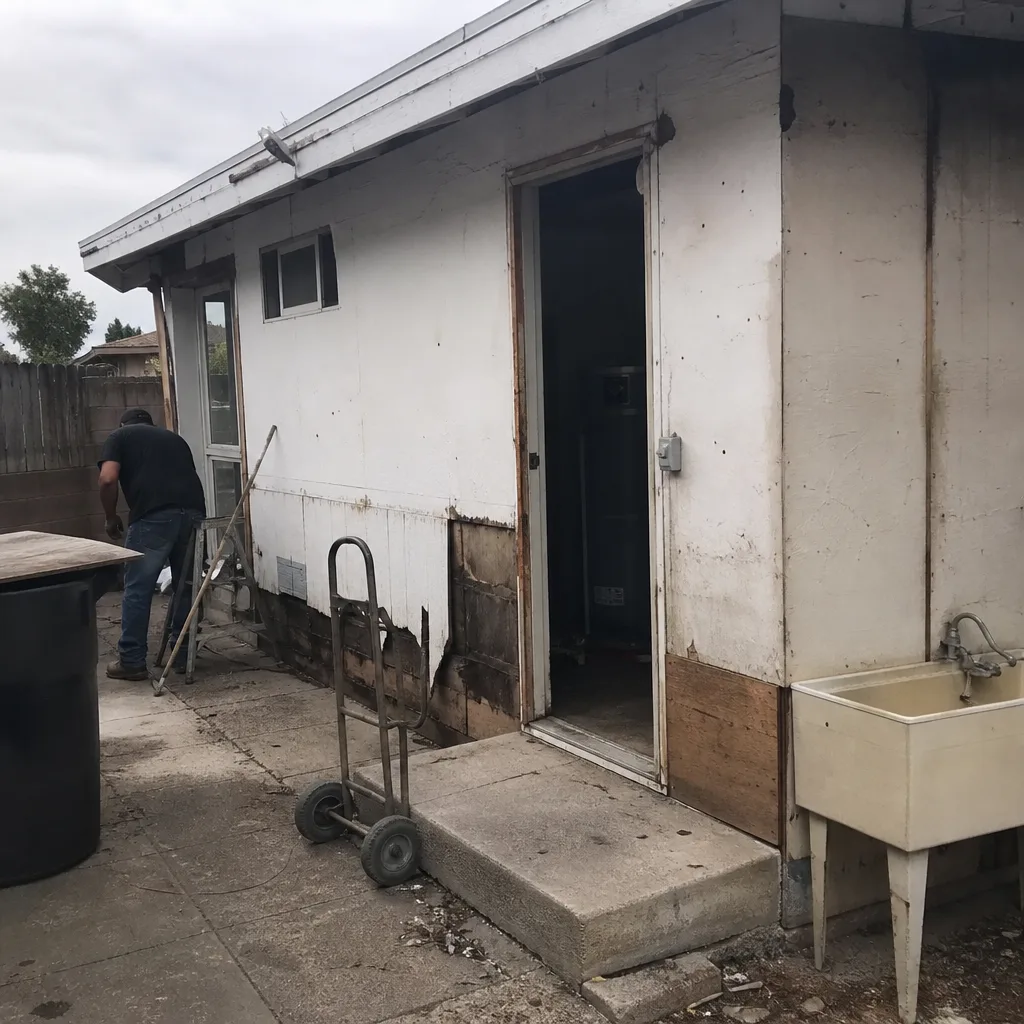 Before
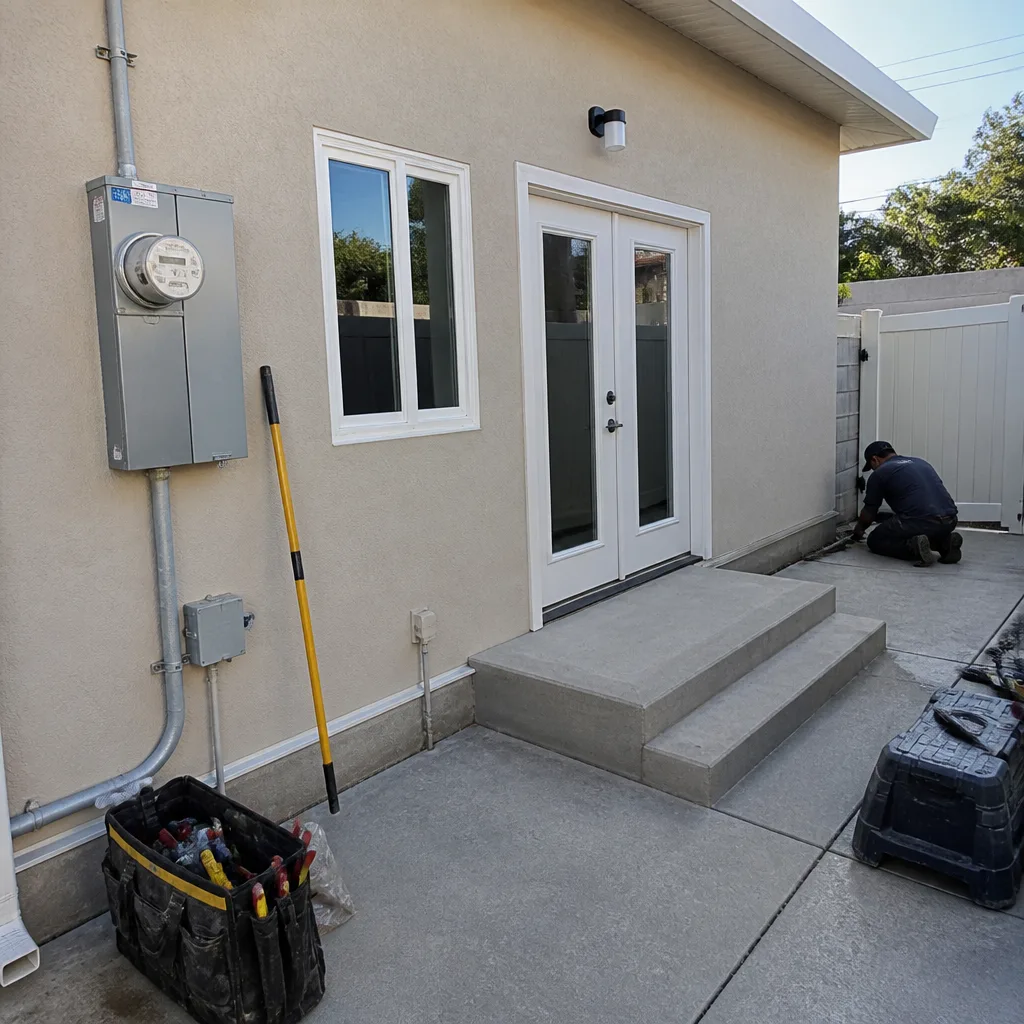 After
AfterWhat California’s Owner-Builder Exemption Actually Permits in Chino
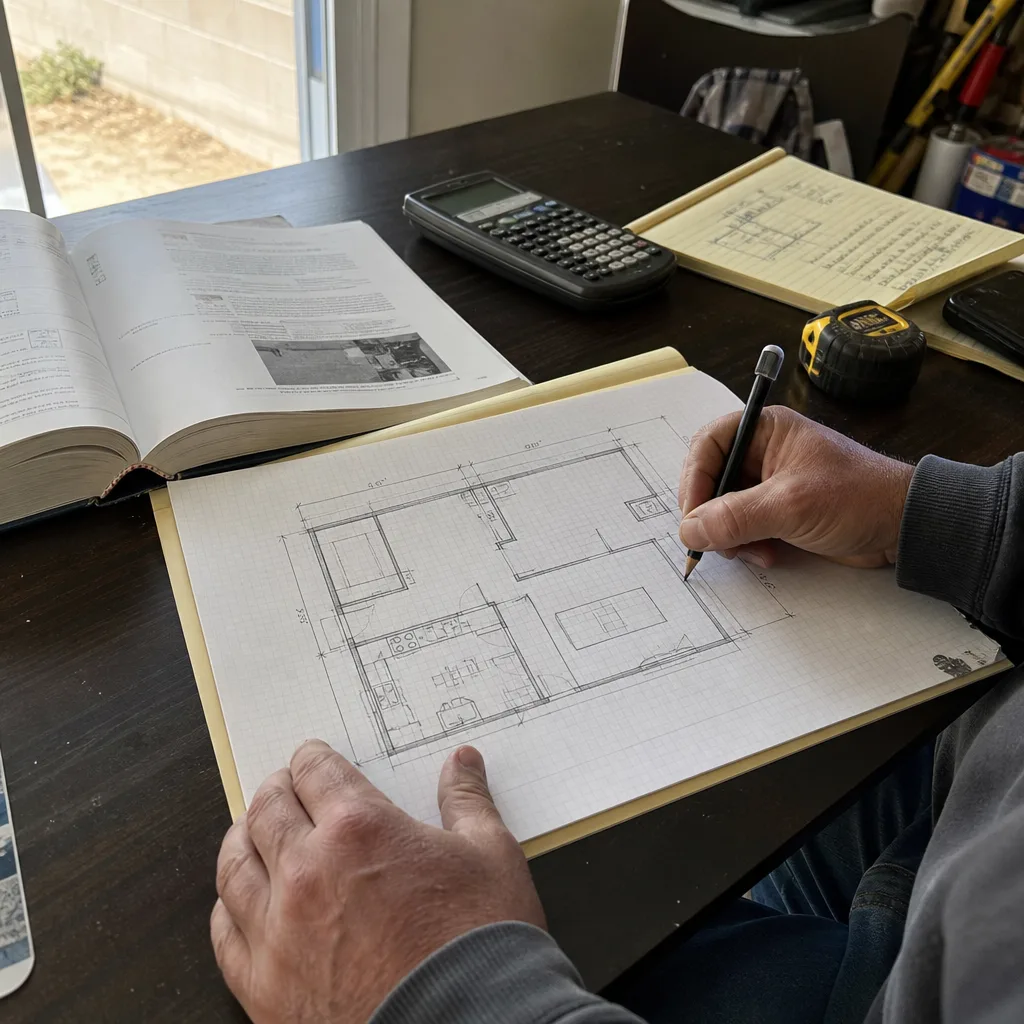
California’s owner-builder exemption, found in Business & Professions Code §7044, lets a homeowner act as their own general contractor on a single-family residence, including an ADU. The exemption applies to Chino properties zoned for residential use, including the R-1, R-2, and R-3 zones that cover most of the city’s established neighborhoods from College Park to Butterfield Ranch.
Here’s what the exemption actually permits:
- Pulling permits in your own name. You can submit plans to Chino Building & Safety, pay permit fees, and schedule inspections as the permit holder of record.
- Hiring and directing subcontractors. You can solicit bids, sign contracts, and coordinate scheduling with electricians, plumbers, framers, and finish crews.
- Performing non-licensed work yourself. Demolition, rough grading (under specific cubic-yard limits), framing (if structurally straightforward), insulation, drywall hanging, painting, and landscaping typically fall outside California’s contractor licensing requirements.
- Acting as the project’s legal responsible party. You assume all warranty obligations, workers’ compensation liability, and code compliance responsibility that a licensed general contractor would normally carry.
Here’s what the exemption explicitly prohibits:
- Self-performing licensed trades without the relevant license. Electrical work over $500 requires a C-10 license. Plumbing over $500 requires a C-36. HVAC requires a C-20. Structural concrete and masonry over $500 require a C-29 or C-53. A homeowner cannot legally perform this work themselves, period. They must hire licensed subcontractors and verify those licenses through the Contractors State License Board.
- Building on property you don’t intend to occupy. The exemption requires the owner to reside in, or intend to reside in, the structure. Pure investment properties don’t qualify.
- Compensating unlicensed workers for construction labor. Paying cash to unlicensed handymen for trade work exposes the owner-builder to CSLB penalties and voids their insurance coverage if injury occurs.
In our experience at Ellery ADU Studio Chino home, the owner-builder exemption creates a paperwork burden that most homeowners underestimate. You’re not just managing a project; you’re becoming a permit expediter, insurance compliance officer, and labor law enforcer. Chino Building & Safety will hold you, not a general contractor, responsible for correction notices, reinspection fees, and final sign-off delays.
One detail specific to Chino: the city’s Planning Division requires owner-builders to attend a pre-construction meeting for detached ADUs over 750 square feet. This meeting covers fire separation requirements, utility connection protocols, and the city’s specific interpretation of CalGreen Tier 1 standards. Miss this meeting, and your first inspection gets automatically failed, with a $180 reinspection fee and a two-week reschedule delay.
The §7044 Resale Disclosure Most DIY Guides Omit
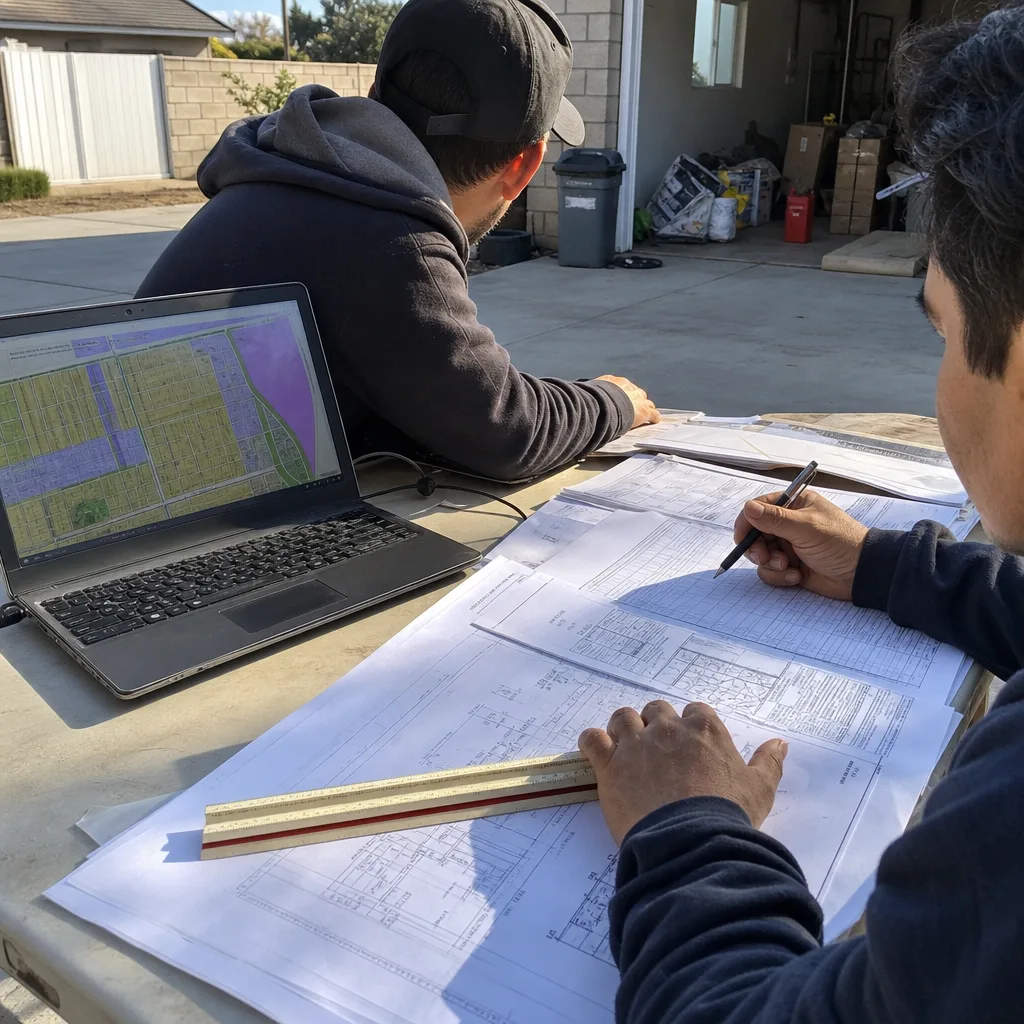
Business & Professions Code §7044(b) requires every owner-builder to disclose their status on the Natural Hazard Disclosure Statement, or in a separate written disclosure, to any buyer within ten years of construction completion. This isn’t a footnote. It’s a mandated disclosure that appears in the same document package as earthquake zone and flood plain information.
We’ve seen how this plays out in Chino’s resale market. Here’s the documented effect:
- The buyer’s inspector flags non-standard conditions. Owner-builder projects often deviate from typical construction sequences. An inspector sees a non-professional-grade stucco application, or a roof tie-in that doesn’t match the permitted detail, and notes it as “recommend structural engineer review.”
- The buyer demands a third-party structural review. This costs $800-$2,500 and takes 2-3 weeks. The seller pays, or the closing gets delayed.
- The buyer requests a price reduction. In Chino’s $650,000-$850,000 single-family market, we’ve seen buyers ask for $15,000-$40,000 off the asking price to account for perceived risk, even when the ADU passed all inspections.
- The lender imposes additional conditions. FHA and VA loans require the appraiser to verify permits and inspections. Owner-builder status triggers a deeper file review, adding 5-10 business days to loan approval.
The ten-year clock runs from the date of final inspection, not the date you started construction. Build an ADU in 2025, sell in 2032, and you’re still disclosing. The disclosure follows the property, not the owner, so even a transfer to family triggers the requirement.
We know of a College Park homeowner who saved approximately $22,000 on a garage conversion ADU by acting as owner-builder in 2019. When they sold in 2023, the buyer’s inspector flagged a non-standard electrical subpanel installation, the homeowner paid $1,800 for an engineer’s letter, and accepted a $12,000 price reduction. The net savings: roughly $8,000 over four years, before accounting for the 200+ hours of personal project management time.
This isn’t an argument against all DIY construction. It’s a financial analysis that most guides omit. The savings get repriced at resale, and the repricing often happens when the seller has the least leverage, in a market that’s already softening.
Where DIY Saves Money Without Legal Exposure
There are three categories of ADU work where a Chino homeowner can save material money without triggering the liability tail of licensed trades or structural work. We’ve specified these in hundreds of projects, and the pattern holds.
Finish Carpentry and Interior Trim
Baseboards, door casings, window stools, and crown molding in an ADU don’t require a contractor’s license if the total contract value stays under $500 per trade. A homeowner with a miter saw, nail gun, and patience can handle this work over a weekend. The savings: $1,500-$3,500 on a typical 500-square-foot ADU, depending on trim complexity and material choice.
The key is sequencing. Finish carpentry happens after final inspection of mechanical, electrical, and plumbing systems. Do it early, and you risk damage during subsequent trades. We’ve seen owner-builders install trim before the HVAC startup, then watch the ductwork crew dent casing with their equipment.
Landscaping and Hardscaping (Within Limits)
Chino’s municipal code allows homeowner-performed landscaping without a contractor’s license, provided retaining walls stay under 3 feet in height and no concrete flatwork exceeds 120 square feet. This covers most ADU yard grading, planting, irrigation (non-pressurized main connections), and decorative gravel or paver installations.
Savings here run $3,000-$8,000, but the real value is timeline control. Professional landscapers in Chino often book 6-8 weeks out. A homeowner can work evenings and weekends, finishing the exterior while interior punch-out proceeds.
One caution: Chino requires a separate landscape irrigation permit if your ADU connects to the municipal water supply through a separate meter. The connection itself requires a C-36 or C-34 licensed plumber. Homeowners can trench and lay lateral lines, but the backflow preventer and meter set must be performed by a licensed contractor.
Interior Painting and Decorative Finishes
Painting, wallpaper, and decorative tile backsplash installation (non-wet-wall) are the classic DIY savings. For a 500-square-foot ADU, professional interior painting runs $2,500-$4,500. Materials cost $400-$700. The homeowner’s time investment: 40-60 hours across priming, cutting in, rolling, and cleanup.
We’ve specified James Hardie fiber-cement siding on dozens of Chino ADUs, and the same principle applies to interior finishes: the material quality matters more than the applicator’s credential. A homeowner who buys premium paint, uses the correct primer for new drywall, and allows proper cure time between coats achieves results indistinguishable from a professional crew.
The liability exposure here is essentially zero. Paint defects are cosmetic, not structural. They don’t trigger inspection failures, and they don’t appear on disclosure statements.
Where DIY Creates Compounding Liability
Conversely, these are the categories where we’ve seen owner-builders lose money, time, and sleep:
- Foundation and slab work. Chino’s expansive clay soils, particularly in the southwest quadrant near the Prado Basin, require specific rebar placement and control joint spacing. A slab crack discovered at final inspection means removal and replacement, not repair.
- Roofing and weatherproofing. Chino’s 110°F summer days and occasional Santa Ana wind events punish marginal flashing details. Water intrusion discovered two years later isn’t covered by any warranty the owner-builder can access.
- Electrical panel upgrades and subpanel installations. Southern California Edison requires a C-10 licensee to pull the service upgrade permit. Homeowner-performed electrical work voids homeowner’s insurance for fire claims.
- Gas line extensions. Southern California Gas Company mandates licensed C-36 or C-38 work for any extension beyond the existing meter. Leaks discovered during pressure testing require complete rework at the owner’s expense.
How Chino Building & Safety Treats Owner-Builder Projects
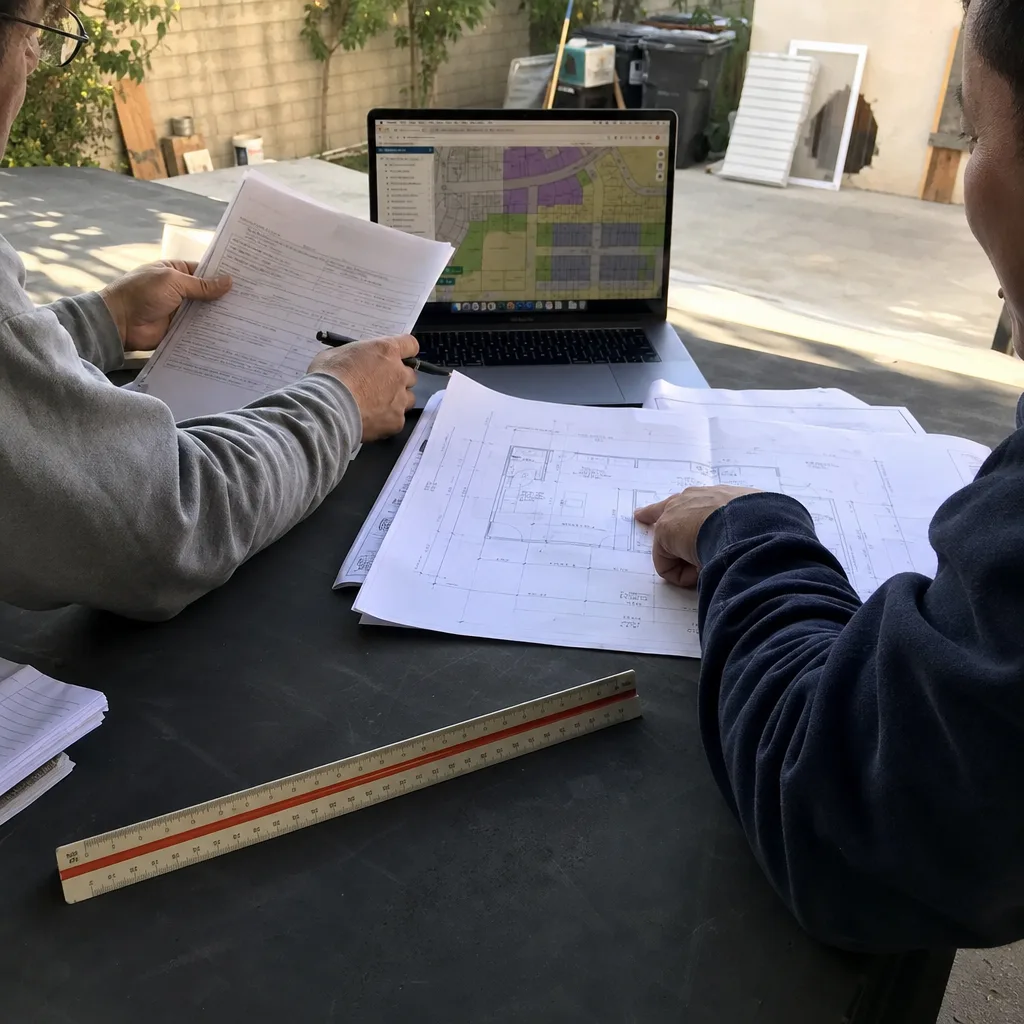
Chino Building & Safety operates under the 2022 California Building Code with local amendments adopted in 2023. The division’s inspection protocols for owner-builder projects differ in practice from contractor-led projects, though the code requirements are identical on paper.
Inspection Scrutiny Levels
We’ve tracked correction rates across our project portfolio and conversations with Chino inspectors. Owner-builder projects show a first-attempt failure rate of approximately 35-45% at rough electrical, rough plumbing, and framing inspections. Contractor-led projects in our experience fail at 12-18%.
The difference isn’t inspector bias. It’s preparation quality. Professional contractors submit detailed structural calculations, manufacturer cut sheets, and engineered drawings that anticipate inspector questions. Owner-builders often arrive with the permit set and good intentions, but without the supplemental documentation that resolves edge cases on-site.
Specific examples from Chino:
- Framing inspection. Chino requires hold-down straps at 48-inch centers for shear walls in ADUs over 600 square feet. The prescriptive table in the permit set shows this, but owner-builders frequently miss the strap gauge specification (14-gauge minimum for two-story, 16-gauge for single-story). Inspector fails, correction requires removing drywall to access straps.
- Rough electrical. Chino enforces AFCI/GFCI requirements strictly. Owner-builders often install standard breakers where combination-type AFCI is required, or miss the dedicated 20-amp small-appliance circuit for kitchen countertops. The correction: replace breakers, re-test, reschedule. Cost: $280-$450 in electrician time, plus $180 reinspection fee.
- Final inspection. Chino’s final checklist includes 47 items for detached ADUs. Item 23, “verified fire separation assembly at property line,” trips owner-builders who assumed standard 1-hour rated drywall was sufficient. Chino requires specific UL-listed assemblies for zero-lot-line conditions common in older neighborhoods north of Riverside Drive.
Reinspection Fees and Timeline Impact
Chino charges $180 per reinspection for failed inspections. More significantly, the reinspection schedule typically runs 10-14 business days out during peak season (March-October). Two failed inspections on a critical path item, like rough plumbing before insulation and drywall, can push a project timeline by a month.
For owner-builders financing construction through a HELOC or construction loan, this timeline extension carries real cost. Interest accrues. Temporary living arrangements extend. The project that was “done by summer” becomes “done by Thanksgiving.”
We’ve also observed that Chino’s inspectors spend more time on owner-builder projects at the pre-construction meeting. They ask more questions about sequencing, request more documentation, and are more likely to require a mid-project site visit if the owner-builder hasn’t built in Chino before. This isn’t punitive. It’s risk management. The city knows that owner-builders lack the bonding and insurance that would cover code violation remediation if the project stalls.
The Financial Break-Even: When Professional Costs Less
The DIY versus professional decision is ultimately arithmetic, not philosophy. Here’s how we structure the analysis for Chino homeowners who ask us for a ADU Design & Permitting in Chino consultation.
The DIY Cost Stack
| Category | Typical Range (500 sq ft garage conversion) | Notes |
|---|---|---|
| Materials and subcontractor labor | $85,000-$120,000 | Homeowner sources, negotiates, coordinates |
| Permit fees, plan check, utility connection | $8,000-$14,000 | Chino’s ADU permit fee schedule, SCE/SCG connection fees |
| Owner time (200-400 hours at $35/hr opportunity cost) | $7,000-$14,000 | Conservative; most professionals earn more |
| Correction costs and reinspection fees | $2,500-$8,000 | Based on 35% first-fail rate, average 1.5 corrections |
| Resale discount or third-party review (amortized over 10 years) | $1,200-$4,000/year | Present value of likely buyer negotiation |
| Total DIY Cost (10-year view) | $115,500-$172,000 |
The Professional Design-Build Cost Stack
| Category | Typical Range (500 sq ft garage conversion) | Notes |
|---|---|---|
| All-in design-build contract | $125,000-$165,000 | Drawings, permit set, construction, final inspection |
| Permit fees included in contract | $0 | Typically itemized but bundled in written price |
| Owner time (20-40 hours) | $700-$1,400 | Design meetings, selections, final walkthrough |
| Correction costs | $0 | Contractor responsibility per Haven Standard |
| Resale discount risk | $0 | Licensed contractor build, standard disclosure |
| Total Professional Cost (10-year view) | $125,700-$166,400 |
The break-even point falls between $80,000 and $120,000 in project value, depending on the homeowner’s time valuation and correction experience. Below this threshold, a simple garage conversion with minimal structural work and no utility complications, DIY can pencil out if the homeowner has genuine construction experience and 200+ hours available.
Above this threshold, the complexity multipliers dominate. A New Detached ADU in Chino with foundation, separate utility meters, and kitchen/bath rough-in typically runs $180,000-$280,000 all-in. At this scale, a single failed foundation inspection, a utility coordination delay, or a $25,000 resale negotiation erases any labor savings.
We’ve also seen the break-even shift based on neighborhood. In Butterfield Ranch, where lots are larger and setbacks more forgiving, foundation work is simpler and inspection failure rates lower. In the older neighborhoods north of Riverside Drive, where zero-lot-line conditions are common and utility access is constrained, professional coordination pays for itself in timeline alone.
The Design-Build Advantage: One Contract, One Price, One Throat to Choke
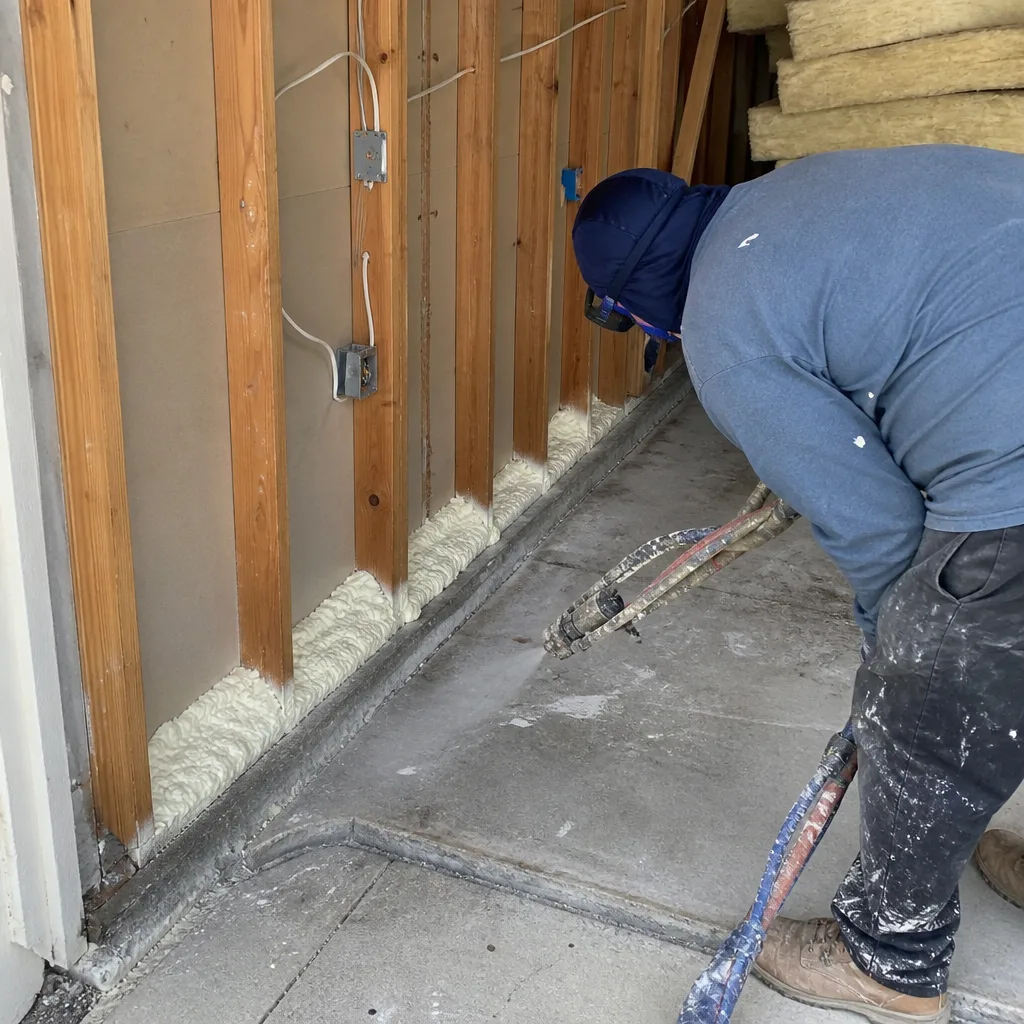
The standard ADU industry model separates design from construction. Homeowners hire an architect or designer for $8,000-$25,000, then bid the drawings to contractors, then manage the inevitable gap between what was drawn and what can be built. When the foundation detail conflicts with the actual soil conditions, the designer blames the contractor for not reading the geotechnical note. The contractor blames the designer for specifying an unbuildable detail. The homeowner pays for the change order.
Ellery ADU Studio operates as a design-build studio, not a contractor. Garage Conversion ADU in Chino and our other services, ADU Design & Permitting, New Detached ADU, Junior ADU & Interior Conversion, and ADU Site Prep & Utilities, are delivered under a single contract at a single written price. The permit set is the core product, not an afterthought.
This matters for the DIY comparison because it eliminates the blame gap that derails most projects. If the slab detail in our permit set doesn’t match field conditions, we revise the drawing and absorb the cost. There’s no change order, no finger-pointing, no $3,500 surprise.
Specific protections under The Haven Standard:
- Clause 1 (Written Price Before Any Work Starts): Every project is quoted with a written, line-item price before any work begins. The words “call for a quote” do not appear anywhere in our process. You receive the full scope, with dollar amounts, before signing.
- Clause 5 (No Surprises): The scope is locked at contract signing. No door-side upsells, no scope creep, no “we found something unexpected” add-ons that weren’t in the original permit set.
- Documented Photo Record: Every site visit produces dated, geotagged photographs that you receive, not a summary of how it felt. You see what we found and what we did.
- 365-Day Done Right Promise: If the finished ADU is not built to the permitted drawings, we make it right, in writing, before the project starts. This is not a verbal assurance. It’s a contractual obligation.
For homeowners comparing DIY to professional build, the relevant question isn’t whether you can swing a hammer. It’s whether you want to be the general contractor, the permit expediter, the insurance compliance officer, and the warranty holder of last resort, while also managing your existing career and family obligations.
We’ve completed 900+ ADUs since 2015, every one with a written price before work started and a documented photo record when work was complete. That volume produces pattern recognition that individual homeowners can’t replicate. We know that Chino’s Planning Division interprets the state fire separation requirement with a specific UL assembly list. We know that SCE’s transformer capacity in the southwest quadrant often requires a service upgrade consultation before permit submission. We know that Tuff Shed’s modular garage conversion system coordinates well with Chino’s prescriptive foundation details, while Boxabl’s unit requires specific site prep that must be engineered for local soil conditions.
This isn’t about capability. It’s about information asymmetry. The city, the utilities, and the code have decades of accumulated practice. A homeowner building one ADU faces that asymmetry raw. A design-build studio faces it with 900+ prior data points.
Common Mistakes to Avoid
- Assuming the owner-builder exemption covers work performed by unlicensed “helpers.” Paying your brother-in-law cash to rough in electrical doesn’t save money if a fire inspector later traces a claim to unlicensed work and your insurer denies coverage. Verify every trade license through CSLB, every time.
- Skipping the pre-construction meeting for detached ADUs over 750 square feet. Chino requires this meeting, and missing it triggers an automatic first-inspection failure with $180 reinspection fee and two-week delay. The meeting invitation arrives by mail; watch for it.
- Using online plan templates without Chino-specific amendments. Generic ADU plans from national websites don’t account for Chino’s local amendments to the California Building Code, including specific fire separation requirements and CalGreen Tier 1 triggers. Plan check rejection costs 4-6 weeks.
- Underestimating utility coordination timelines. Southern California Edison’s service upgrade queue for Chino ran 8-12 weeks in 2024. Owner-builders who start construction before securing the utility release face work stoppage with crews idle and billing hourly.
- Failing to document every inspection pass with photos and signed cards. The §7044 disclosure requires proof of permit compliance. Owner-builders who misplace inspection cards must pay Chino Building & Safety for record retrieval, and buyers’ inspectors treat missing documentation as a red flag.
- Performing structural work without engineered drawings for Chino’s expansive soils. The clay soils in southwest Chino, particularly near the Prado Basin, require specific foundation designs. Prescriptive details from the IRC don’t always suffice; an engineer’s letter adds $1,500-$3,500 but prevents $15,000+ foundation replacement.
- Neglecting to factor resale disclosure into the original financial analysis. The ten-year disclosure requirement isn’t a remote risk. Chino’s typical homeowner turnover is 7-10 years. Most owner-builders will sell within the disclosure window, and the buyer’s negotiation often exceeds the original labor savings.
When to Call a Professional
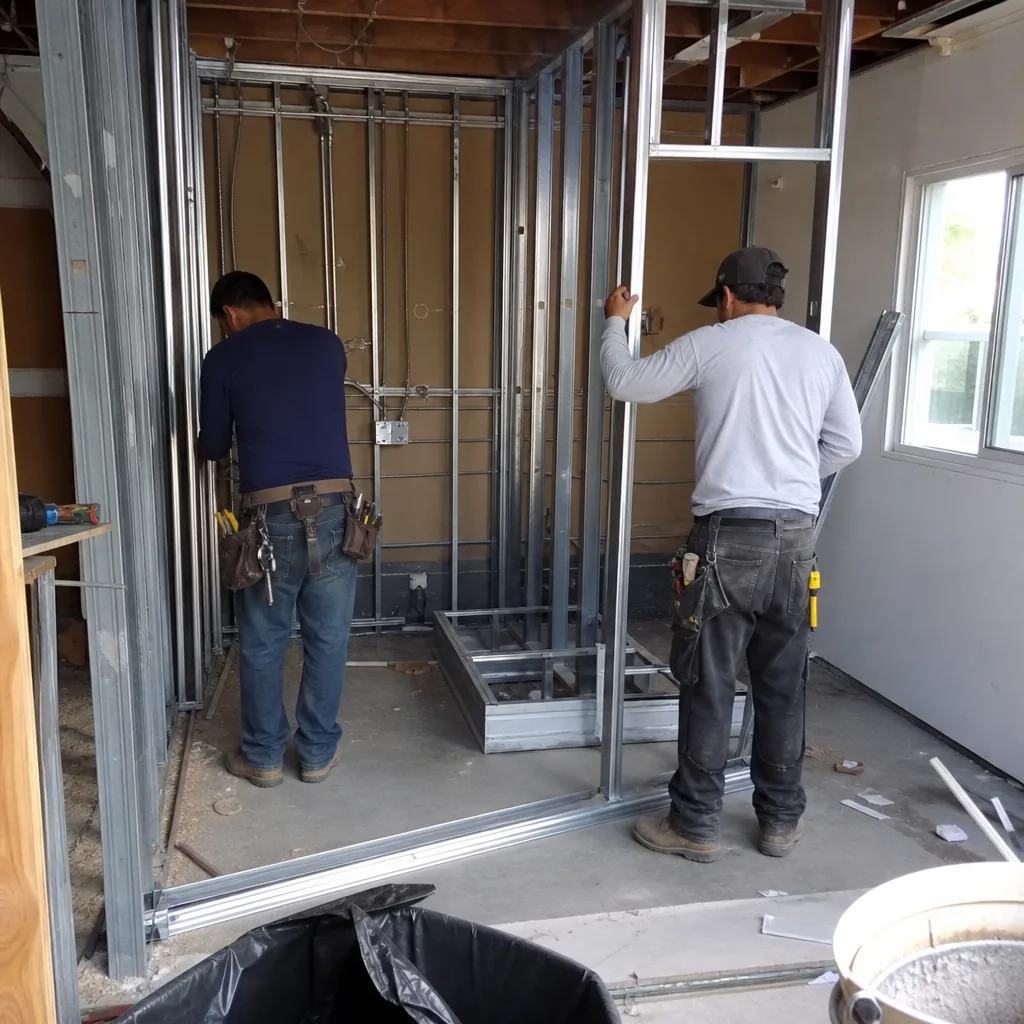
Call a professional when the project involves foundation work, structural engineering, licensed trades, or any scenario where you’ll sell within ten years. Call a professional when your time is worth more than $35 per hour, when you’ve already received one correction notice, or when the permit set requires anything beyond prescriptive IRC details.
For Chino homeowners who want the price on the page, the permit set as the core deliverable, and a single written price before any work begins, Ellery ADU Studio Chino home offers free estimates. We also provide a Free Second Opinion on any written estimate already in hand, no obligation. Call (909) 323-1107 to schedule.
Frequently Asked Questions
A professional design-build ADU in Chino typically runs $125,000-$280,000 all-in, depending on type and size, with a written price locked before work starts. DIY material and subcontractor costs run 15-25% lower on paper, but owner time, correction costs, reinspection fees, and the present value of resale disclosure liability typically erase savings on projects above $120,000. Call (909) 323-1107 for a written estimate on your specific property, or browse more guides & resources on ADU planning in Chino.
Yes, under California’s owner-builder exemption, you can act as your own general contractor and pull permits in your own name. You cannot legally perform electrical, plumbing, HVAC, or structural concrete work yourself without the relevant license; these trades must be hired out to CSLB-licensed contractors. The exemption also requires you to disclose your owner-builder status to any buyer for ten years.
Business & Professions Code §7044 requires owner-builders to disclose their status on the Natural Hazard Disclosure Statement or in a separate written document to any buyer within ten years of construction completion. This disclosure routinely triggers buyer inspections, third-party structural reviews, and price negotiations that reduce or eliminate original DIY savings.
The code requirements are identical, but in practice, owner-builder projects show first-attempt failure rates of 35-45% at critical inspections, compared to 12-18% for contractor-led projects. Chino inspectors also spend more time in pre-construction meetings with owner-builders and are more likely to require supplemental documentation on-site. Reinspection fees are $180 per failure, with 10-14 day reschedule delays.
Finish carpentry, interior painting, and landscaping within Chino’s permit exemptions, save $1,500-$8,000 without legal exposure. These are cosmetic, non-structural, and non-licensed trades. Avoid DIY foundation, electrical, plumbing, roofing, and gas work, where errors create liability that exceeds any labor savings.
Under The Haven Standard, Clause 1, Ellery ADU Studio provides a written, line-item price before any work begins, and Clause 5 locks the scope at signing. No change orders, no door-side upsells, no “unexpected conditions” add-ons. The price you sign is the price you pay, documented in the contract.
The Bottom Line
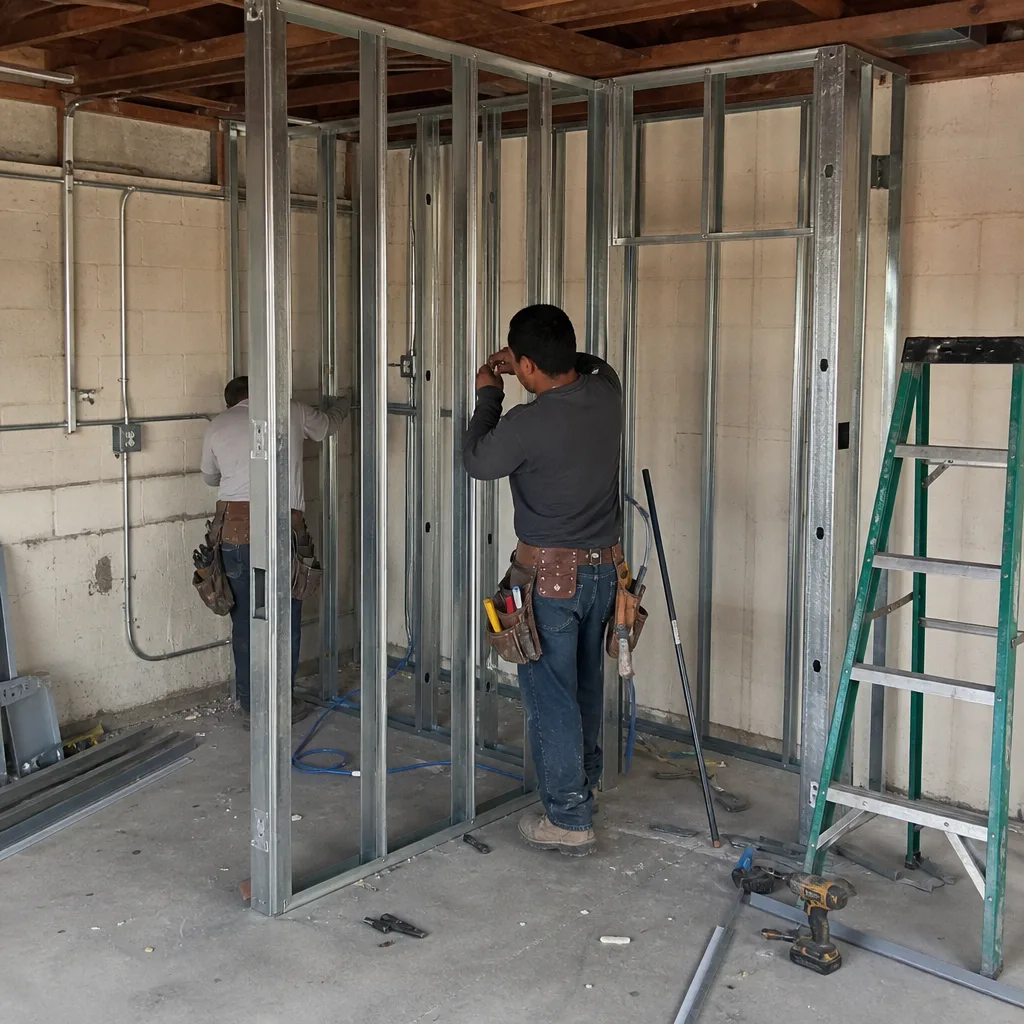
The DIY ADU question in Chino is not about whether you’re handy enough. It’s about whether you’re prepared to be a general contractor, permit expediter, insurance compliance officer, and warranty holder, while disclosing that status to every buyer for the next ten years. For finish work, painting, and landscaping, DIY saves real money without legal exposure. For foundations, licensed trades, and structural work, the liability tail exceeds the labor savings. Above $120,000 in project value, a single design-build contract with written pricing, documented photo records, and a 365-Day Done Right Promise typically costs less than the sum of homeowner time, correction cycles, and resale discount. The permit set is the core product, and the studio that treats it as such eliminates the designer-builder blame gap that derails most projects.
Written by Nadia Ellery, Owner at Ellery ADU Studio Chino, serving Chino since 2015.