
Last updated September 25, 2026
How to Hire a ADU Contractor in Chino: A Step-by-Step Guide
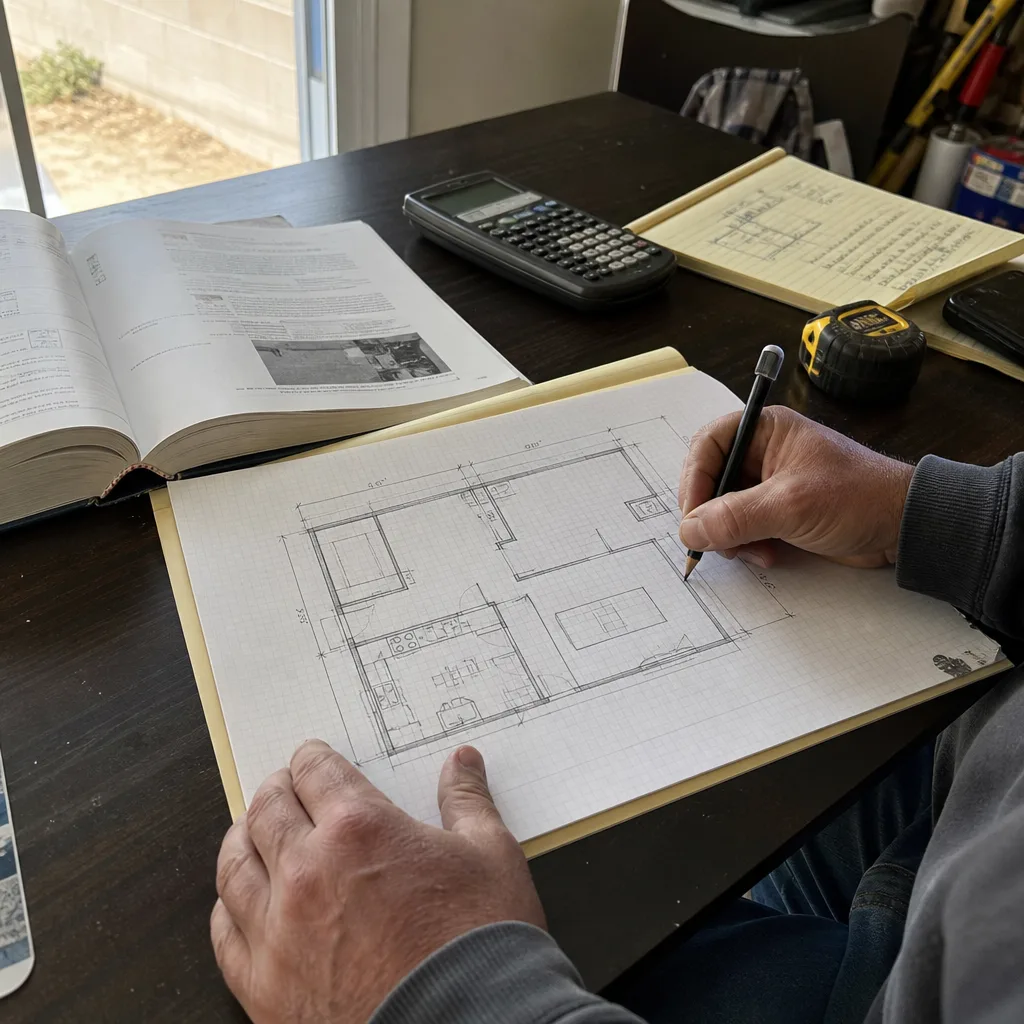
The most expensive hiring mistake Chino ADU owners make is not hiring a bad contractor - it’s hiring a good contractor who was never given a complete permit set. When field conditions don’t match preliminary drawings, the designer blames the builder, the builder blames the designer, and the homeowner pays for the gap. In Chino, where San Bernardino County’s plan check queue already adds weeks to project timelines, a single correction cycle triggered by incomplete drawings can cascade into months of delay. This guide shows how to evaluate the design-to-build handoff before you sign anything, and how to read a bid so you know exactly what you’re buying. For more guides & resources, visit our blog.
Quick Answer
To hire an ADU contractor in Chino, verify active California license classification (B-General or qualifying C-contractor), request three insurance certificates with minimum $1M/$2M limits, confirm the bid prices from a stamped permit set rather than a schematic, and structure the contract so one entity owns both design and construction liability. A single-contract design-build arrangement eliminates the blame gap that derails most Chino ADU projects.
Table of Contents
- Step 1: Verify License Classification and Standing
- Step 2: Request the Three Insurance Certificates That Matter
- Step 3: Read the Bid - Permit Set or Schematic?
- Step 4: Reference Check for Schedule Performance, Not Just Craftsmanship
- Step 5: Understand What Your Contract Structure Requires You to Manage
- Step 6: Evaluate Pricing Transparency and Change-Order Risk
- Step 7: If Considering Prefab or Modular, Verify Brand Fluency
- Common Mistakes to Avoid
- When to Call a Professional
- Frequently Asked Questions
- The Bottom Line
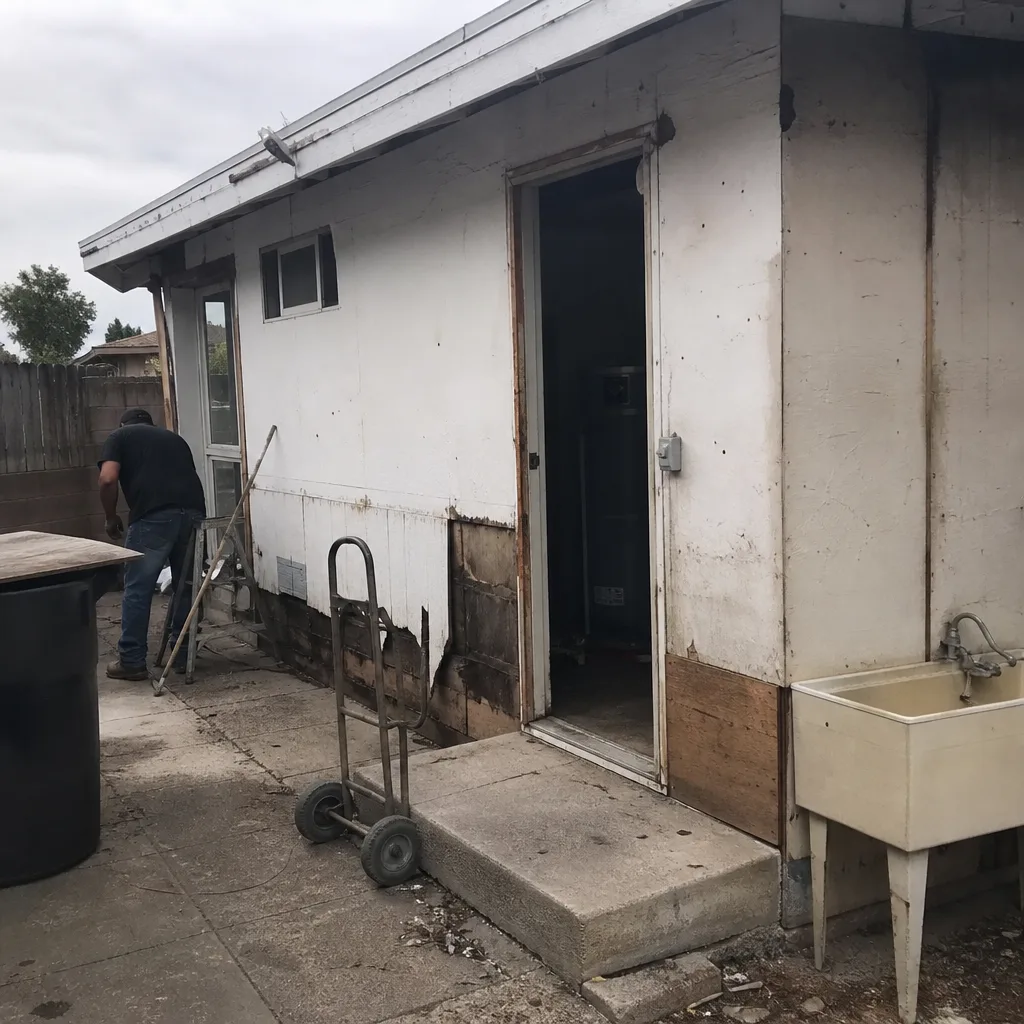 Before
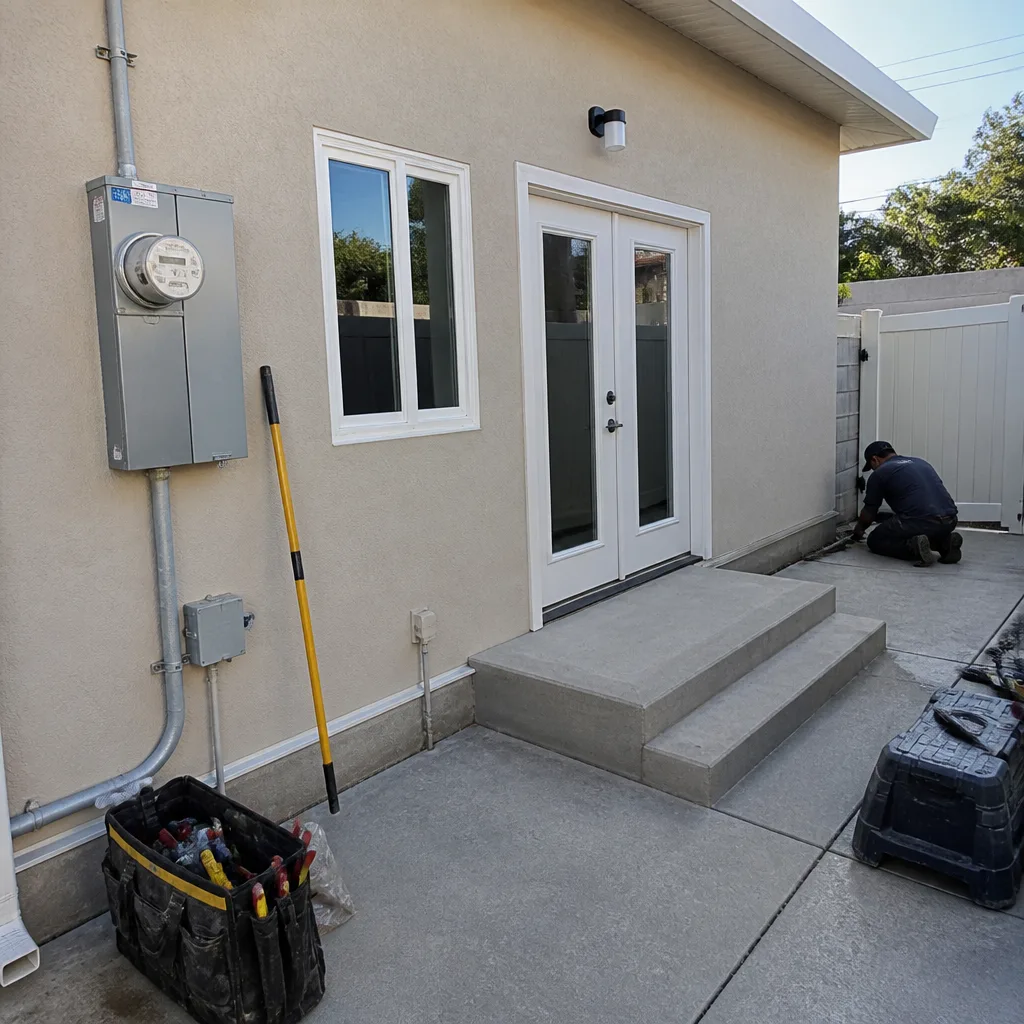 After
AfterStep 1: Verify License Classification and Standing
California contractors are licensed by the Contractors State License Board (CSLB), and the classification matters for ADU work. A B-General Building contractor can oversee the entire ADU project, including subcontracting specialized trades. A C-class contractor - say, a C-36 Plumbing or C-10 Electrical contractor - can only perform work within that specific trade. For a garage conversion or detached ADU in Chino, a B-General license is the baseline; if your contractor holds only C-class licenses, they cannot legally serve as the prime contractor for the full scope.
Here’s what to check:
- Go to cslb.ca.gov and search the license number. Confirm it is active, not suspended, and carries a B-General classification or a qualifying combination that covers your full scope.
- Verify the license is in the contractor’s name, not borrowed or held by an inactive officer. In Chino, we’ve seen homeowners discover mid-project that their “contractor” was operating under a license held by someone who had left the company two years prior.
- Check for pending disciplinary actions. The CSLB publishes these; a recent citation for unlicensed subcontracting is a pattern, not an anomaly.
Unlicensed subcontractor chains are a specific risk in Chino’s ADU market. When a prime contractor layers unlicensed labor beneath them, the homeowner becomes the statutory employer under California Labor Code. That means workers’ compensation liability falls to you if someone is injured. Ask directly: “Will anyone on this job be unlicensed or paid as a 1099 without their own CSLB number?” If the answer is evasive, the structure is likely unstable.
At Ellery ADU Studio Chino, our license number appears on every page and proposal. We carry B-General classification, and every trade partner on our Chino projects is separately licensed and insured - documented in the subcontractor schedule you receive at contract signing.
Step 2: Request the Three Insurance Certificates That Matter
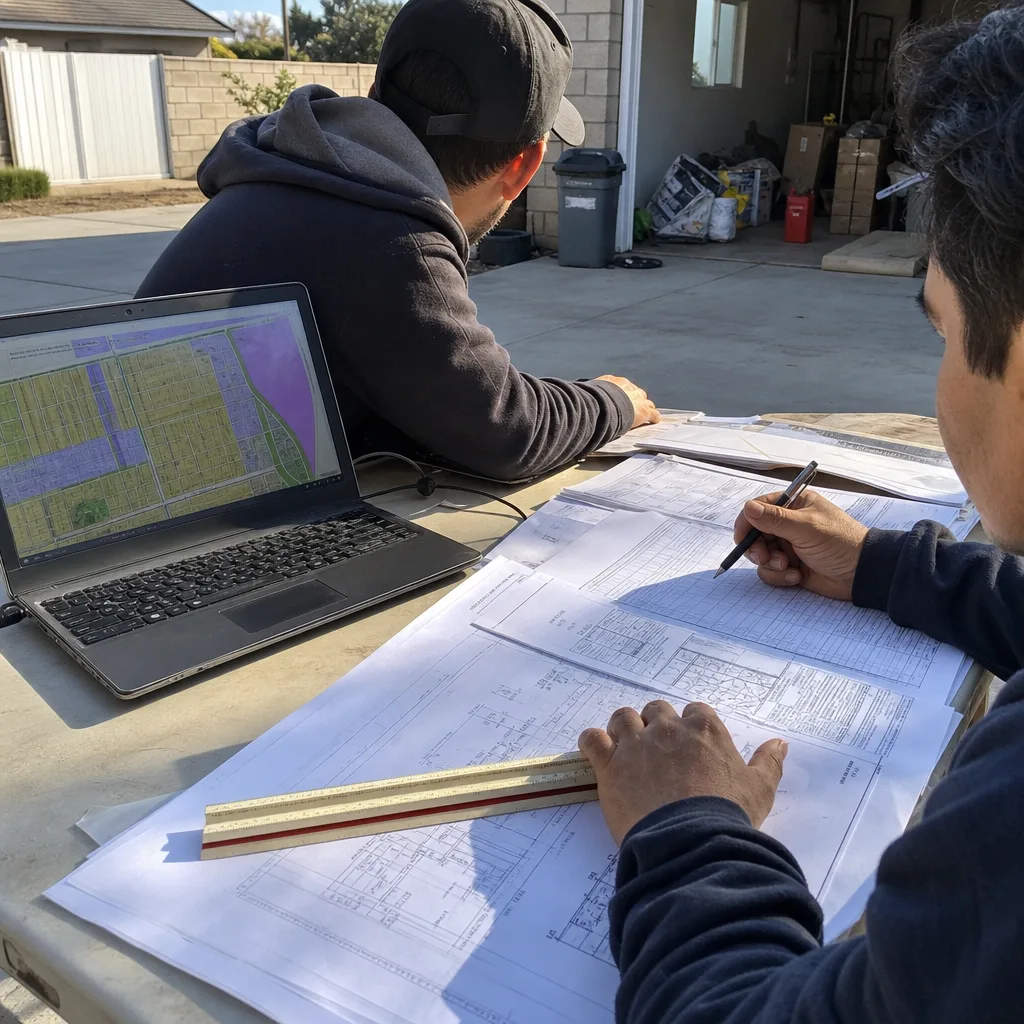
Every ADU contractor in Chino should provide three certificates of insurance without your asking twice. If they hesitate, that hesitation is information.
- General Liability (GL): Minimum $1 million per occurrence, $2 million aggregate. For detached ADUs with excavation or tree removal, request $2 million per occurrence. Chino’s clay-heavy soils in the southern neighborhoods near Prado Regional Park can complicate foundation work; higher limits protect against subsidence-related property damage claims.
- Workers’ Compensation: Required by law if the contractor employs anyone. Verify the policy is active and covers all employees who will step onto your property. In California, sole proprietors without employees can exempt themselves, but if they bring a crew, that crew must be covered.
- Completed Operations: Often overlooked. This covers defects that manifest after the project is finished - a roof leak discovered six months after final inspection, or a foundation crack that opens after the first rainy season. Minimum $1 million, matching the GL term.
Request these certificates directly from the insurance broker, not from the contractor. A PDF forwarded by the contractor can be altered. The broker’s email or fax confirmation carries evidentiary weight if a claim arises.
For Chino ADU projects, we also recommend confirming the policy territory includes San Bernardino County specifically. Some regional contractors carry policies limited to Los Angeles and Orange counties; a Chino project falls outside their coverage.
Step 3: Read the Bid - Permit Set or Schematic?
This is where most Chino homeowners lose control of their budget. See our ADU Cost Breakdown: The Chino Homeowner’s Reference for 2026 for detailed pricing structure. A bid prepared from a schematic floor plan - even a detailed one - is not a fixed price. It is an estimate that will change when the city’s plan checker issues corrections, and corrections are standard in San Bernardino County’s review process.
Here’s how to tell which you’re receiving:
| Permit-Set Bid | Schematic Bid |
|---|---|
| References specific drawing sheets (A-101, S-201, MEP-301) | References “preliminary drawings” or “concept plan” |
| Includes line items tied to permit-set specifications (foundation type, wall assembly R-value, window U-factor) | Uses allowance language: “allow $X for windows,” “TBD on HVAC” |
| States “price valid upon permit issuance with no plan check corrections” | States “price subject to final design” or “refined after permit approval” |
| Contractor has reviewed structural calculations | Structural engineer not yet engaged |
The contractual language that closes this gap is specific. Look for: “Contractor warrants that the bid price includes all work required to construct the ADU as shown in the permit set, including any corrections required by the city plan checker to achieve permit issuance.” Without this clause, the correction cost is yours.
In Chino, San Bernardino County’s plan check for ADUs typically runs 4-6 weeks for a complete submittal, but incomplete sets trigger “plan check holds” that restart the clock. A contractor bidding from a schematic is essentially asking you to underwrite their design risk.
Our ADU Design & Permitting in Chino service produces the full permit set - architectural, structural, MEP, Title 24 energy calculations - before any construction price is written. Under Haven Standard Clause 1, that written price is fixed before work starts.
Step 4: Reference Check for Schedule Performance, Not Just Craftsmanship
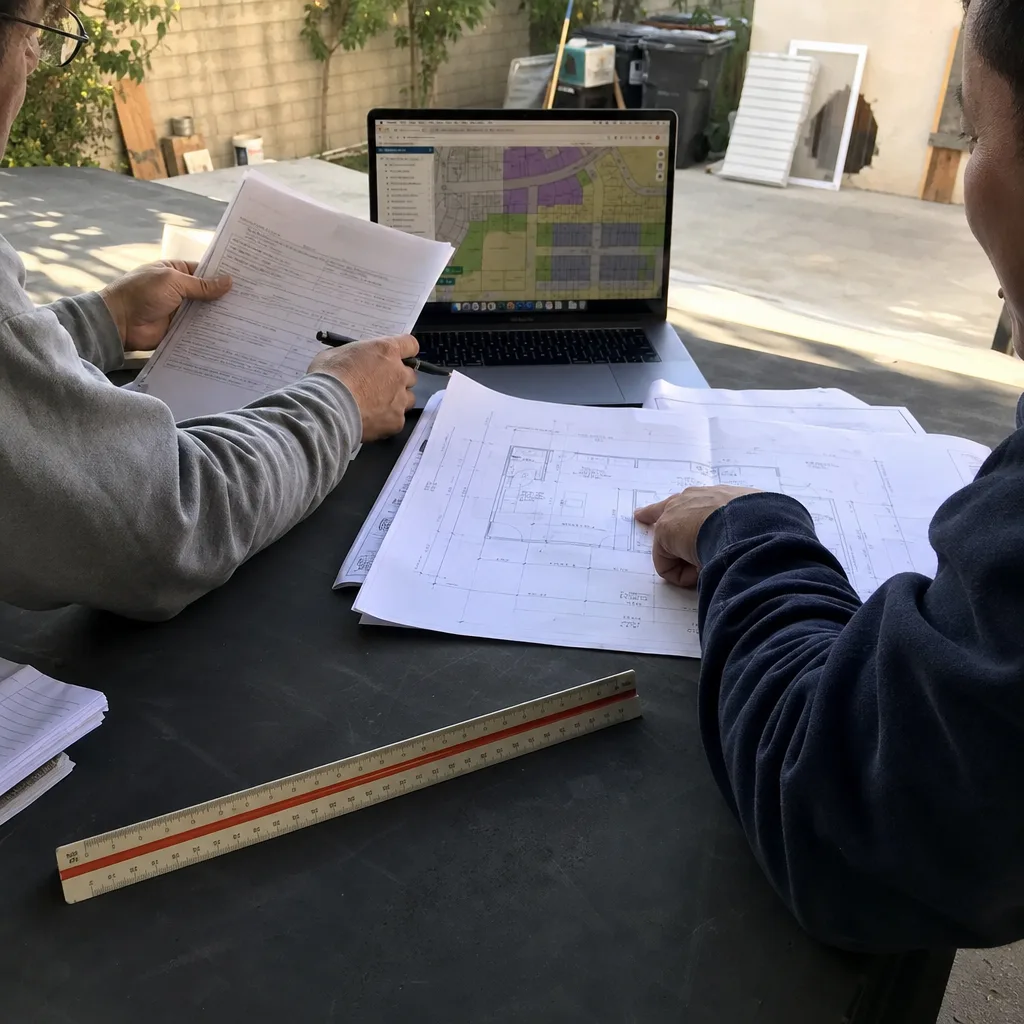
Every contractor has photos of beautiful finished ADUs. Few have documentation of when those projects actually finished relative to their original schedule. In Chino, schedule performance is the metric that separates viable contractors from expensive disappointments.
San Bernardino County’s inspection queue is not Los Angeles County’s. Our Seasonal ADU Care for Chino: Year-Round Homeowner’s Guide covers timing considerations for inspections. Chino projects require coordination with both the city for planning clearance and the county for building inspections if the project falls in unincorporated pockets, or with Chino’s own building department for incorporated areas. Delays compound: a missed rough electrical inspection pushes drywall, which pushes flooring, which pushes final inspection, which pushes the certificate of occupancy you need to legally rent the unit.
Ask references these specific questions:
- “What date was your original completion estimate, and what date did you actually receive certificate of occupancy?” Look for patterns of 30-60 day overruns, not single outliers.
- “How many times did the contractor miss a scheduled inspection, and who paid for the re-inspection fees?” In Chino, re-inspection fees run $150-$300 per occurrence; on a project with six inspection phases, this adds up.
- “Did the contractor provide a written schedule with milestones, and did they update it when delays occurred?” A contractor who cannot manage a schedule before signing will not manage one after.
- “Were permit corrections the contractor’s responsibility or yours, and how long did corrections take?” This surfaces the design-to-build handoff problem directly.
We maintain a documented photo record on every visit - not for marketing, but for schedule accountability. When our Chino clients ask where the project stands, we show timestamped evidence, not verbal reassurance.
Step 5: Understand What Your Contract Structure Requires You to Manage
The single most consequential decision in hiring an ADU contractor in Chino is not who you hire, but how many contracts you sign. The structure determines who owns the problem when something doesn’t match.
Separate designer + separate contractor: You sign one contract for drawings, another for construction. When the field measurement differs from the drawing - the existing garage slab is 3.5 inches, not 4 inches, requiring a thickened edge - the contractor points to the designer’s error, the designer points to the contractor’s failure to verify, and you mediate while paying for the fix. You are the project manager by default.
Single-contract design-build: One entity owns both the permit set and the construction. The same team that drew the foundation detail builds it. If the slab is thin, the design-build studio adjusts the detail and absorbs the cost - because they wrote the detail and they build to it. The homeowner’s role is approval, not arbitration.
This is not theoretical. In 2019, a Chino homeowner on Cypress Avenue hired a Los Angeles designer and a local contractor separately. The designer specified a 12-inch footing depth based on standard soils data; the contractor, unfamiliar with the expansive clay in that Chino neighborhood, poured to 12 inches without site-specific verification. The footing heaved six months after completion. The designer claimed the contractor should have requested a soils report; the contractor claimed the drawings were the drawings. The homeowner paid $14,000 for underpinning and a redesigned foundation.
Our Garage Conversion ADU in Chino and New Detached ADU in Chino services are structured as single-contract design-build. The Haven Standard, Clause 5 (No Surprises), locks the scope at signing: no door-side upsells, no scope creep, no designer-versus-builder disputes.
Step 6: Evaluate Pricing Transparency and Change-Order Risk
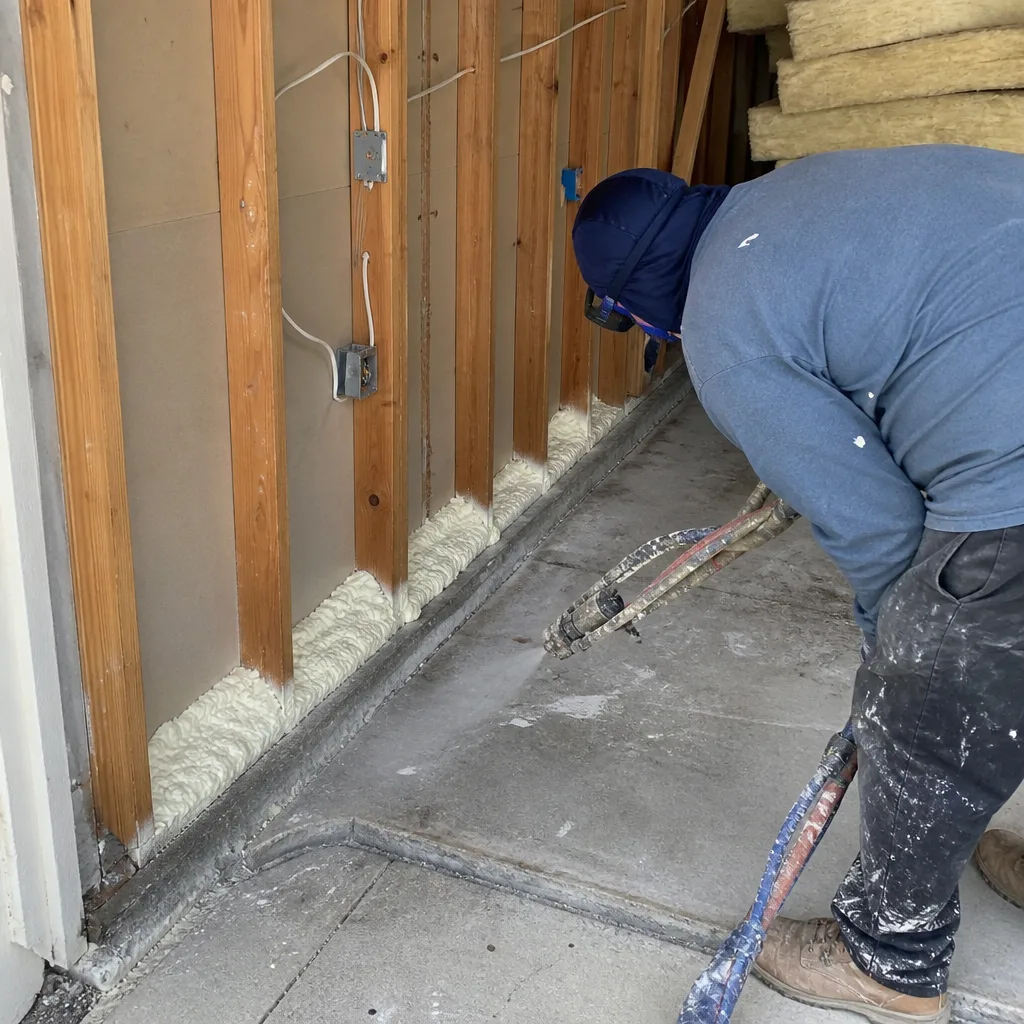
ADU pricing in Chino varies by type, but the structure of the quote matters more than the bottom line. A low initial price with open-ended change-order language is more expensive than a higher fixed price with locked scope.
Typical Chino ADU cost ranges, all-in from design through final inspection:
- Garage conversion ADU: $85,000-$165,000. Lower end for single-story, minimal MEP extension, no structural modification. Upper end for two-story additions, full HVAC replacement, or significant electrical service upgrades.
- New detached ADU (studio/1BR): $180,000-$280,000. Foundation, utilities from main house, and compact footprint keep costs controlled.
- New detached ADU (2BR/2BA): $280,000-$420,000. Kitchen appliance package, full electrical panel, and sewer lateral extension drive the upper range.
- Junior ADU / interior conversion: $45,000-$95,000. Existing bathroom access and shared utilities reduce infrastructure costs.
These ranges assume a complete permit set, not a schematic. If your contractor’s bid falls significantly below these figures, examine the exclusions. Common omissions that become change orders:
- Utility service upgrade (Chino’s older neighborhoods near Downtown often require 200A panel upgrades)
- Sewer lateral replacement (pre-1980 clay pipe is common in Chino’s established areas)
- Fire sprinkler system (triggered by specific square footage and setback combinations in California Building Code)
- Title 24 energy compliance documentation (required for permit, often treated as “permit fees” in vague quotes)
- Landscaping and hardscape restoration (not optional for certificate of occupancy in many Chino jurisdictions)
Under Haven Standard Clause 1, every Ellery project is quoted with a written price before any work begins. The words “call for a quote” do not appear on any page of our site because they do not describe our process. We name a dollar range, then specify it in writing.
Step 7: If Considering Prefab or Modular, Verify Brand Fluency
Prefab and modular ADU systems - factory-built units delivered to site - are increasingly viable in Chino. But they are not plug-and-play. Each system has specific foundation requirements, utility connection protocols, and crane access needs that must be coordinated in the permit set.
A contractor who “can work with anything” is a contractor who has not worked with anything specific. Ask directly:
- “Have you permitted a [brand name] unit in San Bernardino County?” County plan checkers have varying familiarity with factory-built systems; prior approvals smooth the path.
- “Who owns the foundation design - the factory or your team?” If the factory provides a generic foundation detail that doesn’t account for Chino’s clay soils or your specific site drainage, the local engineer must redesign it, adding weeks.
- “Is the crane rental and setup included in your price, or is that my contract?” Crane costs for a modular ADU in Chino range $3,500-$8,000 depending on reach and street closure requirements.
Ellery specifies and coordinates prefab and modular systems from Boxabl, Plant Prefab, Tuff Shed, and James Hardie within our single-contract design-build model. We do not hand off factory coordination to the homeowner. The same team that specifies the module’s foundation connection detail builds that foundation and receives the module - one contract, one written price, one entity accountable for the interface.
Common Mistakes to Avoid
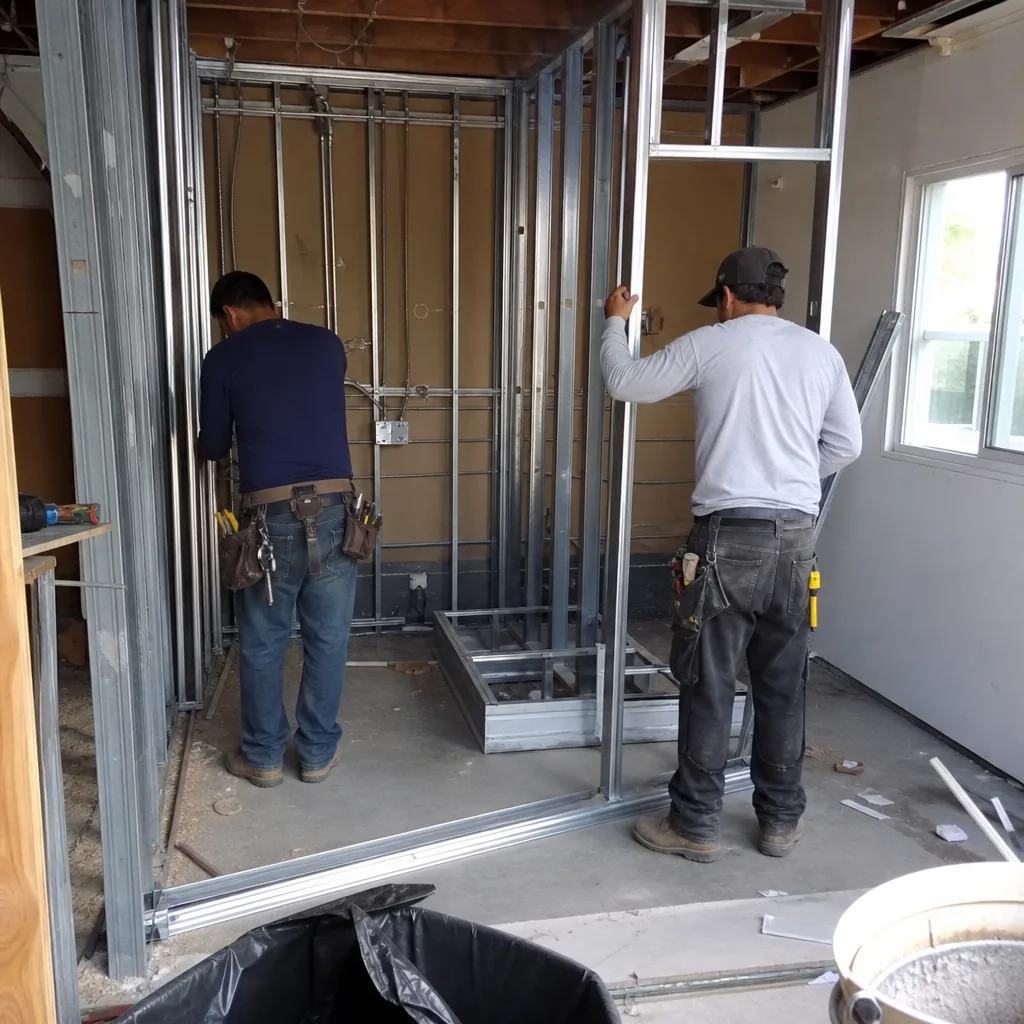
- Hiring based on the lowest schematic bid. The lowest initial price often carries the highest correction-cost exposure. In Chino, we’ve seen $20,000 “savings” evaporate in the first plan check cycle.
- Failing to verify the permit set is complete before construction starts. Starting construction on a “pending” permit is a stop-work order risk. San Bernardino County issues these; the contractor’s schedule pressure is not your emergency.
- Accepting verbal warranty terms. The 365-Day Done Right Promise is effective because it is in writing, dated, and referenced to specific permit drawings. Verbal assurances have no enforcement mechanism.
- Neglecting to check reference projects in Chino specifically. A contractor’s performance in Orange County or Riverside does not predict their Chino performance. Local plan check relationships, inspector familiarity, and soils knowledge vary by jurisdiction.
- Signing separate contracts without a dispute-resolution mechanism. If designer and contractor disagree, who decides? If your contracts are silent, you pay for the litigation or the fix.
- Assuming prefab eliminates design risk. Factory-built units reduce on-site construction time but increase coordination complexity. The permit set must integrate factory drawings with local site conditions; this is design work, not just logistics.
- Ignoring the utility impact. Chino’s water and sewer connection fees for ADUs are set by the Chino Valley Independent Fire District and the Inland Empire Utilities Agency, respectively. A contractor who does not address these in the initial scope is not planning for your total project cost.
When to Call a Professional
Call a professional when you have a preliminary idea of your ADU type - garage conversion, detached new build, or junior ADU - but before you commission drawings from anyone. The sequence matters: a design-build studio can assess feasibility, identify utility constraints, and estimate realistic construction costs before you invest in a full permit set. Reversing this order commits you to a design that may not be buildable at your budget.
Specific scenarios that warrant immediate professional assessment in Chino: your property is in the Chino Airport influence area, where height restrictions are more stringent; your home was built before 1980 and may have unpermitted additions that complicate legal lot coverage calculations; or your lot slopes more than 5%, triggering grading requirements that affect foundation type and cost.
Ellery ADU Studio Chino offers free estimates in Chino - call (909) 323-1107. We also provide a Free Second Opinion on any written estimate already in hand; bring us another contractor’s bid and we will identify the permit-set gaps, insurance omissions, and change-order risks in writing.
Frequently Asked Questions
Garage conversion ADUs in Chino typically run $85,000-$165,000 all-in, drawings through final inspection. New detached ADUs range from $180,000 for a studio to $420,000 for a larger two-bedroom unit. Junior ADUs and interior conversions fall between $45,000-$95,000. Call (909) 323-1107 for an exact quote - estimates are free, and every project receives a written price before any work starts under Haven Standard Clause 1.
Yes. All ADUs in Chino require building permits through either the City of Chino Building Division or San Bernardino County Building and Safety, depending on whether your property is incorporated. The permit set must include architectural drawings, structural calculations, MEP plans, and Title 24 energy compliance documentation. Starting without a permit risks a stop-work order and doubled permit fees.
From permit issuance to certificate of occupancy, garage conversions typically take 4-6 months, and new detached ADUs take 8-14 months in Chino. The permit approval phase adds 4-8 weeks for a complete submittal, longer if corrections are required. Schedule performance depends heavily on whether the contractor bid from a permit-ready set or a schematic - incomplete drawings trigger correction cycles that compound delay.
A B-General Building license is required to serve as prime contractor for a complete ADU project. C-class licenses (plumbing, electrical, etc.) are valid only for their specific trade. Verify active status at cslb.ca.gov, confirm the license holder matches the contracting entity, and check for pending disciplinary actions before signing.
Under a properly structured single-contract design-build agreement with a permit-set bid, the price should not change for scope defined at signing. Under Haven Standard Clause 5 (No Surprises), our scope is locked at signing - no door-side upsells, no scope creep. If your contract allows “unforeseen conditions” changes without a defined process, the price will likely increase. Call (909) 323-1107 for an exact quote - estimates are free.
Ellery ADU Studio pulls all permits as part of our single-contract design-build service. The permit set is our core product, not an afterthought; we submit, track corrections, and coordinate inspections through final approval. If you are working with separate designer and contractor contracts, clarify permit responsibility in writing - it is frequently omitted, leaving the homeowner to manage a process they did not design.
Properties near Prado Regional Park and southern Chino often encounter expansive clay soils requiring deeper footings or post-tension slabs. The Chino Airport influence area imposes height restrictions that limit second-story ADUs. Older neighborhoods near Downtown Chino frequently have pre-1980 sewer laterals and electrical panels that require upgrade before ADU connection. A site-specific feasibility assessment identifies these constraints before design begins.
The Bottom Line
Hiring an ADU contractor in Chino is not primarily about finding skilled labor - it is about structuring accountability so that labor has complete, correct instructions. The permit set is the instruction set. A contractor bidding from anything less than a stamped, complete permit set is asking you to underwrite design risk you cannot see. Verify license classification, request three insurance certificates, read the bid for permit-set specificity, check references for schedule performance, and structure the contract so one entity owns both design and construction. Download our ADU Design & Permitting Maintenance Checklist for Chino Homeowners to track each step. The alternative is managing disputes you did not cause, on a timeline you do not control, with a budget that shifts beneath you.
Call (909) 323-1107 to schedule your free estimate. Bring us your project idea, or bring us another contractor’s written estimate for a Free Second Opinion. We’ll identify the gaps in writing.
Written by Nadia Ellery, Owner at Ellery ADU Studio Chino, serving Chino since 2015.