
HOA & Zoning Compliance for ADUs in Chino, CA
In Chino, getting HOA approval and city zoning clearance are two separate hurdles - and most ADU projects stall at one or both. Ellery ADU Studio handles both tracks simultaneously, starting before a single drawing is drafted, so your project doesn’t lose four months to a CC&R objection that could have been caught on day one. If you want the plain version of what this process costs and what we deliver, you’re in the right place. Call us at (909) 323-1107 and a live person will pick up.
HOA & Zoning Compliance is one part of a larger permit-and-design process - you can see how it fits within our full ADU Design & Permitting in Chino service, which covers everything from site analysis through final inspection under a single written contract.
Chino sits at a point where three jurisdictional realities collide: the City of Chino’s own municipal code, San Bernardino County overlay requirements on a handful of parcels near the city’s edges, and HOA governing documents that range from one-paragraph policy statements to 80-page CC&R binders. Under California’s updated ADU statutes (AB 2221 and SB 897 took full effect in 2023), HOAs cannot outright ban ADUs - but they can, and do, impose design standards on color, roof pitch, siding material, and placement that a permit application still has to reflect. Ignoring the HOA during design means re-drawing. Ignoring the city zoning code means re-submitting. We do neither, because at Ellery we treat ADU Design & Permitting as the core product, not an afterthought.
When You Need HOA & Zoning Compliance
- Your property is governed by an HOA and you don’t know what the CC&Rs say about ADUs. Many Chino HOAs – particularly those in Preserve, College Park, and the newer Crossings communities – have adopted ADU design criteria in the last two years, and the language varies enough that the rules from your neighbor’s subdivision don’t apply to yours.
- You received a city comment letter saying your proposed ADU is “non-conforming” or “requires additional findings.” This typically means a setback, lot coverage, or height issue that wasn’t caught before submittal. In Chino, the standard rear-yard setback for a detached ADU is 4 feet, but corner lots and lots backing to an arterial street sometimes carry additional buffer requirements that catch applicants off-guard.
- Your HOA board approved the ADU verbally but never issued written authorization. The City of Chino’s planning desk will not accept a verbal approval. A written HOA authorization letter, signed by a board officer, is a required attachment to the permit application.
- You’re considering a prefab or modular unit – such as a Mighty Buildings or Plant Prefab panel system – and your HOA has an architectural review committee that hasn’t seen one before. ARC members sometimes flag unfamiliar materials as “non-compliant” when the real issue is that the committee needs a spec sheet and a precedent. We’ve walked multiple Chino HOA boards through exactly that conversation.
- You bought a lot in Chino’s R-1 Single Family zone and assumed a 1,200 sq ft detached ADU was automatic. California law does permit one ADU by right on most R-1 lots, but lot coverage maximums – typically 40 percent in Chino’s standard R-1 zone – can shrink the buildable ADU footprint significantly once the main house and any existing structures are counted. The math matters before you fall in love with a floor plan.
- You want to build a Junior ADU inside the main house and your HOA has a “no separate dwelling unit” clause in its original CC&Rs. Pre-2020 CC&Rs frequently contain language that conflicts with state ADU law. We document the statutory preemption in writing so your HOA board has a clear legal basis to issue approval rather than spending three months consulting their own attorney.
Our HOA & Zoning Compliance Process
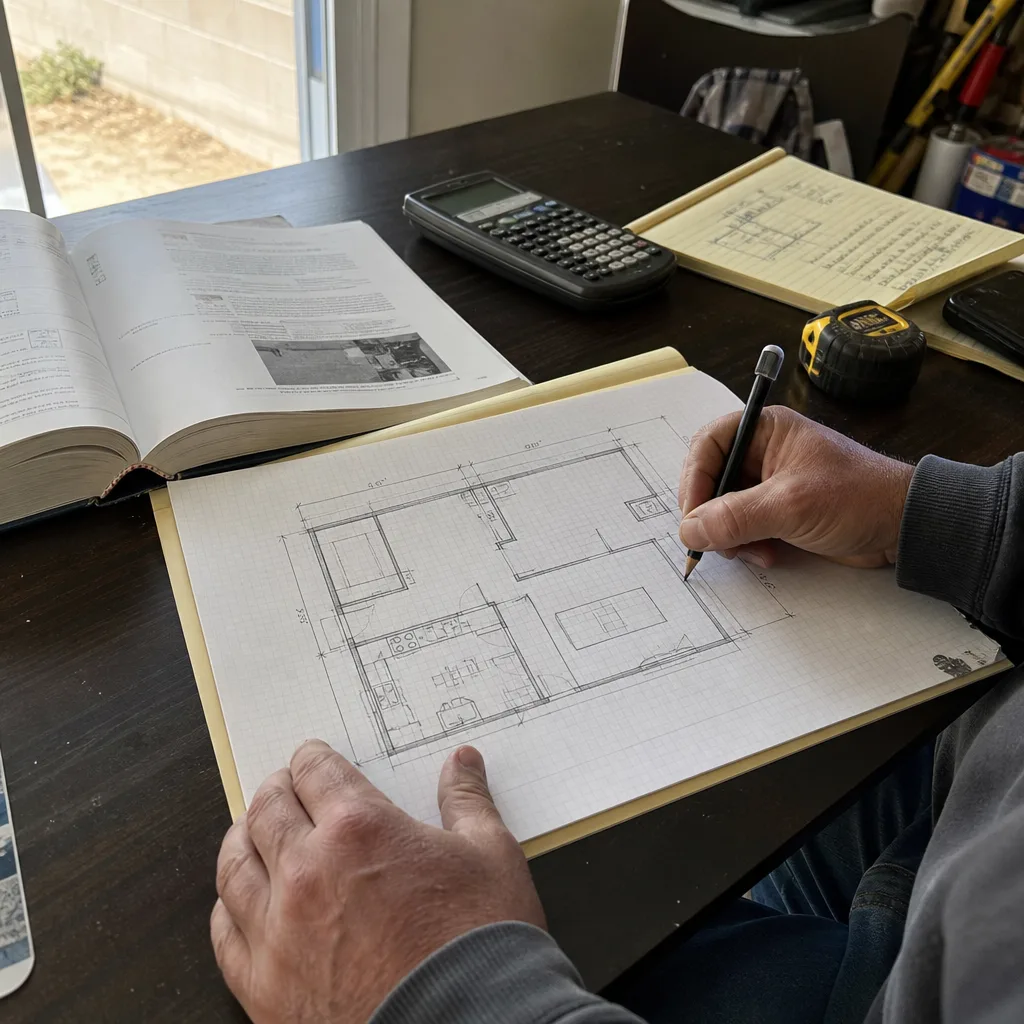
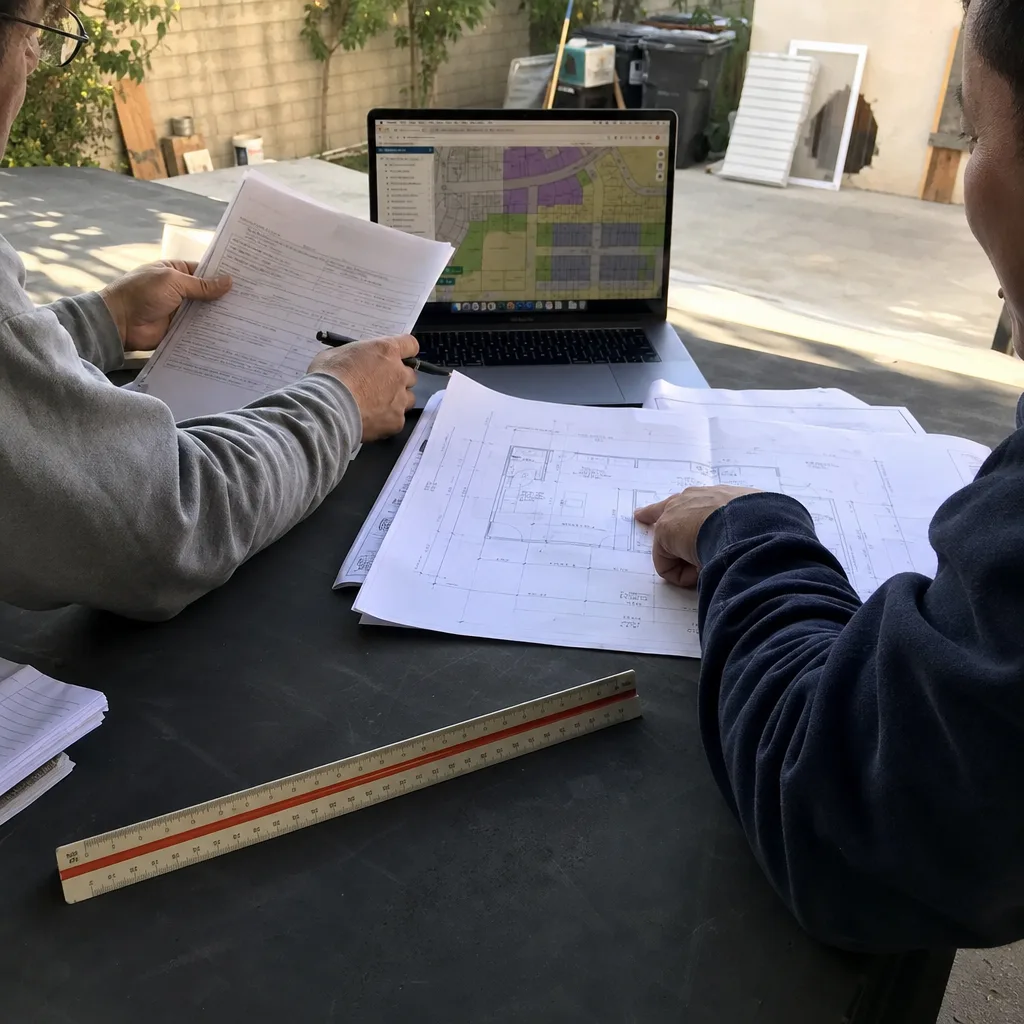
- Document pull and conflict matrix. Before any design work, we pull your parcel’s zoning designation from Chino’s GIS portal, your HOA’s recorded CC&Rs from San Bernardino County, and any ARC design guidelines your HOA has published. We build a one-page conflict matrix showing exactly where city code and HOA rules diverge – and where California state law overrides both. This document goes to you in writing before your project moves to design. Under Haven Standard Clause 1, your written price covers this step; there is no separate “zoning research fee” billed on top.
- Setback, coverage, and height analysis. We run the numbers on your specific lot: rear and side setbacks, total lot coverage with the proposed ADU footprint added in, and the maximum allowable height for your zoning district. In Chino, detached ADUs in R-1 zones are capped at 16 feet in height unless the parcel has a specific variance on record. We check that record. If your lot coverage math is tight, we’ll tell you the exact square footage you have to work with before a floor plan is drawn – not after.
- HOA pre-application meeting. We prepare a one-to-two page summary of the proposed ADU – unit type, approximate square footage, exterior materials, color palette, and roof pitch – and request a pre-application meeting with your HOA’s ARC. This step is optional for clients who prefer to skip it, but in Chino we’ve found it cuts formal ARC review time by an average of six weeks, because the board has already seen the project before the formal submission packet arrives. If your HOA is unfamiliar with prefab construction systems (common when a client is considering a Plant Prefab or Mighty Buildings unit), we bring a one-page spec comparison that frames the system in terms the ARC already uses for conventional stick-frame.
- Formal ARC submission and written authorization tracking. We prepare and submit the full ARC application packet: site plan, preliminary elevations, material and color callouts, and any supporting documentation the HOA requires. We track the submission timeline against your CC&Rs’ stated review window (most Chino HOAs have a 30- or 45-day review period under their own bylaws). If the board doesn’t respond within that window, we document the deadline in writing – because some HOA bylaws treat non-response as deemed approval. You receive a copy of every piece of correspondence we send and receive on your behalf.
- City permit submittal with HOA authorization attached. Once written HOA authorization is in hand, we incorporate any ARC-required design modifications into the permit set and submit to the City of Chino’s Building and Safety Division. Because our conflict matrix and HOA coordination happen before the permit set is finalized, we are not revising drawings to satisfy two masters at once – the permit set reflects both from the start. This is the specific point where separate designer-builder arrangements tend to break down: the designer submits plans that clear the city but fail HOA review, the builder can’t start, and everyone points at the other party. With a single Ellery contract, there is no one else to point at.
- Plan check response and final clearance. Chino’s plan check typically takes three to five weeks for a standard detached ADU. We respond to all plan check comments in writing and track every open item to closure. A documented photo record is maintained throughout – you receive evidence of what was submitted, what comments came back, and how each one was resolved, not a verbal summary of where things stand.
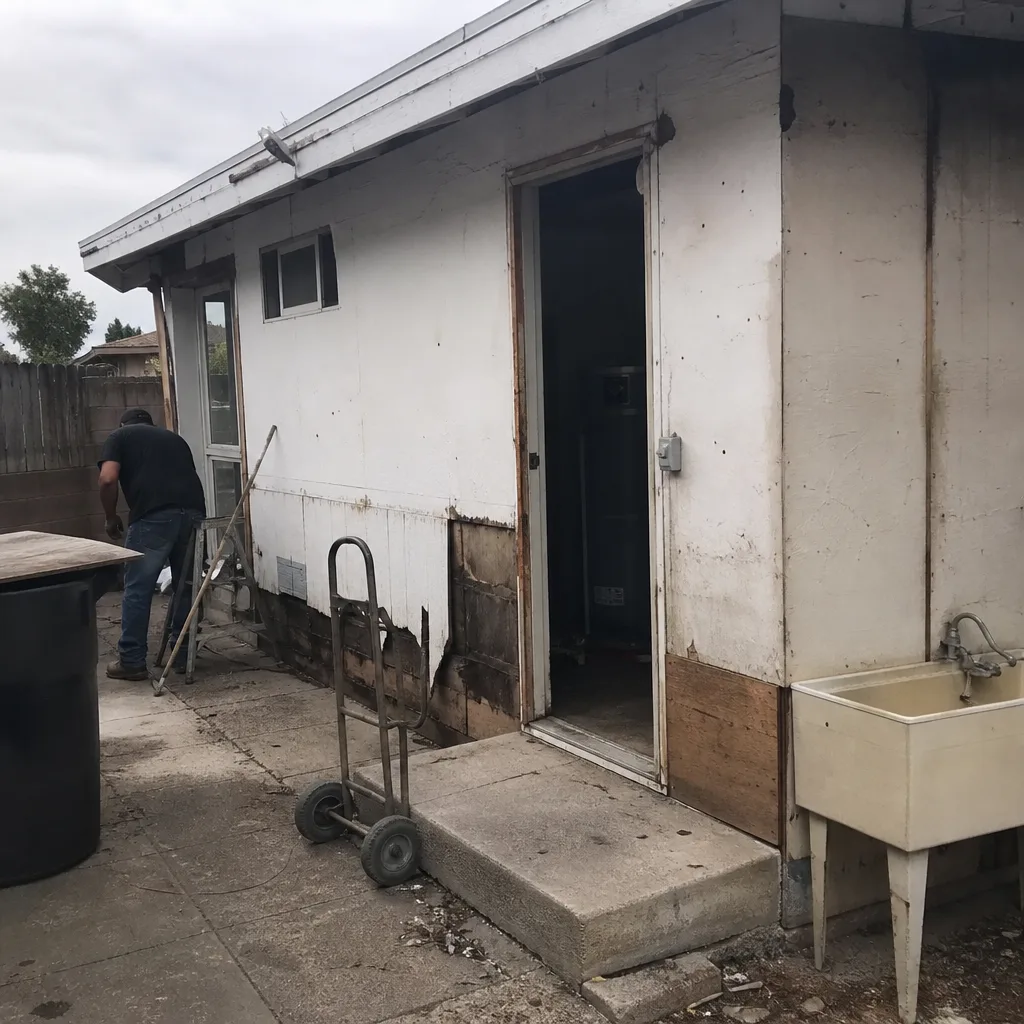 Before
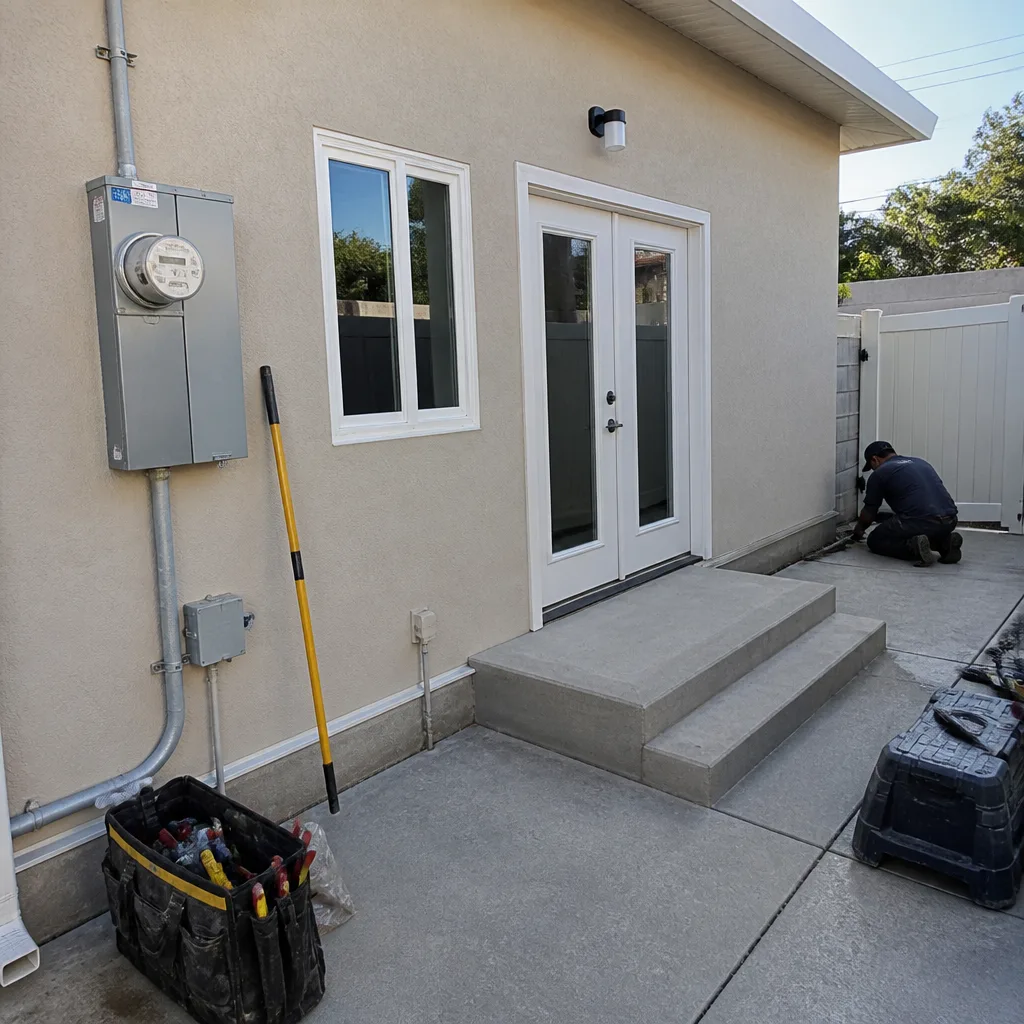 After
AfterHOA & Zoning Compliance Costs in Chino
HOA and zoning compliance work in Chino is included within Ellery’s full design-and-permit contract rather than billed as a standalone line item. That said, here is what the underlying work affects in your total project budget, so you can read any written quote – ours or a competitor’s – with clear eyes.
| Cost Component | Typical Range in Chino | What Drives Variation |
|---|---|---|
| City of Chino permit fees (ADU, 500-1,200 sq ft) | $4,500 – $9,800 | Square footage, utility connections, school fees (Chino Valley USD impact fees apply to ADUs over 500 sq ft) |
| HOA ARC application fee (paid to your HOA) | $0 – $500 | Varies by HOA; many Chino HOAs charge nothing; a few charge a flat review fee |
| Design revisions required by ARC conditions of approval | $0 – $1,800 | Zero if pre-application meeting catches issues early; higher if ARC conditions require significant elevation changes |
| Setback variance application (if required) | $1,200 – $3,500 | Required only when the proposed unit cannot meet standard setbacks; includes city filing fee plus hearing preparation |
Every Ellery project is quoted with a written price before any work begins – that’s Haven Standard Clause 1, and it applies to this work the same way it applies to every other part of the project. If a setback variance or ARC revision cycle is anticipated, it appears in your written quote as a named line item, not a surprise invoice after the fact.
To get an exact written quote for your Chino property, call (909) 323-1107. A live person will answer. There is no voicemail queue.
What Affects the Complexity of Your HOA & Zoning Review
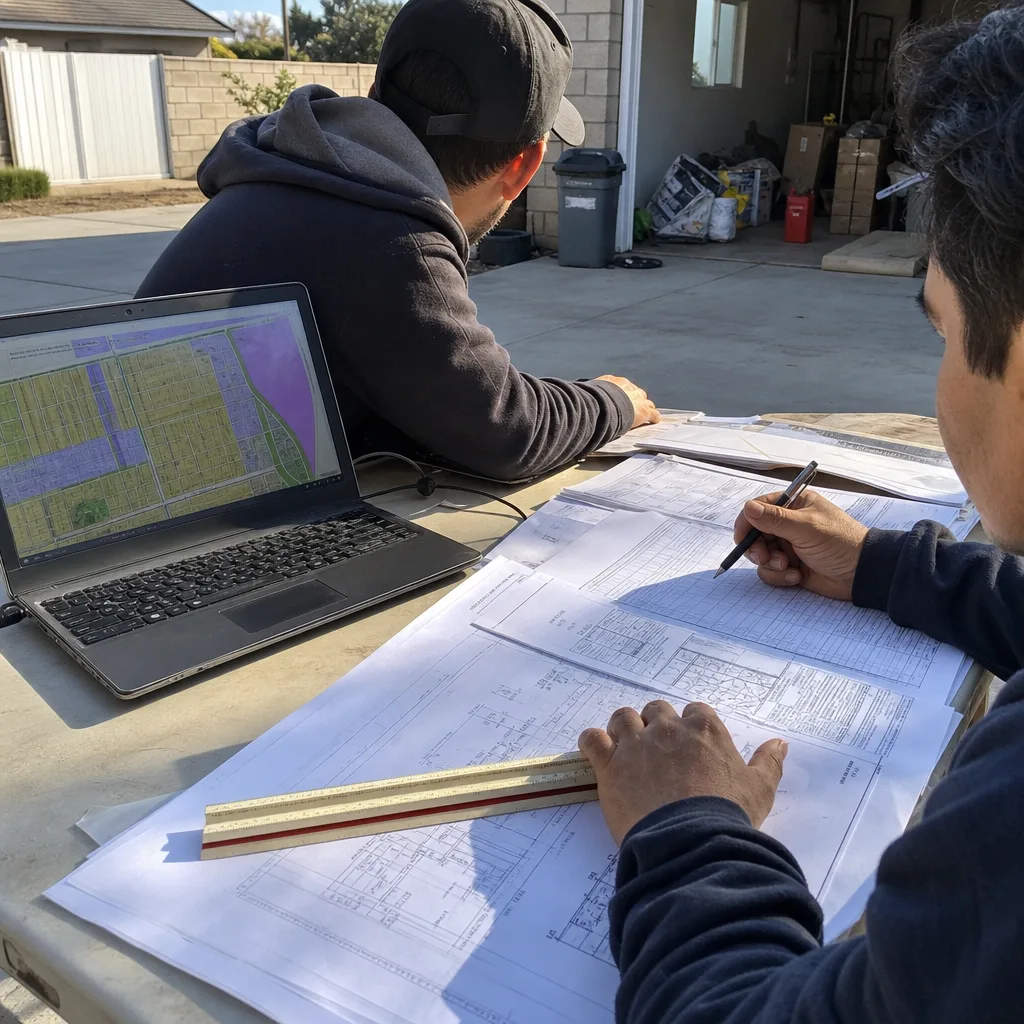
Not every Chino property carries the same compliance load. Here are the factors that most consistently affect how long and how involved the HOA and zoning process will be:
- HOA vintage: HOAs formed before 2020 frequently have CC&R language that explicitly prohibits “secondary structures” or “detached dwelling units.” State law (Civil Code Section 4751) now preempts that language for ADUs, but older HOA boards sometimes need documentation before they’ll issue written approval. We prepare that documentation.
- Lot size and existing coverage: Chino’s R-1 zone caps total lot coverage at roughly 40 percent in most cases. On a 6,000 sq ft lot with a 2,000 sq ft house and a 400 sq ft garage, you have approximately 1,000 sq ft of remaining coverage budget. That math limits your ADU footprint before zoning code setbacks are even applied.
- Corner lots: Corner lots in Chino carry a street-side setback that functions more like a front setback than a side setback. This routinely shrinks the buildable area for a detached ADU on corner parcels in neighborhoods like the Preserve or along Eucalyptus Ave corridors.
- Proximity to flood zones or utility easements: Parts of central and southwestern Chino carry FEMA Zone AE or X-shaded flood designations. An ADU proposed on a lot with a flood overlay may require an elevation certificate before the permit application can proceed – a step that adds two to four weeks and $400 to $900 in third-party survey costs.
- Unit type: A Junior ADU inside the existing house footprint typically moves faster through both HOA and city review than a new detached structure, because it involves fewer exterior changes. A detached ADU in a style or material the HOA’s ARC hasn’t previously approved – a Mighty Buildings concrete panel system, for example – can take longer on the HOA track while the ARC gets comfortable with the spec.
Why Chino’s HOA Landscape Is Particularly Layered
Chino developed in several distinct waves. The older neighborhoods near downtown – bounded roughly by Chino Ave, Central Ave, and Riverside Drive – were built primarily before master-planned HOA communities became the norm, so they have no HOA at all. Those properties deal with city zoning only, which simplifies the process considerably.
The Preserve, by contrast, is one of the largest master-planned communities in San Bernardino County, with its own sub-association structure and a layered ARC review that involves both the master HOA and individual neighborhood HOAs. An ADU application in the Preserve can require sign-off from two separate ARC bodies before it reaches the city – a sequence that catches applicants off-guard when they assume one approval covers everything.
College Park, Crossings, and the newer communities along Euclid Ave near the Ontario border each have their own CC&Rs and their own ARC timelines. We’ve worked with boards in all of these communities. The consistency across all of them is that written, documented communication – not phone calls, not verbal agreements – is what moves a project forward. That matches how we work anyway.
Our full home page covers the range of what Ellery ADU Studio does across all project types, if you want a broader sense of how HOA compliance fits within the studio’s overall approach before scheduling a call.
FAQs – HOA & Zoning Compliance for ADUs in Chino
Can my Chino HOA legally block my ADU?
No – a California HOA cannot legally prohibit an ADU outright. Since 2020, Civil Code Section 4751 has preempted HOA rules that ban or “effectively prohibit” ADU construction on single-family lots. What your HOA can do is impose reasonable design standards – materials, colors, roof pitch, placement relative to common areas – and require written architectural approval before construction begins. In practice, this means your HOA gets a vote on how the ADU looks, not whether it exists. We document the statutory preemption language in every HOA pre-application packet we submit in Chino, which gives the board a clear basis to issue approval and limits the back-and-forth. If you want an exact timeline estimate for your specific HOA, call (909) 323-1107.
How long does HOA and city zoning approval take for an ADU in Chino?
Combined, the process typically runs 10 to 18 weeks from first submission to full permit issuance for a straightforward detached ADU in Chino. HOA ARC review accounts for 4 to 6 weeks of that window, depending on your HOA’s meeting schedule. City plan check adds another 3 to 5 weeks. If a setback variance or ARC appeal is required, add 6 to 10 weeks. The pre-application HOA meeting we conduct before formal submittal consistently shaves two to six weeks off the ARC track by surfacing issues before the clock starts. To understand the timeline for your specific lot and HOA, call (909) 323-1107 – we can give you a written estimate after a Site Assessment.
Does Chino’s city zoning supersede my HOA’s rules?
It depends on which rule is more restrictive and which statute applies. City zoning sets minimum requirements – setbacks, coverage limits, height, and Title 24 Energy Compliance – and you must meet them. HOA rules layer on top with design standards, but cannot override state ADU law. In practical terms: if the city allows a 16-foot-tall ADU and your HOA caps it at 14 feet, the HOA cap is likely enforceable because it’s a design standard, not a prohibition. If your HOA says no ADUs at all, that rule is preempted by state law. The conflict matrix we build at the start of every Ellery project maps exactly these intersections for your parcel, so you know before design begins what you’re working with. Call (909) 323-1107 to get that analysis started.
What if my HOA denies my ADU application?
A flat denial is rare since 2020’s statutory preemption, but conditional denials – “approved with the following changes” – are common. We document every ARC condition in writing and incorporate required changes into the permit set before city submittal. If an HOA issues a denial that we believe conflicts with Civil Code Section 4751, we prepare a written response citing the statutory basis and request reconsideration. We do not handle HOA litigation, but we can prepare the documentation that any attorney you consult would need to pursue a formal challenge. In most cases in Chino, a well-prepared written response resolves a conditional denial without escalation. Call (909) 323-1107 if you’ve already received a denial letter – we offer a free second opinion on any written HOA decision.
Key Takeaways
- In Chino, HOA approval and city zoning clearance are separate processes that must both be completed before a building permit issues – and they can run simultaneously if the project is structured correctly from day one.
- California state law (Civil Code Section 4751) prevents HOAs from banning ADUs outright, but HOAs retain the right to impose design standards. Knowing the difference early saves months.
- Chino’s master-planned communities – particularly the Preserve – may require approval from two separate ARC bodies, not one. This is a common source of delay for applicants who didn’t know it was coming.
- Every Ellery project is quoted with a written price before any work begins. HOA coordination, conflict matrix preparation, and ARC submission are included in that price, not billed as extras after the fact.
- A live person answers at (909) 323-1107 around the clock. There is no voicemail queue, and a free second opinion is available on any written estimate or HOA denial letter you’ve already received.
If you’re planning an ADU in Chino and your property is governed by an HOA – or if you’ve already received a city comment or ARC denial – call Ellery ADU Studio at (909) 323-1107. A live person will answer. We’ll review your parcel, your HOA’s CC&Rs, and your city zoning in writing, and give you an exact written price before any work begins. That’s not a sales pitch; it’s Haven Standard Clause 1, and it applies to every project we take on.
Written by Nadia Ellery, Owner at Ellery ADU Studio Chino, serving Chino.